

The web development ecosystem has reached a significant milestone with the official release of Preact 11, arriving six years after development and community planning first began for the next major iteration of the popular alternative to React. Designed to maintain the same modern API that developers have grown accustomed to, the newly released version introduces a suite of performance and architectural upgrades, including improved hydration strategies, automatic ref forwarding, and a shift to an exclusively ECMAScript Module (ESM) package. The long-awaited rollout comes at a time when web frameworks and build tooling are undergoing rapid evolution, focusing heavily on reducing bundle sizes and maximizing execution efficiency across both client and server environments.

For years, Preact has served as a lightweight, drop-in alternative for teams looking to leverage React’s component model without paying the performance tax of a larger library footprint. The release of version 11 refines this mission by addressing core bottlenecks in modern rendering pipelines. Improved hydration ensures that server-rendered applications transition smoothly into interactive client-side experiences with fewer layout shifts and reduced main-thread blocking. Meanwhile, automatic ref forwarding simplifies component composition, removing boilerplate code that developers previously had to write manually when passing references down through deeply nested component trees. By transitioning entirely to an ESM-only distribution, the Preact team is also aligning the library with modern packaging standards, enabling better tree-shaking and faster parsing times for modern bundlers. Teams seeking to transition their existing applications can consult the official upgrade guide, which outlines the breaking changes and migration paths necessary to adopt the new architecture.
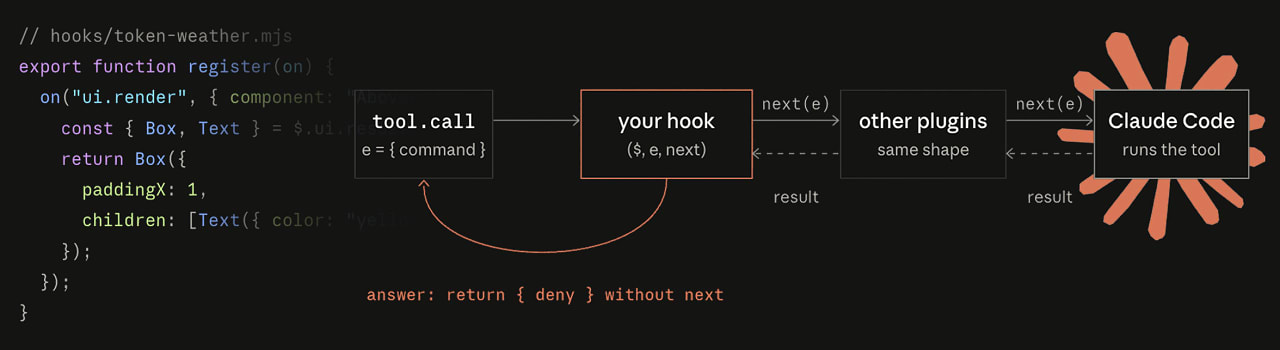
Alongside the Preact release, the broader developer tooling landscape has seen notable advancements aimed at extending artificial intelligence capabilities and improving backend cost-efficiency. In the realm of agentic coding, Claude Code has rolled out support for Mods, a new extension mechanism that allows developers to customize and extend the coding harness using JavaScript. This feature enables engineers to observe runtime events, dynamically alter agent behavior, and render custom user interfaces directly within their development workflows. Demonstrating the flexibility of this new capability, developer Addy Osmani constructed a custom mod in roughly eighty lines of code, designed to provide a real-time visual forecast of the coding assistant’s context window usage. This integration highlights a growing trend toward programmable development environments where AI tooling can be tailored to match specific engineering habits and project constraints.

Infrastructure and backend optimization have also taken center stage as companies look for ways to reduce operational overhead without sacrificing application performance. In a prominent case study highlighting modern Node.js optimization, engineering teams at Booking.com detailed how they successfully cut their Node.js service costs by thirty-eight percent. The substantial savings were achieved by moving away from PM2 and transitioning to Watt’s worker threads, coupled with a complete overhaul of load balancing and worker configuration strategies. By rethinking how concurrency and resource allocation are handled at the server level, the organization managed to drastically lower its infrastructure footprint, offering a blueprint for other high-traffic web applications facing rising cloud computing expenses.
Type safety and code maintainability continue to be critical areas of focus for TypeScript developers, as demonstrated by recent explorations into developer ergonomics and language capabilities. Rahul M. Juliato published an examination of readable regular expressions for TypeScript, drawing inspiration from Emacs to rebuild the complex Semantic Versioning regular expression from named, composable pieces. By breaking down cryptic pattern strings into understandable, modular components, developers can maintain complex validation logic with greater clarity. In a similar vein, Radosław Miernik explored the nuances of automatic type refinements in TypeScript, analyzing which filter callbacks allow the compiler to successfully narrow an array’s type and which fail to do so, shedding light on the subtle mechanics of type guards in everyday codebases.
Performance-driven architecture received another major boost with the release of Effect 4.0, a ground-built rewrite of the popular library designed for constructing reliable applications capable of handling complex challenges such as resource management, concurrency, retries, and typed errors. Version 4.0 introduces significant architectural trims, boasting a core that produces minimal bundles five times smaller than its predecessor while reducing memory consumption per concurrent task by eighty-six percent. Spearheaded by Sebastian Lorenz, the release underscores the growing demand for robust, production-ready primitives that can handle asynchronous operations and failure states gracefully in large-scale JavaScript and TypeScript environments.
As the ecosystem continues to expand, developers are finding new ways to connect and share knowledge across various domains. The upcoming Mozilla Festival in Barcelona is slated to bring together developers, creatives, and technologists to exchange ideas and collaborate on open web initiatives. Concurrently, production infrastructure tools like Trigger.dev continue to address the complexities of running TypeScript-based agents and workflows in live environments, offering native support for queues, retries, and unconstrained execution times for long-running computational tasks. These developments collectively point toward an increasingly sophisticated ecosystem where performance, developer experience, and intelligent automation converge to shape the future of web engineering.










No comments yet. Be the first to join the conversation!