

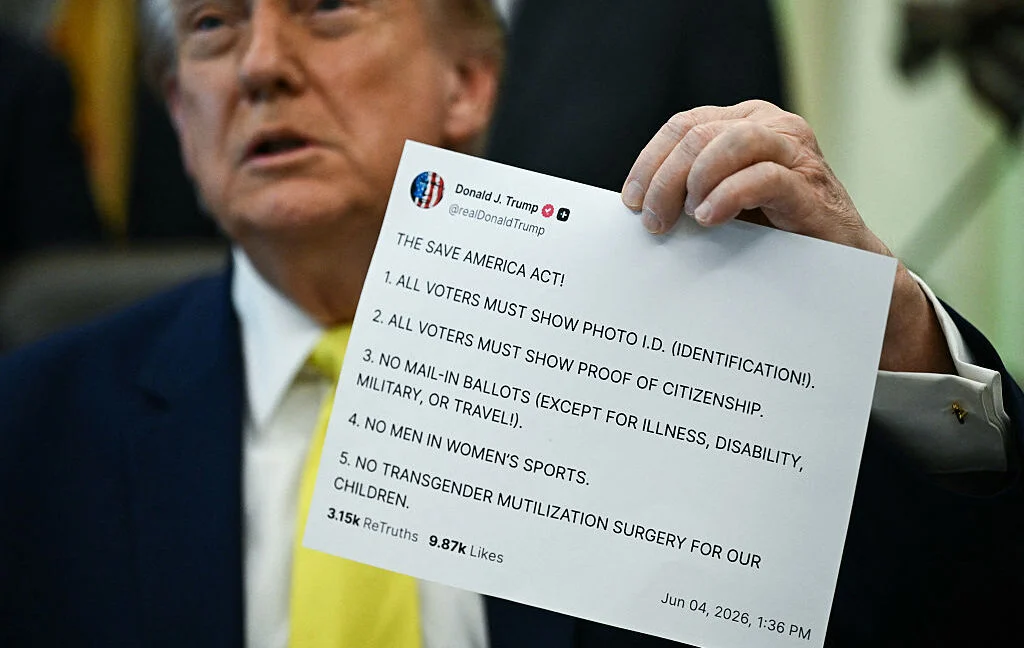
A federal court is poised to decide in the coming weeks whether Donald Trump can maintain a controversial business model that critics say turns the presidency into a pay-to-play enterprise. At the center of the dispute is a lawsuit challenging the legality of charging up to $100,000 monthly for instant API access to Truth Social, a platform where the president frequently breaks major policy news, announces military actions, and details changes in his administration.
The potential ruling by a federal judge could set a historic precedent, marking the first time a sitting U.S. president has been tasked with defending the practice of personally profiting from the sale of direct, early access to government-related information. The case, which has drawn sharp scrutiny from media organizations and legal scholars alike, touches upon fundamental questions regarding the First and Fifth Amendments, as well as the long-standing norms surrounding the Presidential Records Act.
The Government’s Defense of the Paywall
During a hearing held this past Wednesday, Department of Justice civil attorney Brantley Mayers appeared before U.S. District Judge Paul Oetken to argue that the president’s business dealings via Truth Social do not constitute a conflict of interest. As the majority owner and largest stakeholder of the Trump Media & Technology Group, the parent company of Truth Social, the president sits in a position to benefit directly from the platform’s revenue streams.
The DOJ’s argument rested on the premise that the content posted to the president’s personal feed serves an essential public function. Mayers characterized the president’s posts as "unvarnished public service," comparing them to the "fireside chats" delivered by Franklin D. Roosevelt during the 1930s and 1940s. By framing the Truth Social feed as a modern digital iteration of FDR’s radio broadcasts, the government attempted to minimize the perception that the platform is being used as a vehicle for personal enrichment.
However, the courtroom atmosphere shifted when the DOJ’s analogy faced a blunt reality check from the bench. When Mayers argued that the president’s use of his social media platform was merely a conduit for policy announcements, Judge Oetken interjected with a pointed question that highlighted the core discrepancy in the government’s logic: "Well, President Roosevelt didn’t charge money for his fireside chats, did he?"
The question cut to the heart of the litigation, which posits that the value of the Truth Social API access is derived almost exclusively from the president’s official role. By restricting the fastest flow of this information to those willing to pay exorbitant fees, critics argue that the administration is effectively privatizing the distribution of critical government news.
Allegations of Constitutional Violations
The lawsuit, brought by a coalition of news organizations, outlines a multi-pronged constitutional challenge. The plaintiffs argue that the current fee structure violates the First Amendment by creating a tiered system of access to information that is inherently public in nature. Furthermore, they contend that the arrangement ignores the mandates of the Presidential Records Act, which dictates how official communications are archived and handled—communications that, the plaintiffs argue, Trump does not technically own in his capacity as a private citizen.
Beyond the First Amendment concerns, the news groups have leveled a significant Fifth Amendment challenge. They argue that the government’s defense of these fees is fundamentally irrational. According to the complaint, the Fifth Amendment prohibits the government from charging "unreasonable sums that cannot be justified to offset the cost of the government benefit." By charging arbitrary and high-priced premiums for what should be readily available information, the administration is accused of granting preferential access to those with the deepest pockets, effectively silencing or sidelining smaller news outlets that cannot afford the entry price.
The financial stakes are substantial. With subscription costs reaching $100,000 per month for API access, the potential revenue for the platform could reach $1.2 million per subscriber annually. Plaintiffs argue that this creates a direct, ongoing financial conflict, as the president continues to hold a majority stake in the company profiting from the data being sold.
The "Barriers to Entry" Argument
The DOJ’s response to the court’s skepticism regarding the cost of access was to draw a historical parallel between the technological landscape of the 21st century and the mid-20th century. When pressed on why news organizations should be forced to pay a premium for access that was historically free, Mayers suggested that "barriers to entry" have always existed in the dissemination of news.
He argued that just as some citizens in the 1930s and 1940s could not afford the radios necessary to hear FDR’s fireside chats, modern news organizations may face similar economic hurdles in accessing current government updates. This argument attempted to frame the current paywall as a natural evolution of market conditions rather than a deliberate policy choice by the administration to monetize government announcements.
However, legal observers noted that the comparison largely sidestepped the fundamental issue of a public official profiting from the sale of government information. In the case of Roosevelt’s radio broadcasts, the lack of a radio did not mean that a news organization was being charged a fee by the president to access the transcript or the audio content; it simply meant the technology was not ubiquitous. In the current dispute, the president’s company is actively soliciting payment for the digital "feed" that contains the official word of the administration.
Implications for Transparency and Precedent
The outcome of the hearing, and the impending decision from Judge Oetken, could have profound implications for how the executive branch interacts with the press and the public. Should the court side with the government, it would effectively affirm the right of a sitting president to monetize the platforms they use to conduct state business. This could lead to a permanent shift in how news organizations budget for and access government announcements, potentially favoring wealthy media conglomerates over independent or smaller journalistic outlets.
Conversely, a ruling against the current fee structure could force the administration to reconsider its relationship with Truth Social or face the prospect of a massive legal and ethical reckoning. The case serves as a stark reminder of the tension between the modern era of social media, where the lines between personal platforms and official communication channels are increasingly blurred, and the long-standing constitutional protections intended to keep government information accessible to all.
As the judge prepares his ruling, the core of the debate remains the distinction between a private citizen utilizing a platform for personal business and a president using that same platform to issue decrees that affect the lives of millions. For now, the administration continues to maintain that its digital strategy is a service to the public, while the plaintiffs argue that it is an unprecedented effort to profit from the powers of the highest office in the land. The court’s decision will likely hinge on whether these "fireside chats" are considered a legitimate public communication tool or a commercial enterprise masquerading as a government function.






No comments yet. Be the first to join the conversation!