

The first precision commercial alternative to Global Positioning System (GPS) technology is preparing to go live this month as startup Xona Space Systems sends six satellites into low-Earth orbit aboard a SpaceX rocket. The upcoming launch represents a major milestone in the commercialization of satellite navigation, a sector that has long remained a de facto government space monopoly dominated by free signals provided by national programs in the United States, Europe, China, and Russia.
While launching a service that directly competes with free global navigation networks might initially seem unconventional, Xona hopes to prove that a massive, underserved commercial market exists for higher-performance positioning, navigation, and timing (PNT) hardware and data. Founded in 2019 by a team of five aerospace engineers who originally met at Stanford University’s graduate program, the company has spent years turning academic research into a viable commercial enterprise. One of the co-founders, Tyler Reid, went on to earn a PhD by writing his dissertation on the unique possibilities of utilizing low-Earth orbit (LEO) satellites to dramatically improve navigation accuracy.
Traditional global navigation satellite systems provide immense value to modern society, but they suffer from inherent vulnerabilities. Traditional analog satellite networks are relatively easy to jam or spoof, and their standard signals simply are not precise enough to be relied upon entirely for advanced automated applications like farming robots or self-driving cars. According to the company’s leadership, these limitations were first discussed during informal "pizza and beer chats" among the Stanford friends, who ultimately wondered if solving these technical deficiencies could serve as the foundation for a sustainable business model.
When Xona CEO Brian Manning first encountered the idea, his initial reaction was skepticism. During a recent visit to the company’s headquarters, Manning recalled thinking that challenging free government infrastructure was a flawed concept. However, after diving deeper into the economics of the industry, he realized that people often mistake the nature of the market. While the service provided by traditional navigation constellations is technically free to end users, the underlying hardware market is immense. Billions of compatible devices are manufactured and sold every year, and none of those hardware components are given away for free. Manning recognized that a massive global market was desperately searching for superior performance, reliability, and precision.
Translating that vision into a functioning product required overcoming significant technical challenges. Improving upon standard GPS required designing a stronger signal capable of delivering vastly superior timing and location data. Furthermore, the company needed to develop a unique satellite architecture that could maintain precise time synchronization without requiring expensive, heavy atomic clocks onboard each spacecraft. Xona achieved this by taking advantage of the constellation’s close proximity to Earth and maintaining constant, low-latency communication with ground-based sources of truth.
Another major hurdle successfully cleared by the engineering team was ensuring that Xona’s advanced signals could be received by existing GPS hardware through relatively simple software modifications. This strategic compatibility gives the startup immediate access to an established global market of receivers while significantly streamlining the regulatory approval process required for broadcasting commercial navigation signals.

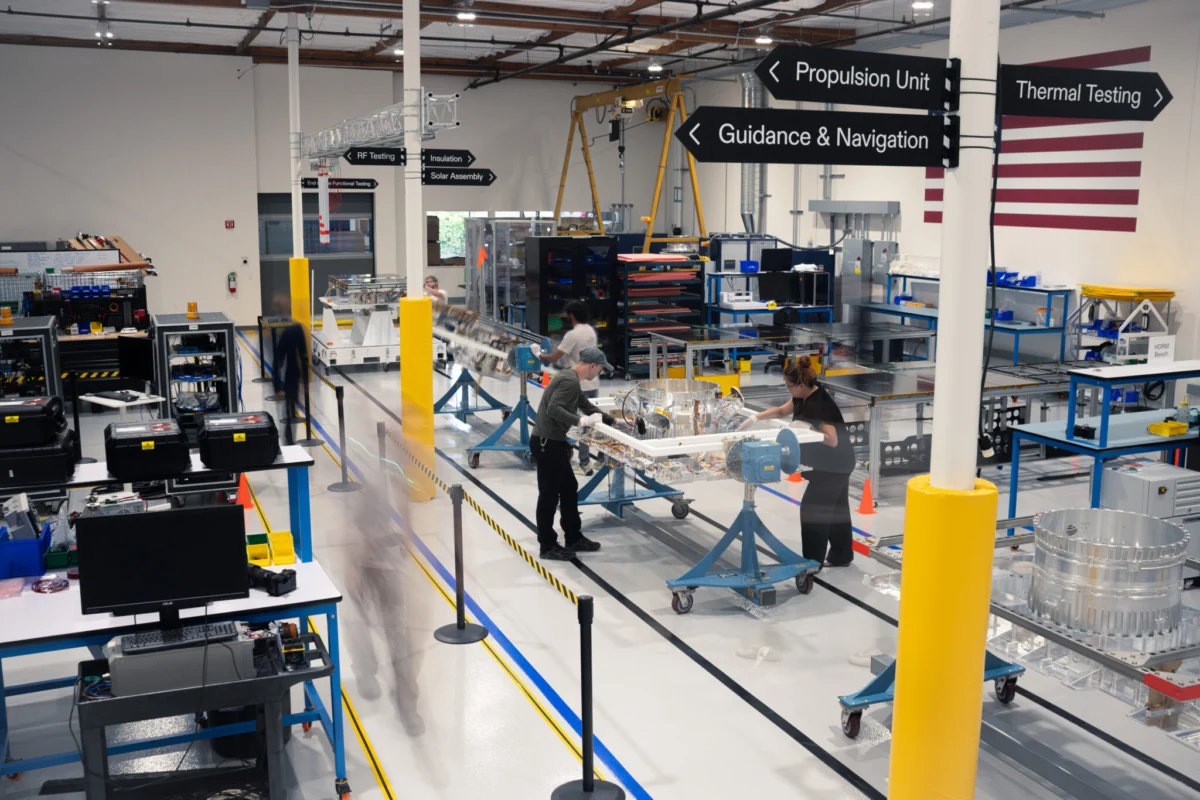
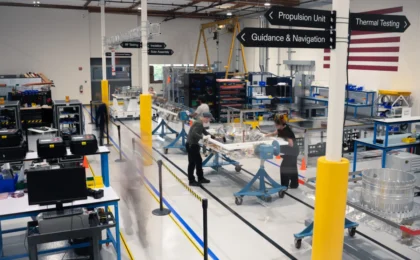
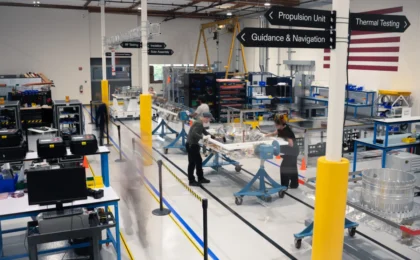
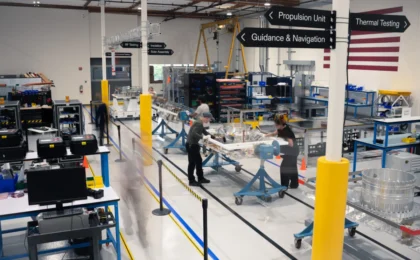
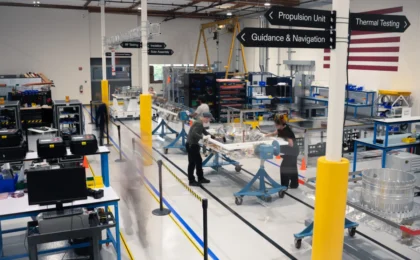
The upcoming SpaceX mission will carry a mixed payload of six satellites designed to validate these innovations. Four of the spacecraft are similar to a successful prototype launched by the company last year to prove its underlying technology, utilizing a standard satellite platform built by Aerospace Labs. The remaining two satellites were manufactured entirely in-house at Xona’s facility in Burlingame, California. These two internally built spacecraft are intended to serve as the foundational building blocks for the company’s planned 258-satellite operational constellation, which has been named Pulsar.
Once fully deployed, the Pulsar constellation aims to provide centimeter-level precision for geolocation, a massive leap forward from the meter-level precision offered by standard GPS. Additionally, the network’s signal will be powerful enough to penetrate deep inside buildings and dense urban environments where traditional satellite signals frequently degrade or disappear entirely. Manning also believes that the signal’s robust design will make it inherently more resilient against would-be jammers and spoofers operating in increasingly contested environments.
Following the upcoming launch, Xona will be positioned to begin beta-testing the Pulsar system with real-world enterprise customers as the satellites pass overhead across the mid-latitudes roughly eight times each day. Early industrial partners are already lining up to test the capabilities of the network. Ian Gough, CEO of electronic timing specialist TimeBeat, noted that the initial pilot program will provide his engineering team with a critical tool to independently check, verify, and correct timing data distributed by devices deployed around the world. Looking further ahead, Xona targets full commercial service coverage across the United States, Europe, Japan, and South Korea by the year 2028.
To fund its ambitious roadmap, Xona has raised just over $300 million from private venture capital investors since its inception. Notably, this funding includes a $20 million investment from the U.S. Space Force. While the company’s primary focus remains commercial enterprise applications, the U.S. military and government agencies have demonstrated clear strategic interest in resilient navigation technology, particularly as electronic jamming and signal spoofing become increasingly prevalent in modern geopolitical conflicts.
Beyond industrial timing and defense applications, Xona is positioning its technology to support the coming wave of widespread autonomy. CTO Tyler Reid, whose doctoral thesis directly inspired the creation of the company, previously worked on autonomous vehicle development at Ford. During that time, he observed firsthand that existing navigation infrastructure fell short of what would be required to safely scale autonomous driving systems across the transportation sector.
From its corporate headquarters, which feature sweeping views of commercial jets landing at San Francisco International Airport, Xona’s leadership team frequently contemplates the broader safety implications of their work. Pointing toward the incoming aircraft, Manning observed that civil aviation remains the undisputed gold standard for safety across all forms of mass transportation. The company envisions its technology playing a vital role in bringing that same uncompromising level of reliability to other sectors—ultimately providing autonomous road vehicles with a navigation service robust enough that passengers can feel as secure taking their hands off the steering wheel as travelers do relaxing inside a modern commercial airliner.









No comments yet. Be the first to join the conversation!