

The software development community is experiencing a significant wave of tooling updates, highlighted by the official release of Preact 11. Arriving six years after the initial planning and community discussions began for this major milestone, the latest iteration of the popular lightweight alternative to React brings a series of deeply anticipated architectural improvements. Designed to maintain the modern API familiarity that developers have come to rely on, Preact 11 introduces enhanced hydration strategies, automatic ref forwarding, and transitions to an ESM-only package structure, modernizing the library for today’s high-performance web applications.

For developers seeking to transition their existing applications to the new major version, a comprehensive upgrade guide has been published by the Preact team to navigate the structural changes. The shift toward an ESM-only distribution aligns the library with contemporary JavaScript ecosystem standards, reducing legacy compatibility overhead and streamlining build processes across modern bundlers. The improvements to hydration and ref forwarding directly address long-standing developer pain points, making server-side rendered applications faster and component integration more seamless.
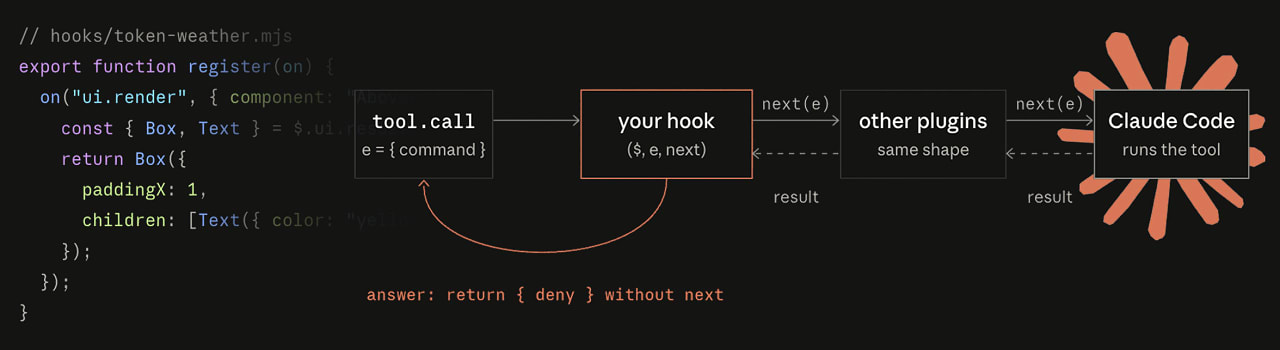
At the same time, the ecosystem surrounding AI-assisted development continues to mature rapidly. Addy Osmani recently highlighted the introduction of support for Mods in Claude Code, a powerful extension mechanism that allows developers to customize and expand agentic coding harnesses using JavaScript. By writing custom mods, developers can monitor real-time events, modify underlying assistant behavior, and render custom user interfaces directly within their development workflows. Demonstrating the flexibility of this system, Osmani built a functional mod in roughly eighty lines of code that provides a live forecast visualization of the assistant’s context window, offering a glimpse into how developers might tailor AI tools to their specific productivity needs.

Infrastructure efficiency and architectural optimization remain top priorities for enterprise engineering teams, as evidenced by recent performance case studies. Ilya Malyavin detailed how Booking.com successfully reduced the operational costs of its Node.js services by an impressive thirty-eight percent. This significant financial and computational saving was achieved by transitioning away from PM2 and adopting Platformatic Watt’s worker threads, alongside a complete overhaul of load balancing and worker configuration strategies. The migration underscores the substantial gains that can be unlocked by re-evaluating core runtime configurations and leveraging modern worker thread architectures under heavy production workloads.
Type safety and code readability have also seen innovative developments within the TypeScript ecosystem. Rahul M. Juliato published an exploration into building readable regular expressions for TypeScript, drawing direct inspiration from Emacs’s rx notation. By reconstructing semantic versioning regular expressions from named, composable pieces, the approach demonstrates how complex pattern matching can be made vastly more maintainable and understandable for development teams. Complementing this focus on type systems, Radosław Miernik examined the nuances of automatic type refinements in TypeScript, breaking down precisely which filter callbacks successfully narrow an array’s type during runtime operations and which fail to do so, providing clarity for developers striving for strict type safety.
The library and tooling landscape saw further heavy-hitting releases with the arrival of Effect 4.0, presented by Sebastian Lorenz. Built as a ground-ground rewrite of the popular library designed for constructing reliable applications, Effect 4.0 targets notoriously tricky programming challenges such as complex resource management, concurrency handling, automated retries, and typed errors. The latest version boasts dramatic performance and footprint enhancements, featuring a minimal bundle size that is five times smaller than its predecessor and achieving an eighty-six percent reduction in memory usage per concurrent task, making it an increasingly attractive option for high-throughput backend services and data pipelines.
As developers look toward upcoming collaborative events and robust production infrastructure, community gatherings such as the upcoming Mozilla Festival in Barcelona offer spaces for creators and engineers to connect and share wild ideas. Concurrently, production deployment platforms like Trigger.dev continue to address the complexities of running TypeScript agents and workflows in live environments, providing built-in queues, automated retries, and elimination of timeouts for long-running asynchronous tasks. These collective updates across frameworks, runtimes, type systems, and AI integrations paint a picture of a fast-evolving engineering landscape focused heavily on performance, cost-efficiency, and developer ergonomics.










No comments yet. Be the first to join the conversation!