

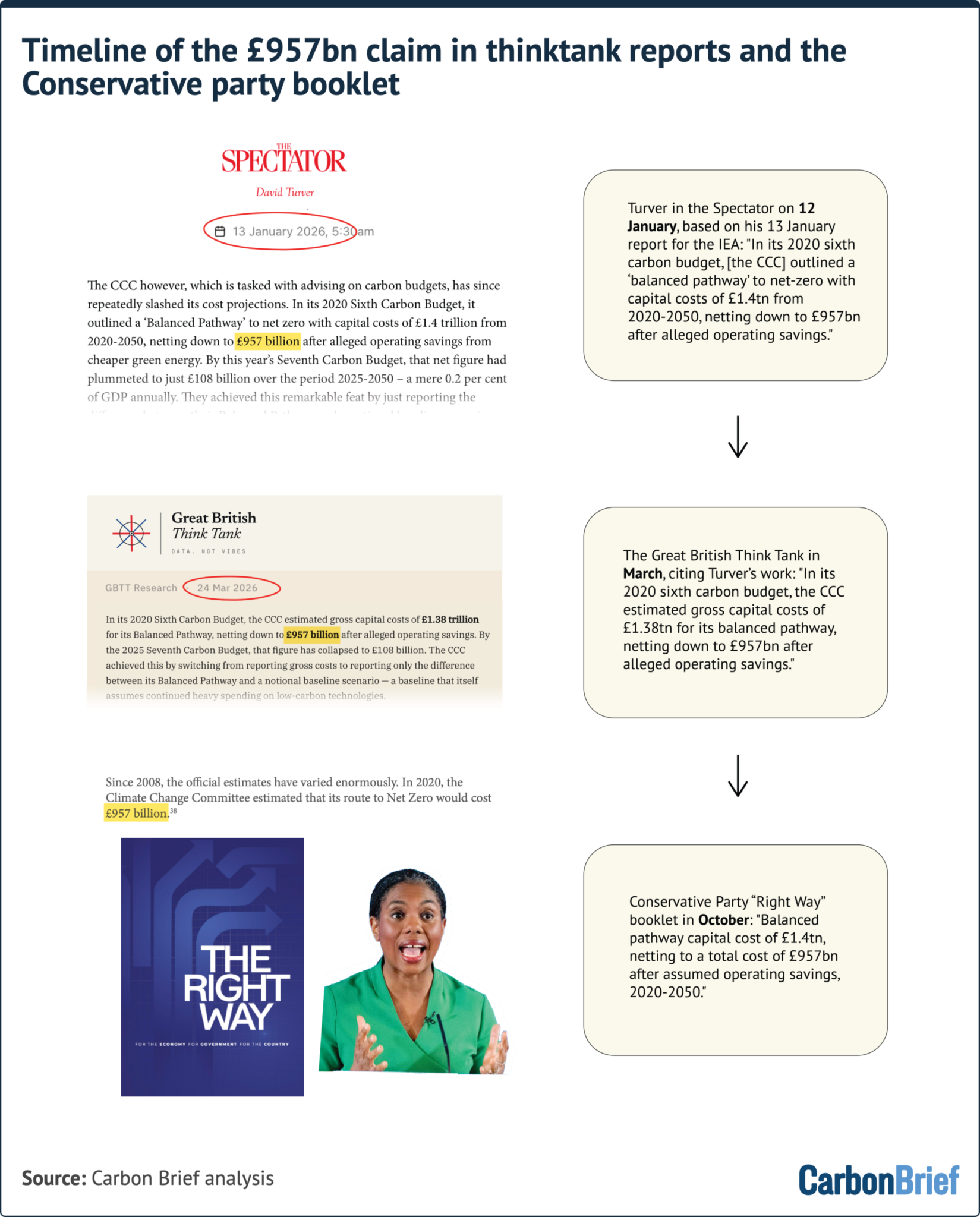
A policy booklet recently published by the UK’s opposition Conservative Party features a prominent financial figure regarding the "cost of net-zero" that appears to have been doubled entirely as a result of a basic spreadsheet error.
The policy document, titled "Right Way" and framed as a "common sense" guide to governance, argues that what the public ultimately expects is a government competent enough to solve the structural and logistical problems for which it takes responsibility. Within its pages, a specific section contends that sophisticated economic modelling should never serve as a substitute for straightforward political judgment, using this premise to dismiss various independent estimates concerning the financial burden of transitioning the UK to a net-zero carbon economy.
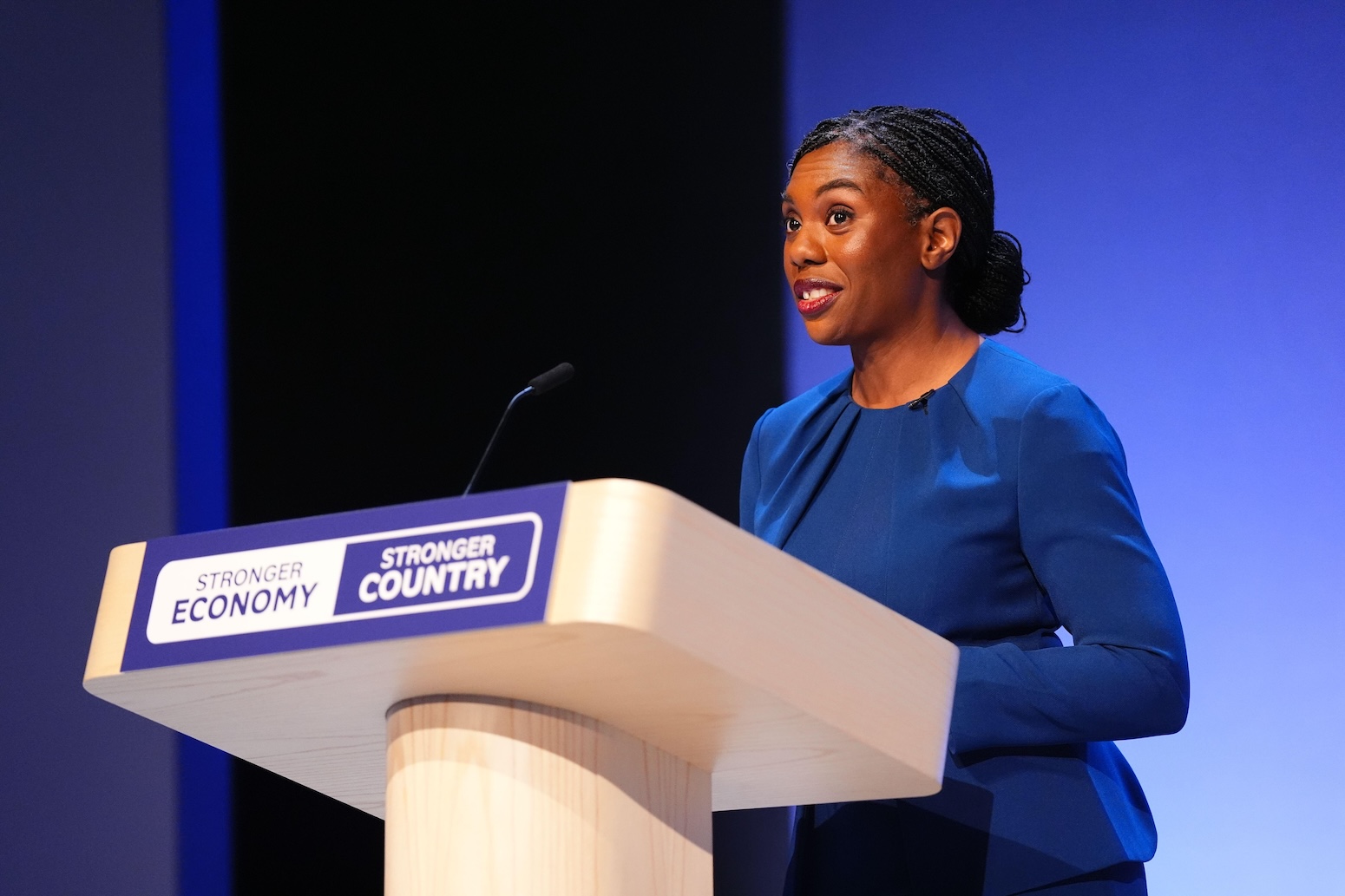
However, the Conservative document proceeds to make an incorrect claim regarding the official projections provided by the government’s independent advisory body, the Climate Change Committee (CCC). The booklet asserts that in 2020, the CCC estimated its proposed route to achieving net-zero carbon emissions would carry a price tag close to £1 trillion, specifically citing a figure of £957bn.
In reality, the CCC’s actual 2020 estimate was exactly half that amount—£478bn. Furthermore, the committee published a revised figure of £108bn last year, largely driven by the rapidly falling costs associated with electric vehicles and advancing clean technologies.
Spreadsheet Error
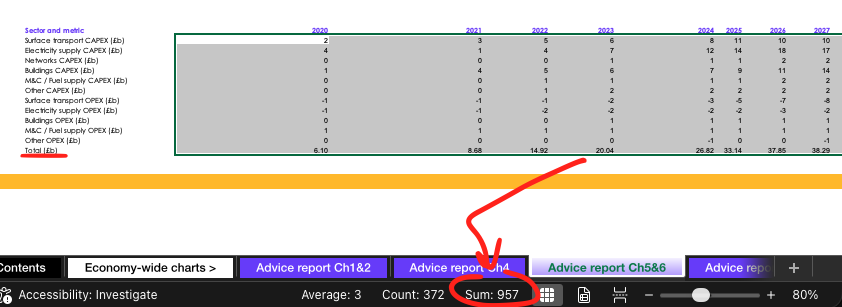
The erroneous claim found within the Conservative Party document can be traced back to an accidental double-counting mistake originating from a spreadsheet published by the CCC in 2020 to support its Sixth Carbon Budget.
The 2020 data file contained a comprehensive table detailing the additional capital investments required to construct a net-zero economy, spanning everything from low-carbon electricity generation infrastructure to the widespread installation of household heat pumps and electric vehicles. These extra capital expenditures, abbreviated as CAPEX, accumulated to a total of £1.38 trillion over the course of the thirty-year period from 2020 through 2050. At the same time, these capital costs were offset by projected operational savings—listed as OPEX—amounting to £0.90 trillion over the same timeframe.
When these capital expenditures and operational savings were combined across the 2020 to 2050 window, the net figure arrived at a total cost of £478bn.
Alongside the annual sectoral figures for CAPEX and OPEX, the CCC’s original spreadsheet included a summary line designated to give combined totals for each individual calendar year. It appears that an analyst subsequently added all of these individual figures together without accounting for the fact that annual summary totals were already embedded in the data, causing both the underlying costs and the projected savings to be counted twice.
This double-counted calculation yielded a cumulative total of £957bn for the cost of net-zero, which subsequently found its way into public policy debates and ultimately into the Conservative Party’s official publication.
When the CCC originally published its findings in 2020, it emphasized that the net cost of £478bn amounted to less than one percent of the UK’s gross domestic product over the entire thirty-year period. The committee pointed out that the substantial upfront investments required would not only generate massive savings by reducing reliance on expensive fossil fuel imports, but would also provide an overall boost to GDP of roughly two percent.
By 2025, as clean energy markets evolved, the CCC updated its economic projections. It revised the estimated investment costs and operating savings to £670bn and £562bn respectively, producing a reduced net total of £108bn between 2025 and 2050—representing less than 0.2 percent of GDP. Earlier this year, the committee reiterated that achieving net-zero emissions would ultimately cost less than enduring a single major fossil-fuel price shock, estimating that the broader environmental and economic benefits would deliver value worth £110bn annually.
Paper Trail
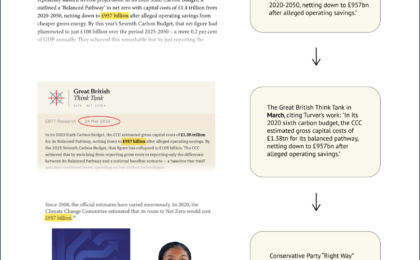
The erroneous £957bn figure included in the Conservative publication formally cites the CCC’s 2020 advice on the UK’s sixth carbon budget, even though that official documentation contains no such figure.

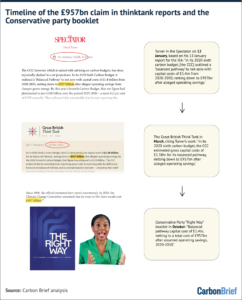
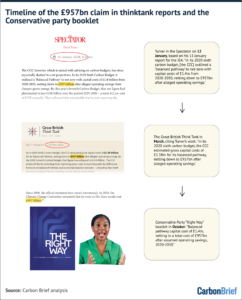
An examination of public records reveals that the earliest online appearance of the £957bn figure occurred in January 2026, within an article published by The Spectator written by retired engineer and self-described "accidental energy analyst" David Turver. Just one day after that article appeared, Turver repeated the mistaken figure in a formal report published by the free-market Institute of Economic Affairs, explicitly citing chart data from the CCC’s 2020 advice.
However, the underlying CCC spreadsheet containing that specific data only totals £478bn—precisely half of Turver’s cited figure. The mistake occurred because the analysis inadvertently summed every individual row of data without excluding the pre-calculated annual summary rows, effectively duplicating the total financial impact.
Turver’s subsequent report also inadvertently sparked a wider wave of exaggerated headlines across various outlets claiming that net-zero would cost anywhere from £7.6 trillion to upwards of £9 trillion. Those more extreme figures relied on baseline assumptions that treated fossil fuels, along with the cars, domestic boilers, and power plants that consume them, as entirely free resources.

Following the initial publication of Turver’s report and article early in the year, the flawed £957bn figure was repeated in March by the Great British Think Tank, an organization whose public slogan focuses on data-driven research sourced exclusively from official public bodies. Months later, the exact same figure migrated into the Conservative Party’s "Right Way" policy booklet.










No comments yet. Be the first to join the conversation!