

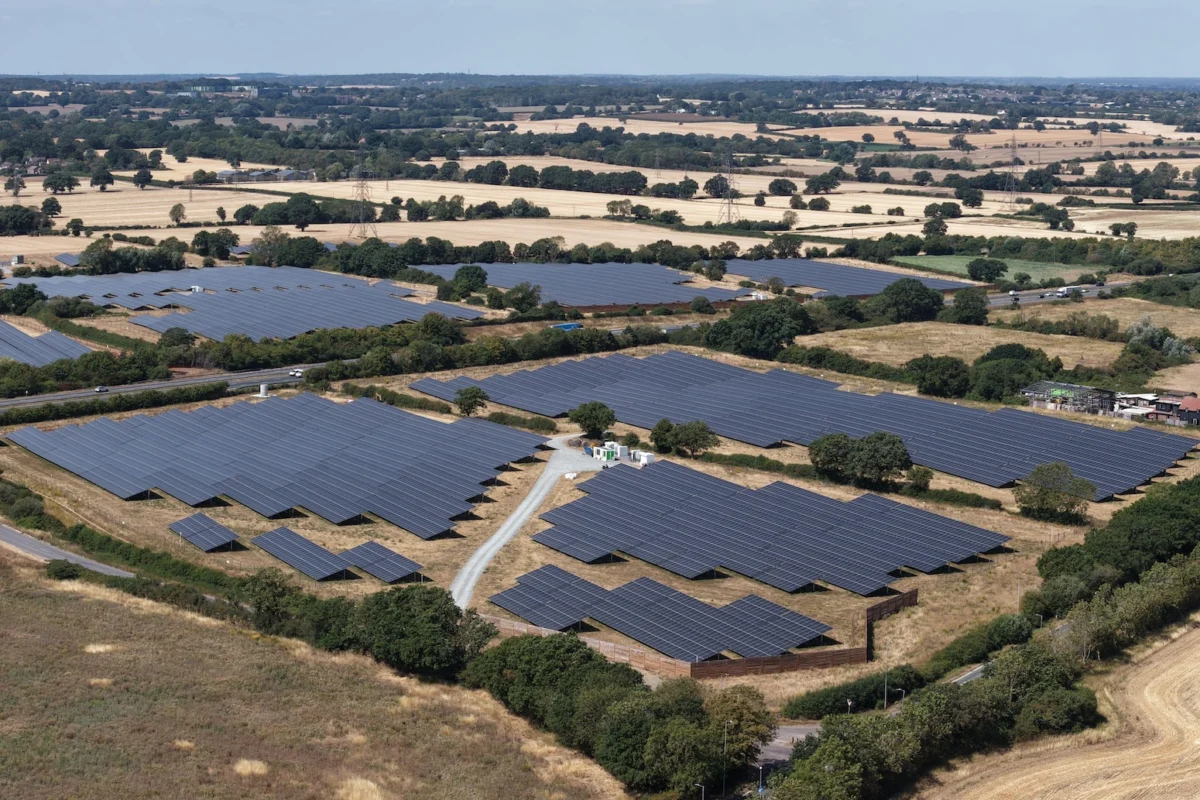
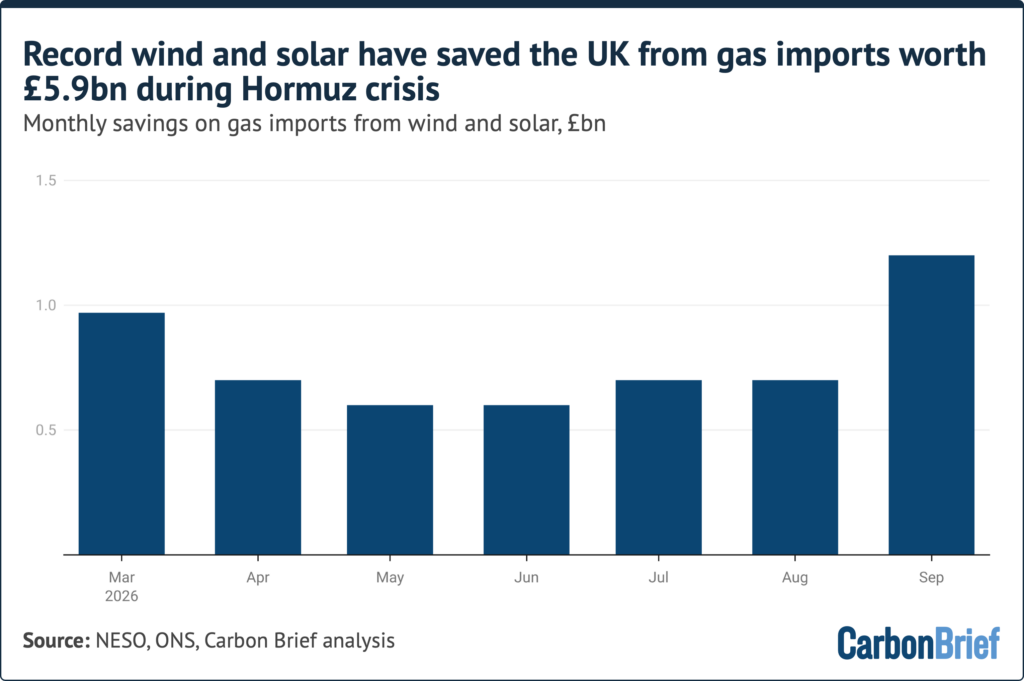
The United Kingdom has successfully avoided the need for natural gas imports worth an estimated £5.9bn since the outbreak of the Hormuz crisis, shielded by a historic surge in domestic generation from wind and solar power. New analysis published by Carbon Brief reveals that unprecedented output from renewable sources has cushioned the British energy grid against extreme international market shocks, even as geopolitical turmoil in the Middle East drives global fossil fuel prices to heights not witnessed since the 2022 European energy crisis.
While wholesale energy markets reel from the ongoing conflict in the Middle East following the escalation in early 2026, the UK’s transition toward green energy has delivered tangible economic and energy security benefits. Wind and solar installations across the country have delivered a 14% year-on-year increase in power generation for 2026 to date, directly depressing the demand for gas-fired electricity, which has fallen by nearly 10% over the same timeframe.
Overall, wind and solar have captured a record-breaking 41% share of the UK’s total electricity needs through 2026 to date, easily outpacing gas generation, which accounted for 25% of the power mix. The scale of the renewable surge has shielded the national economy from staggering import costs, preventing a scenario that would have required the procurement and delivery of more than 100 additional liquefied natural gas (LNG) tanker shipments to British shores.
Surging Global Gas Prices and Winter Pressures
The financial savings have accumulated rapidly over recent months, driven higher by compounding market pressures. In September 2026 alone, monthly import savings reached an impressive £1.3bn, the combined result of near-term wind and solar output hitting nearly 10 terawatt-hours (TWh) and soaring wholesale gas prices.
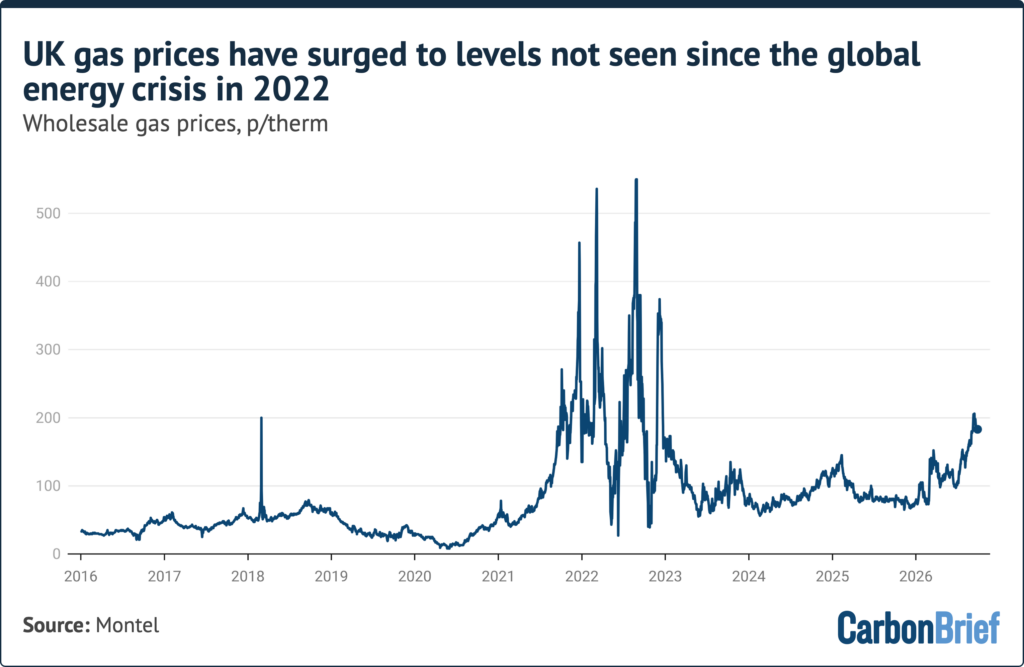
These market dynamics trace their roots back to the structural shocks that began when Russia choked off pipeline supplies to Europe following its invasion of Ukraine in 2022. From 2023 through the beginning of this year, British gas prices hovered at an average of 90p per therm—roughly triple the baseline prices seen in 2019 before the combined disruptions of the Covid-19 pandemic and the war in Ukraine.
However, the outbreak of conflict involving the US and Iran in the Middle East in February and March 2026 propelled prices upward once again. Gas averaged 134p per therm—nearly four times pre-crisis 2019 levels—before climbing further. By September 2026, wholesale gas prices averaged 189p per therm, marking the highest sustained levels since the height of the global energy crunch four years prior.
Market analysts note that prices are climbing steeply once again as the Northern Hemisphere approaches winter, a seasonal period characterized by heightened demand for residential and commercial heating. Compounding the issue, European natural gas storage inventories remain unusually low, setting the stage for an intense international tug-of-war between Europe and Asia as both regions scramble to secure the limited global cargoes of LNG necessary to stave off shortages during the cold months ahead.
The Divergence in Household Energy Bills
The impact of these global market volatility metrics is being felt acutely by British consumers, though the burden is falling unevenly across energy vectors. Under the regulatory price caps set by energy watchdog Ofgem, soaring wholesale gas prices are translating directly into higher heating bills for households.
According to projections from the public policy think tank Nesta, typical household gas bills are slated to jump by 33%—amounting to roughly an additional £200 per year compared to April levels. Conversely, household electricity bills have risen by a modest 4% over the same period. Energy experts attribute this stark divergence directly to the insulating effect of growing domestic clean-energy generation, which has begun to alter traditional market dynamics.
Andrew Sissons, director for sustainable future at Nesta, highlighted the shifting economic landscape on social media, pointing out that the historic link between electricity pricing and international gas markets has finally begun to break down for consumers.
The economic fallout from the Hormuz crisis has extended far beyond the gas sector, affecting oil, diesel, and other refined petroleum products globally. Reports indicate that the European Union has absorbed an estimated €100bn in extra fossil-fuel import costs since the onset of the crisis, with low- and middle-income importing nations bearing an especially heavy financial toll.
Within the UK, retail diesel prices have climbed to record highs approaching £200 per litre. In contrast, recent analyses underscore the stark operational savings offered by electrification, with electric vehicles proving up to nine times cheaper to drive than their petrol or diesel equivalents.

Political Response and the Push to Decouple Prices
The ongoing vulnerability of domestic consumers to international commodity shocks has taken center stage in national politics. Addressing the Labour Party conference, Energy Secretary Miatta Fahnbulleh emphasized that the root cause of elevated energy bills lies in the nation’s historical exposure to volatile global fossil-fuel markets.
Prime Minister Andy Burnham echoed these sentiments during his own conference address, pointing to the rapid expansion of renewable infrastructure as a vital shield against external price spikes. Burnham confirmed that he has instructed the Department for Energy Security and Net Zero to accelerate efforts to decouple domestic electricity pricing from the international gas market.
"We are already taking more control of our electricity prices with a massive expansion of home-grown renewables and nuclear," Burnham told party delegates. "I have asked Miatta to speed up the breaking of the link between what we pay for power at home and the international gas market, to get bills down."









No comments yet. Be the first to join the conversation!