

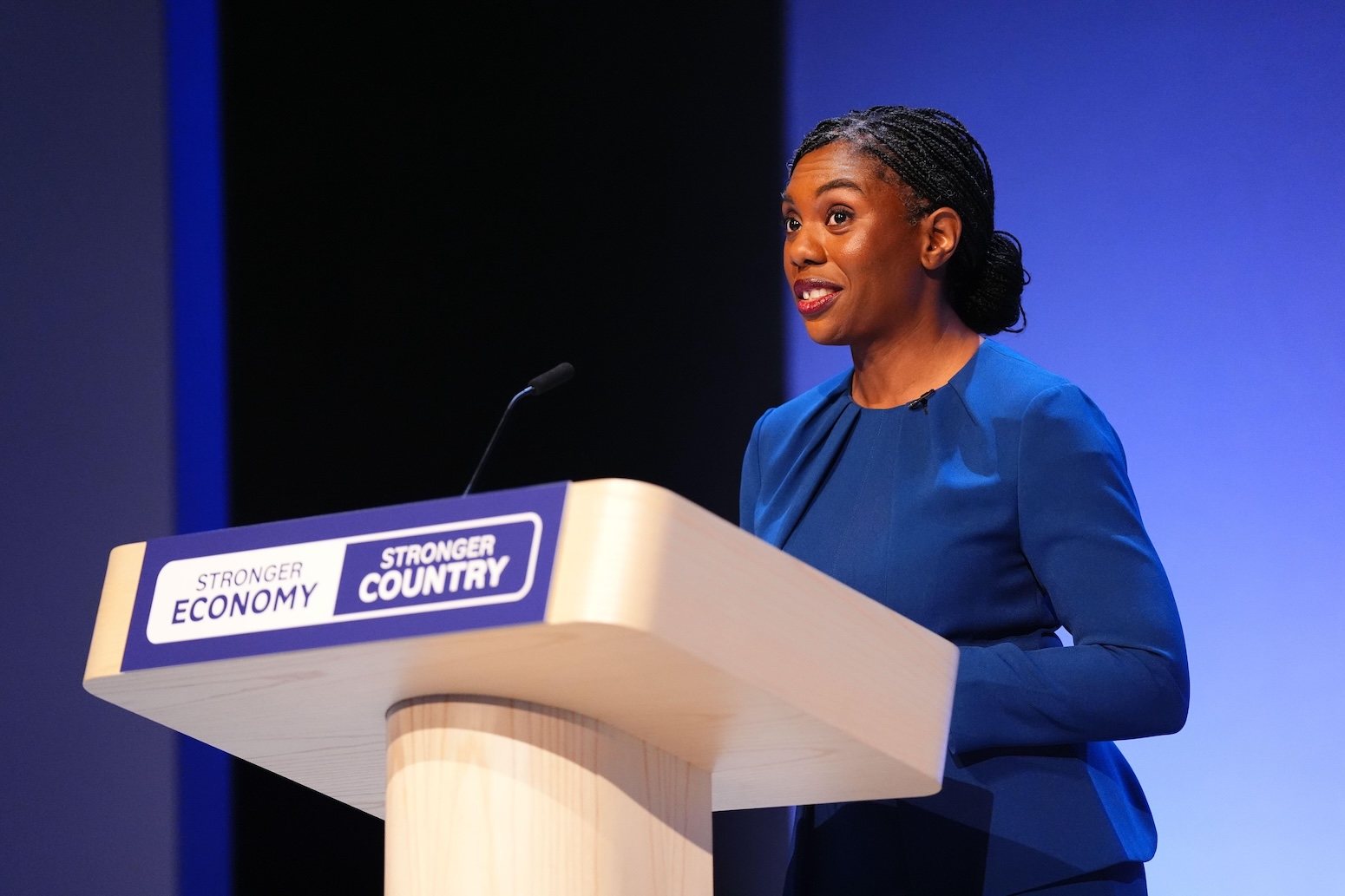
A policy document recently published by the UK’s opposition Conservative Party has sparked scrutiny after it was revealed to contain a major statistical error regarding the financial cost of achieving net-zero carbon emissions. The party’s flagship "common sense" policy booklet, titled "The Right Way," argues that the public ultimately desires a government capable of solving the practical problems for which it takes responsibility, while cautioning that sophisticated economic modeling should never act as a substitute for grounded political judgment.
Within its pages, the document attempts to critique and disparage various estimates surrounding the financial burden of transitioning the United Kingdom to a net-zero economy. However, in doing so, it erroneously claims that the Climate Change Committee (CCC)—the government’s official independent adviser on climate policy—pegged the baseline cost of reaching net-zero at nearly £1 trillion. Specifically, the Conservative booklet asserts that in 2020, the CCC estimated its designated route to net-zero would total £957bn.
That figure, however, is entirely incorrect. The actual estimate published by the CCC in its comprehensive 2020 assessment was exactly half that amount, standing at £478bn. Furthermore, subsequent revisions published by the committee last year lowered that projection significantly to £108bn, a reduction driven largely by the rapidly falling costs associated with electric vehicles and low-carbon infrastructure.
Tracing the Spreadsheet Error
The root of the Conservative Party’s inflated figure appears to trace back to an accidental misinterpretation of raw data tables contained within a spreadsheet published by the CCC alongside its 2020 Sixth Carbon Budget advice.
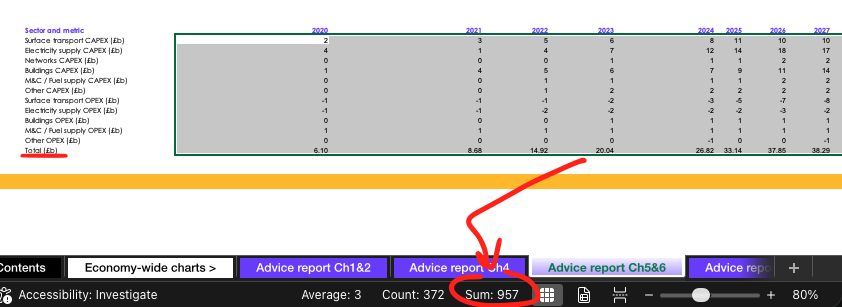
That specific spreadsheet features detailed breakdowns of the additional capital investments required to build a net-zero economy across multiple decades, spanning everything from low-carbon electricity generation to domestic heat pumps and electric vehicles. These extra capital expenditures, designated as CAPEX, totaled £1.38tn over the thirty-year period between 2020 and 2050. Set against these costs were projected operational savings, categorized as OPEX, which amounted to £0.90tn over the same timeframe.
When combining the distinct capital expenditures and operational savings across the 2020 to 2050 timeline, the net total comes to £478bn. The analytical error occurred because the CCC spreadsheet included a summary row listing the combined gross totals for individual years alongside the cumulative sectoral figures. An external analyst apparently added all of these figures together without accounting for the pre-existing annual totals, inadvertently counting the economic costs and operational savings twice.
This double-counting mechanism yielded a grossly distorted total of £957bn for the cost of net-zero, which subsequently found its way into public policy literature.
When the CCC originally published its findings in 2020, it emphasized that the true net cost of £478bn represented less than one percent of the United Kingdom’s total gross domestic product over a thirty-year span. Moreover, the committee noted that the massive capital investments required would generate substantial savings by slashing reliance on volatile fossil-fuel imports, ultimately boosting overall GDP by approximately two percent.
Subsequent modeling by the committee reinforced these projections. In updated assessments, the CCC adjusted its investment cost and operating saving figures to £670bn and £562bn respectively, leaving a net total of £108bn between 2025 and 2050—equivalent to less than 0.2 percent of GDP. Earlier this year, the committee underscored that completing the transition to net-zero would ultimately cost less than a single major fossil-fuel price shock, while delivering direct societal benefits valued at £110bn annually.
The Paper Trail
The erroneous £957bn figure included in the Conservative Party publication is formally referenced to the CCC’s 2020 advice on the UK’s sixth carbon budget, despite that document containing no such figure.

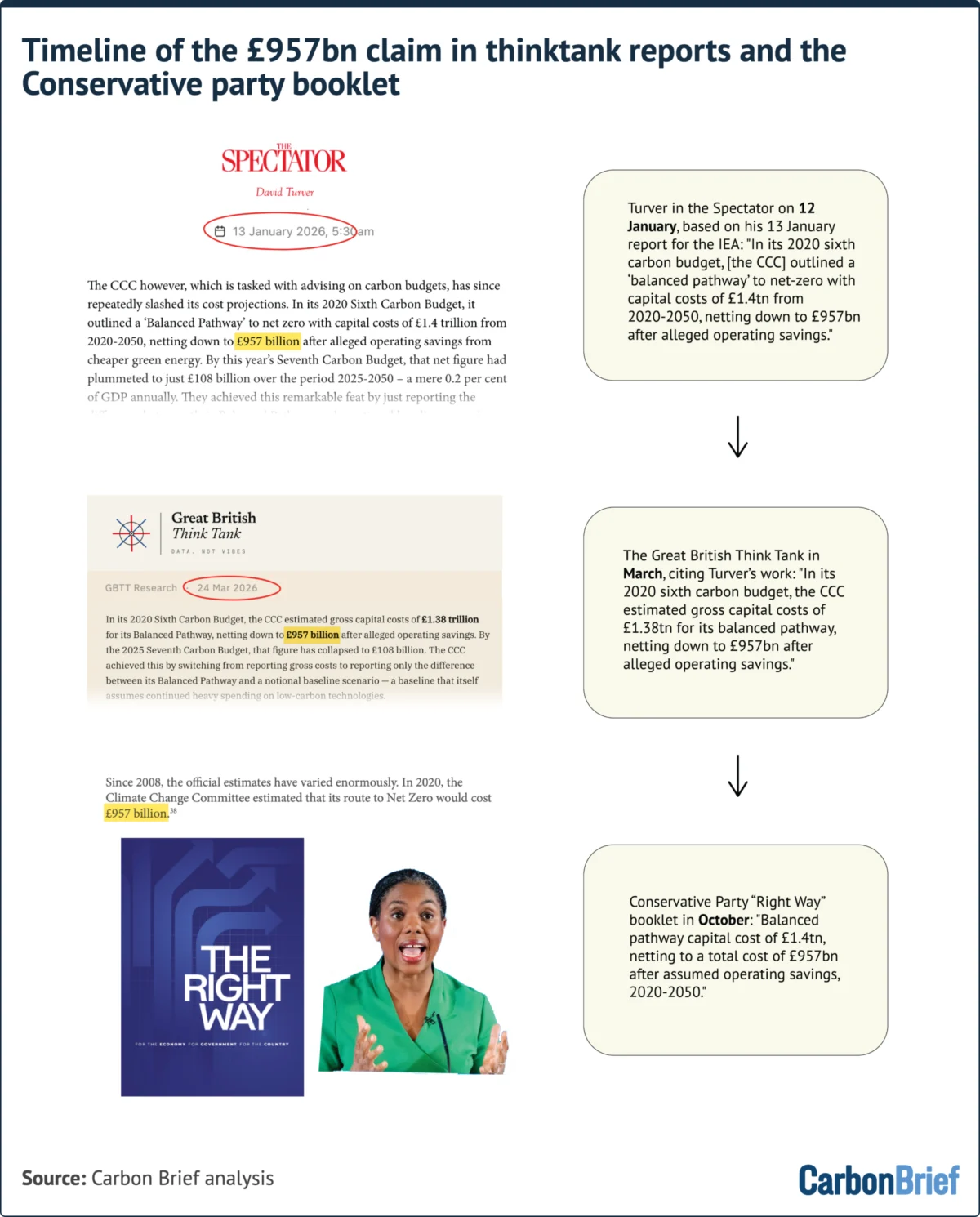
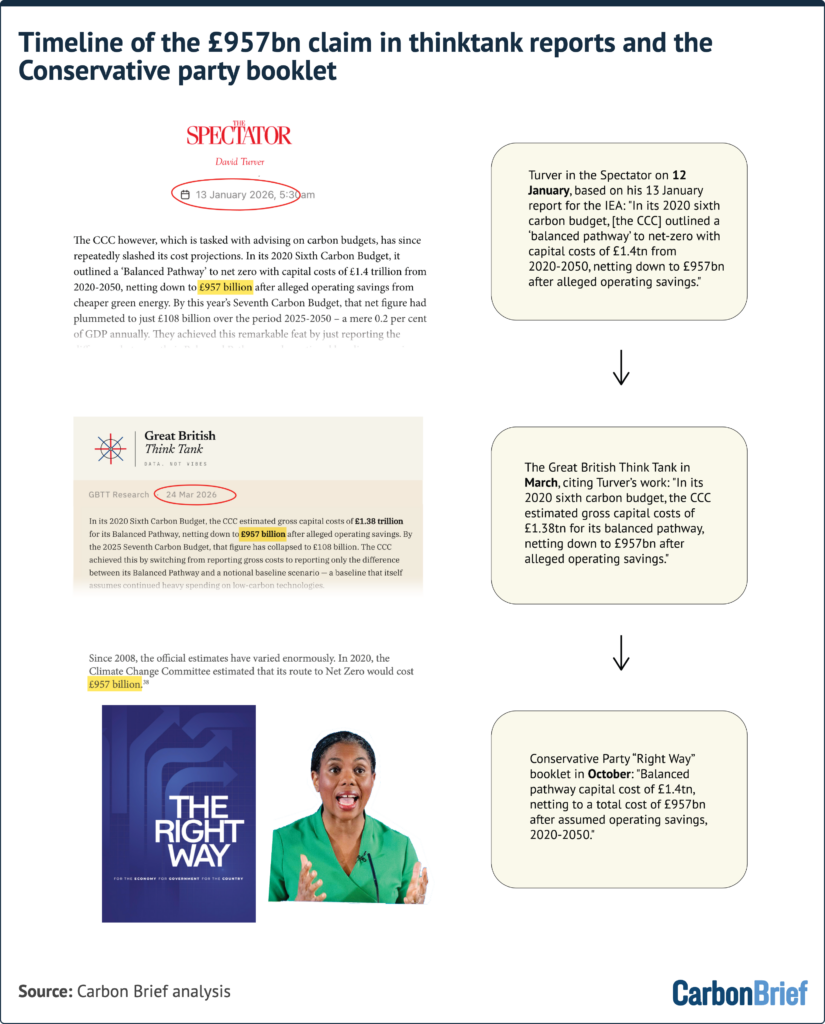
Investigative tracking indicates that the earliest public appearance of the mistaken £957bn statistic online occurred in January 2026, via an article published in The Spectator authored by retired engineer and self-described energy analyst David Turver. Just one day later, Turver repeated the inflated figure within a formal report authored for the free-market Institute of Economic Affairs, explicitly citing figure 5.3 of the CCC’s 2020 advisory documents.
Because the underlying spreadsheet for figure 5.3 totals only £478bn, the report relied on the double-counted sum generated by summing the annual totals row. This initial miscalculation subsequently triggered a broader ripple effect across various policy circles. Additional reports generated even higher, heavily skewed headlines claiming that net-zero would cost between £7.6tn and £9tn, figures derived from auxiliary assumptions treating essential infrastructure like fossil fuels, internal combustion cars, household boilers, and power plants as having zero replacement or operational value.
Following Turver’s publications, the £957bn figure was repeated in March by the Great British Think Tank, an organization whose operational ethos centers on utilizing data rather than political sentiment and sourcing figures strictly from official public bodies. By October 2026, the statistic was formally integrated into the Conservative Party’s "Right Way" policy booklet, cementing the spreadsheet error into mainstream political debate surrounding the future of the UK’s climate commitments.









No comments yet. Be the first to join the conversation!