

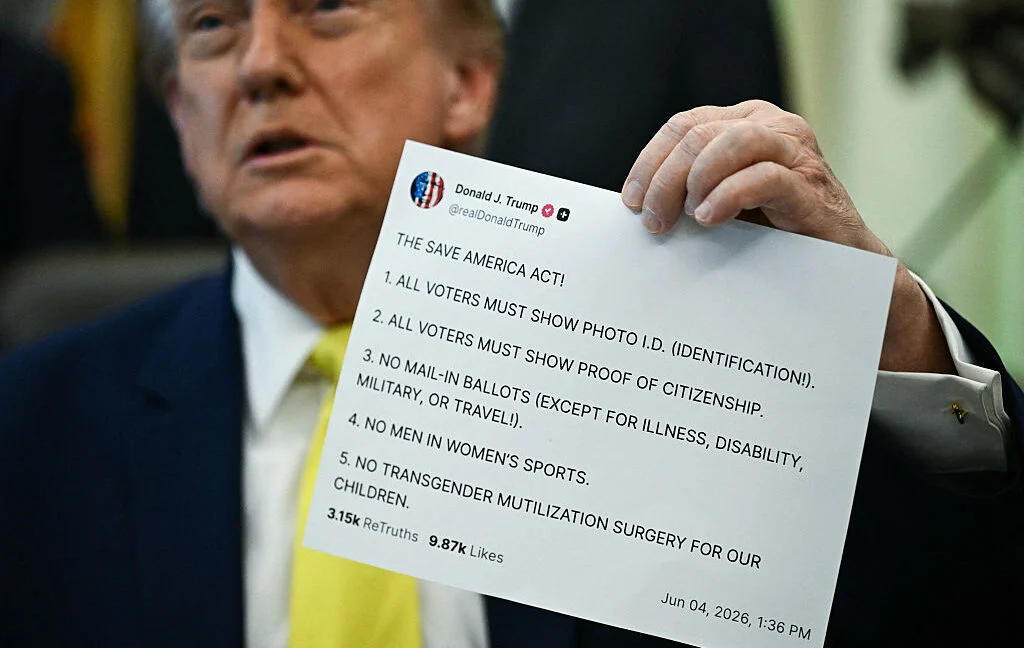
In the coming weeks, a federal judge is expected to issue a pivotal ruling that could determine whether a sitting president may legally profit from the sale of early access to government information. The case, which centers on the controversial practice of charging up to $100,000 monthly for API access to President Donald Trump’s social media posts on Truth Social, has sparked a high-stakes legal battle over the intersection of presidential communications, administrative transparency, and constitutional law.
The litigation, brought by a coalition of news organizations, challenges the propriety of the Trump Media & Technology Group—the parent company of Truth Social, of which the president is the majority owner and largest stakeholder—monetizing direct streams of information that frequently serve as the primary conduit for major policy announcements, ranging from military strikes and ceasefires to significant shifts in trade and immigration policy.
During a hearing held on Wednesday, Department of Justice civil attorney Brantley Mayers defended the administration’s position, asserting that there is no conflict of interest in the current arrangement. The DOJ’s stance holds that the president’s personal social media feed functions as an unvarnished public service rather than a commercial endeavor, dismissing concerns that the exorbitant fees constitute a breach of ethics or constitutional mandates.
The Constitutional Challenge
The legal challenge filed by the news organizations argues that the pay-to-play model for government information creates an unprecedented tier of access that undermines the democratic process. Plaintiffs contend that the practice violates the First Amendment, which protects the public’s right to access government information, and the Presidential Records Act, which governs the management of documents and communications produced by the executive branch.
Central to the argument is the assertion that the information contained within these posts is inherently public and government-owned, despite being hosted on a private platform. By placing this information behind a $100,000-per-month paywall, the plaintiffs argue that the administration is effectively privatizing government transparency.
Furthermore, the lawsuit invokes the Fifth Amendment, arguing that the government is prohibited from charging "unreasonable sums that cannot be justified to offset the cost of the government benefit." The plaintiffs suggest that the API fees are arbitrary and irrational, designed to grant preferential access to high-paying entities while excluding smaller news outlets and the general public from timely access to critical national information. By leveraging the president’s official role to drive up the value of his private company’s proprietary API, the plaintiffs argue that the administration has created a system that prioritizes profit over the equitable dissemination of public interest information.
The "Fireside Chat" Defense
During Wednesday’s proceedings, the DOJ’s defense drew a controversial comparison between the current social media strategy and the historic communication methods of Franklin D. Roosevelt. Attorney Brantley Mayers likened the president’s Truth Social posts to Roosevelt’s "fireside chats," arguing that both served as a direct line of communication between the leader and the citizenry.
By framing the posts as a public service, the DOJ sought to characterize the revenue generated through the API access as a secondary, incidental aspect of a broader mission to communicate directly with the American people, bypassing traditional media filters. Mayers emphasized that the administration views the platform as an essential tool for unmediated governance, arguing that the monetization of the API does not detract from the fundamental nature of the message being delivered.
However, the comparison faced immediate skepticism from U.S. District Judge Paul Oetken. When Mayers attempted to elaborate on the historical parallels, Judge Oetken interjected with a pointed question: "Well, President Roosevelt didn’t charge money for his fireside chats, did he?"
The question highlighted a central tension in the courtroom: the difference between the accessibility of government information in the 20th century versus the modern digital landscape. Unfazed, Mayers attempted to bridge the gap by arguing that "barriers to entry" have always existed in the dissemination of presidential communications. He suggested that, much like the economic hurdles that prevented some Americans from owning a radio during the 1930s and 40s, the current API fees represent a modern logistical barrier that does not inherently invalidate the legality of the platform’s business model.
Potential Financial and Ethical Implications
The financial stakes of the case are significant. With the potential to generate upwards of $1.2 million per subscriber annually, the API access represents a substantial revenue stream for the Trump Media & Technology Group. Critics argue that because the value of this access is derived almost entirely from the president’s official actions and announcements, the arrangement effectively allows the president to personally profit from the power and influence of his office.
The news organizations suing the administration emphasize that the core issue is not merely the cost, but the precedent being set. They argue that if a president is permitted to sell exclusive, early access to policy announcements, it creates an environment where those with the deepest pockets gain a structural advantage in reporting and reacting to government actions. This, they contend, fundamentally alters the relationship between the government and the press, creating a two-tiered system of information access that is inconsistent with the principles of a transparent and open democracy.
The DOJ, however, remains steadfast in its defense, maintaining that the president’s private business interests and his official duties are sufficiently distinct under the current framework. The government’s lawyers have argued that the API access provides a technical service to subscribers—allowing for real-time data integration—rather than selling the information itself, which remains viewable to the public on the platform.
The Path Forward
As the hearing concluded, the arguments presented by both sides underscored the profound legal questions at play. Judge Oetken’s decision, expected in the coming weeks, will likely set a significant legal precedent regarding the commercialization of presidential communications in the digital age.
The outcome of this case could force a reevaluation of how federal officials interact with private social media platforms and whether the government can allow its own information to be gated behind high-cost commercial barriers. If the court rules in favor of the plaintiffs, it could strike a significant blow to the business model of Truth Social’s API and force the administration to reconsider its policy on how government news is disseminated. Conversely, a ruling in favor of the government would likely cement the president’s ability to continue monetizing his social media presence, regardless of the criticism regarding potential conflicts of interest or the erosion of equitable public access.
For now, the legal community and the public remain focused on the potential for a landmark ruling that will clarify the boundaries of presidential conduct in an era where the line between a personal social media account and an official government communication channel has become increasingly blurred. The judge’s forthcoming decision will not only impact the specific API fees in question but may also define the scope of presidential accountability and transparency for years to come.




No comments yet. Be the first to join the conversation!