

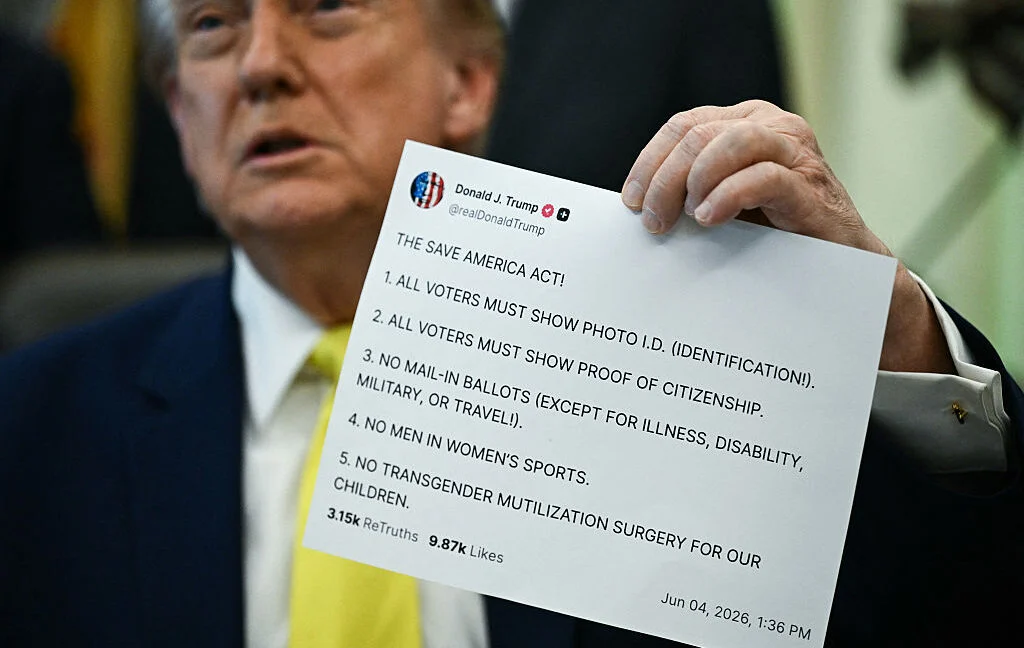
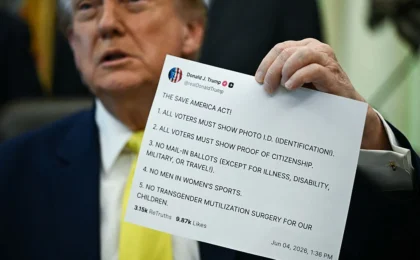
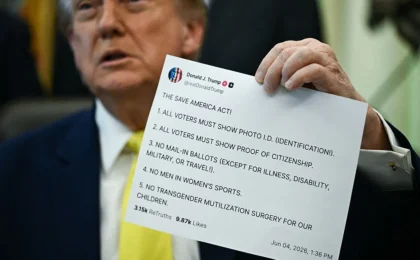
A federal court is poised to issue a decision in the coming weeks that could redefine the intersection of presidential communication, digital property rights, and the potential for personal profit from government information. At the heart of the litigation is a contentious model employed by the Trump administration: charging organizations up to $100,000 monthly for instant API access to Truth Social posts, a platform where President Donald Trump frequently breaks major news regarding military strikes, tariffs, and administration policy.
The core question before US District Judge Paul Oetken is whether a sitting president can monetize access to official government announcements when those announcements are disseminated through a private platform in which the president holds a majority stake. Should the court rule against the administration, it could mark the first time a president is effectively barred from personally profiting from the sale of early access to information that arguably constitutes official government record.
The Government’s Defense of the Pay-to-Play Model
The legal battle reached a critical juncture this past Wednesday during a hearing where Department of Justice civil attorney Brantley Mayers sought to justify the exorbitant fees. Mayers argued before the court that there is no inherent conflict of interest in the current arrangement. He contended that the API access fees are a matter of private enterprise, noting that Donald Trump is the largest stakeholder and majority owner of the Trump Media & Technology Group (TMTG), the parent company of Truth Social.
In the government’s view, the administration’s use of Truth Social is not a mechanism for personal enrichment but rather a modern iteration of historical presidential communication. Mayers explicitly likened the president’s social media feed to the "fireside chats" delivered by Franklin D. Roosevelt in the 1930s and 1940s. By characterizing these posts as an "unvarnished public service," the DOJ argued that the platform acts as a direct line of communication between the leader and the public, independent of traditional media gatekeepers.
The argument suggests that the premium API access—which allows subscribers to receive automated, real-time feeds of the president’s posts before they appear on the public web interface—is a service provided by a private corporation, not a government-mandated toll. According to the DOJ, the fact that the platform carries significant political and economic weight does not negate its status as a private media company.
Legal Challenges from Media Organizations
The lawsuit, brought forward by a coalition of news groups, presents a multifaceted challenge to the legality of these fees. The plaintiffs argue that the current system creates a tiered structure of information access that is fundamentally incompatible with the obligations of the executive branch.
Central to their argument is the Presidential Records Act. The media organizations contend that when the president uses a social media platform to announce significant policy shifts—ranging from immigration directives to international ceasefire negotiations—those posts effectively function as official records. By gating the immediate dissemination of this information behind a $100,000 monthly firewall, the plaintiffs argue that the president is restricting the public’s ability to access government information through a bottleneck that he personally controls and profits from.
Furthermore, the legal complaint invokes the First Amendment, suggesting that the administration is unconstitutionally prioritizing certain information consumers over others. The plaintiffs argue that this creates an uneven playing field, where only the wealthiest news organizations or corporations can afford to receive critical, time-sensitive information, thereby distorting the public square.
Perhaps the most significant legal hurdle for the administration involves the Fifth Amendment. The news groups argue that the fee structure is an unreasonable imposition on the public. They contend that the government is prohibited from "charging unreasonable sums that cannot be justified to offset the cost of the government benefit." By granting preferential access to what they term "crucial government information" for reasons they describe as "arbitrary and irrational," the administration is allegedly violating the basic tenets of fair government access.
The Judicial Interruption
The courtroom dynamic took an unexpected turn when the DOJ attempted to bolster its "fireside chat" analogy. When Mayers argued that the social media feed was merely a modern version of FDR’s radio addresses, Judge Paul Oetken intervened to highlight the glaring discrepancy between the two eras.
"Well, President Roosevelt didn’t charge money for his fireside chats, did he?" Judge Oetken asked, cutting the government attorney off mid-argument.
The question underscored the central tension of the case: the difference between broadcast technology that reached the masses for free and a proprietary API system designed to extract high-dollar rents from the news industry. In response, Mayers attempted to bridge the gap by arguing that "barriers to entry" have always existed in media. He posited that just as some news organizations today cannot justify the $60,000 to $100,000 monthly cost for Truth Social’s API access, many Americans in the 1930s and 40s could not afford the radios necessary to hear Roosevelt’s voice.
However, the comparison faced immediate scrutiny. The plaintiffs pointed out that the "barrier" in the 1930s was the cost of hardware, which was a result of market limitations rather than a deliberate policy choice by the Roosevelt administration to charge listeners for the right to hear the President. In contrast, the current Truth Social model is an intentional, artificial scarcity created by the platform owner to monetize the presidency’s digital output.
Potential Financial and Ethical Implications
The financial stakes of the case are significant. With subscription costs reaching up to $100,000 per month, the potential for personal profit is immense. Estimations provided during the proceedings suggest that if the current model remains unchecked, the president could stand to make up to $1.2 million per subscriber annually. Because the value of this API access is derived almost exclusively from the president’s role in shaping government policy, the line between personal wealth and executive duty becomes increasingly blurred.
The news groups argue that because the president does not "technically own" the government information he disseminates—rather, he is a steward of it—the act of selling that information creates a unprecedented conflict of interest. The lawsuit asserts that when the president’s financial interest in his media company aligns with the speed at which his policies are broadcast, the public interest is sidelined.
As the case moves toward a final decision, the ruling is expected to have far-reaching consequences for how future administrations interact with digital media platforms. If Judge Oetken finds that the fees violate the law, it would effectively curtail the ability of public officials to utilize private media holdings as profit centers for government-related information. Conversely, a ruling in favor of the administration could establish a legal precedent that allows for the commercialization of presidential communications, provided they are hosted on private digital infrastructure.
The legal teams for both sides are now preparing for the final stages of the trial, with the judge’s forthcoming decision likely to serve as a landmark ruling on the reach and limitations of presidential authority in the digital age. As it stands, the court is currently evaluating the extent to which the government can justify the commercial gatekeeping of official announcements, a debate that has brought the transparency of the current administration into sharp focus. With no clear precedent for a president profiting from the API of their own media platform, the final ruling will likely be scrutinized not just for its legal reasoning, but for its impact on the transparency and accountability of the executive branch moving forward.




No comments yet. Be the first to join the conversation!