

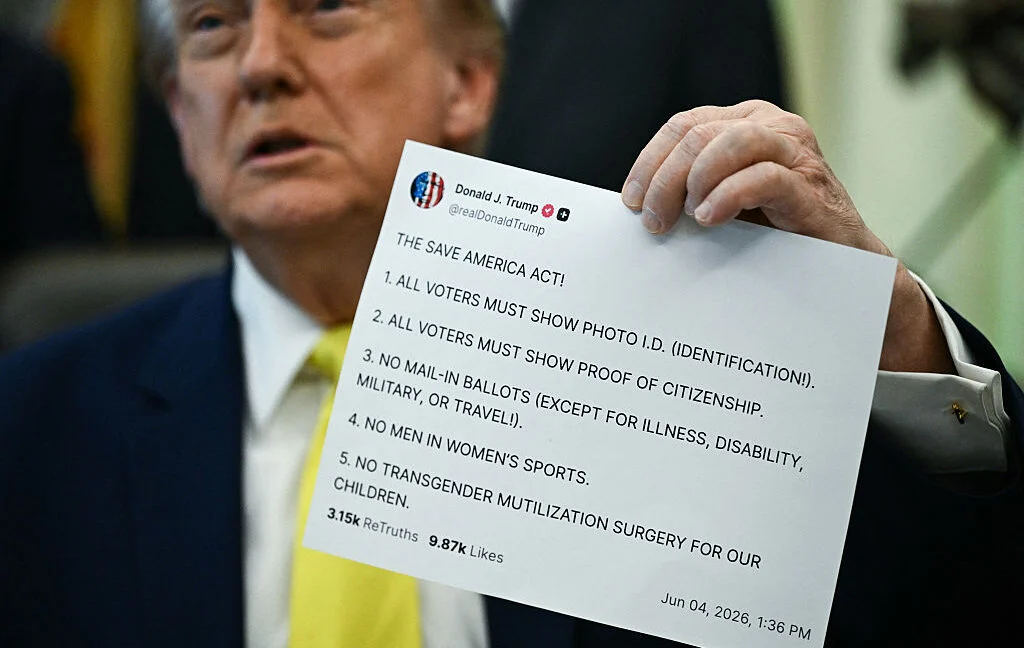
In a landmark legal challenge that touches upon the intersection of modern digital technology, executive transparency, and the potential for presidential profiteering, a federal judge is expected to rule within the coming weeks on whether Donald Trump can continue to monetize access to government information. At the heart of the dispute is the president’s role as the majority owner of Trump Media & Technology Group, the parent company of Truth Social, which currently charges entities up to $100,000 per month for instant API access to the president’s social media feed.
The controversy reached a focal point during a hearing this past Wednesday, where the Department of Justice (DOJ) mounted a vigorous defense of the practice. Brantley Mayers, representing the government as a civil attorney, argued before U.S. District Judge Paul Oetken that the tiered access system—which allows paying subscribers to receive real-time notifications of presidential announcements—presents no conflict of interest. The DOJ’s position is that the president’s social media activity functions as a modern-day iteration of the "fireside chat," providing an unvarnished window into executive decision-making.
However, the legal coalition of news organizations bringing the suit sees the arrangement differently. They argue that by placing government news behind a prohibitively expensive paywall, the administration is violating fundamental constitutional and statutory principles. The complaint asserts that the practice contravenes the First Amendment by creating discriminatory tiers of access to information that is inherently public in nature. Furthermore, the plaintiffs contend that the fees violate the Presidential Records Act, as the posts contain official government business that, by law, should not be subject to private commercial ownership or restricted access.
The Constitutional Challenge and the "Fireside Chat" Defense
The core of the plaintiffs’ argument rests on the Fifth Amendment, specifically the prohibition against the government charging "unreasonable sums" that lack justification and the granting of preferential access to vital information for arbitrary reasons. The news organizations maintain that because the value of the Truth Social API is derived almost entirely from Trump’s status as president, the platform is essentially selling exclusive, early access to government policy. When the president uses the platform to announce military strikes, shifts in immigration policy, tariff implementations, or diplomatic ceasefires, those announcements carry the weight of state authority. By forcing media outlets and other interested parties to pay exorbitant fees to receive these updates instantaneously, the administration is arguably creating a system where the ability to report on government activity is contingent upon one’s capacity to pay a private corporation.
During the Wednesday proceedings, the DOJ attempted to frame the president’s digital footprint as a public service rather than a commercial enterprise. Mayers drew a direct comparison to the radio broadcasts of Franklin D. Roosevelt, suggesting that the president’s Truth Social posts perform the same civic function as the "fireside chats" of the 1930s and 40s. According to the DOJ, the president is merely utilizing a modern medium to communicate directly with the American public, and the existence of a high-cost API tier does not undermine the character of that communication.
This historical comparison, however, met with skepticism from the bench. Judge Oetken interrupted Mayers’ argument to pose a direct and challenging question: "Well, President Roosevelt didn’t charge money for his fireside chats, did he?"
The question highlighted the stark difference between the public radio broadcasts of the past and the current digital architecture managed by a company in which the president holds a majority stake. Mayers responded by suggesting that the "barriers to entry" for the fireside chats were effectively the same as those facing the public today. He argued that just as some citizens in the 1930s and 1940s could not afford the radios necessary to hear the president speak, today’s news organizations may find themselves unable to afford the $60,000 to $100,000 monthly fee for Truth Social’s API. In the view of the DOJ, the cost is not an impediment to public service but rather a market-driven reality of the technology utilized to distribute the president’s message.
Profiteering vs. Public Communication
The financial implications of the current arrangement are significant. With the API access fees potentially netting up to $1.2 million per subscriber annually, the case raises questions about the definition of presidential property. The plaintiffs argue that the information being sold—government policy, executive orders, and national security updates—is not the personal property of Donald Trump. They contend that the administration is leveraging the office of the presidency to generate private revenue, a practice that the news groups claim is unprecedented in American history.
The suit underscores a growing anxiety among media organizations regarding how digital gatekeeping affects the democratic process. When a president relies on a private social media platform for official communications, the terms of service of that platform can dictate who gets to see—and report on—the news first. By charging a high premium for "instant" access, the administration is arguably prioritizing the interests of wealthy subscribers over the general public’s right to timely access to government information.
The DOJ, however, remains steadfast in its defense of the status quo. The government’s legal team has maintained that the president’s use of Truth Social is a private expression of his office and that the financial arrangement is a matter of corporate management by the parent company, rather than a matter of government policy. The DOJ’s strategy appears to rely on the argument that the president has the discretion to choose the platform for his communications and that the associated costs are a byproduct of the platform’s business model rather than a government-imposed fee.
The Road to a Ruling
As the hearing concluded, the tension between the legal arguments regarding the First and Fifth Amendments and the administration’s characterization of its communication strategy remained unresolved. The judge’s intervention regarding the historical precedent of presidential communications signals that the court is closely scrutinizing whether the current digital landscape warrants a departure from long-standing norms of transparency.
The pending decision by Judge Oetken carries weight that extends far beyond the immediate financial dispute. A ruling in favor of the news organizations could set a precedent that restricts how government officials interact with private platforms when those interactions involve the dissemination of official information. Conversely, a ruling in favor of the government could solidify a new standard in which access to presidential communications is increasingly treated as a luxury commodity.
For now, the legal teams have concluded their arguments, leaving the court to deliberate on the merits of the suit. The case continues to highlight the complex and often murky legal terrain of the digital age, where the line between a private individual’s social media account and the official communications channel of the President of the United States has become increasingly blurred. As the nation awaits the ruling, the central question remains: to what extent can the executive branch prioritize its own digital infrastructure over the public’s fundamental right to unfettered, timely access to government information? The answer, as it emerges in the coming weeks, will likely shape the relationship between the presidency, the media, and the public for years to come.




No comments yet. Be the first to join the conversation!