

The web development ecosystem is experiencing a wave of significant updates, highlighted by major framework milestones, architectural overhauls aimed at cost reduction, and innovative extensions for agentic coding tools. From the long-awaited release of Preact 11 to a complete rewrite of the Effect library and strategic optimizations from major tech enterprises, developers have a wealth of new tools and architectural strategies to evaluate for their modern web applications and infrastructure pipelines.
Leading the framework updates, the Preact team has officially announced the launch of Preact 11. Arriving six years after the community first set out on the roadmap toward this major version, the latest iteration of the popular alternative to React maintains the same modern API while introducing powerful internal enhancements. Among the standout improvements in Preact 11 are refined hydration techniques, automatic ref forwarding, and a transition to an ECMAScript Modules (ESM)-only package structure. These updates are designed to streamline modern build processes, reduce friction when integrating with contemporary packaging tools, and improve server-side rendering performance. Developers looking to adopt the new version can consult the comprehensive upgrade guide provided by the maintainers to navigate the transition smoothly.

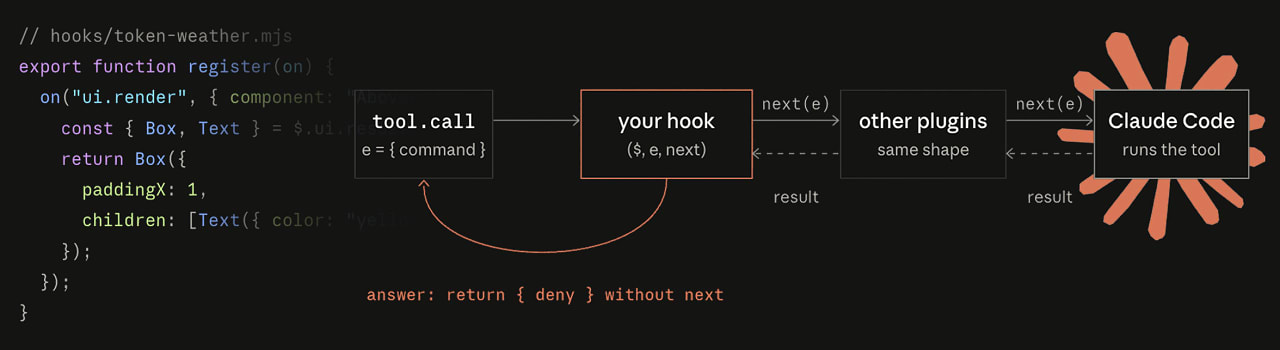
In parallel with framework evolutions, the landscape of agentic coding tooling continues to expand rapidly. Addy Osmani has introduced support for Claude Code Mods, an extensible feature designed to let developers customize and monitor agentic coding environments using JavaScript. By writing custom mods, developers can observe runtime events, dynamically alter agent behaviors, and inject custom user interfaces directly into their development workflow. Demonstrating the flexibility of the new system, Osmani built a functional mod in roughly eighty lines of code that renders a live, real-time forecast of the agent’s context window usage, offering a glimpse into how developers might increasingly tailor their AI-assisted engineering environments.
Infrastructure costs and architectural performance optimization also remain a top priority for enterprise engineering teams. Ilya Malyavin shared insights from Booking.com detailing how the company successfully cut its Node.js service costs by thirty-eight percent. The substantial savings were achieved by moving away from PM2 and transitioning to Watt’s worker threads, alongside a thorough overhaul of load balancing strategies and worker configurations. This real-world case study underscores the financial and computational benefits of re-evaluating core runtime process managers and thread execution models at scale, particularly for high-traffic web services.

Type safety and language ergonomics continue to inspire innovative community tooling across the JavaScript and TypeScript ecosystems. Rahul M. Juliato published an exploration of readable regular expressions for TypeScript, drawing conceptual inspiration from Emacs to rebuild the complex Standard Versioning regular expression out of named, composable pieces. By breaking down intricate pattern matching into distinct, understandable modules, developers can write more maintainable and self-documenting validation logic. Similarly, Radosław Miernik delved into the mechanics of automatic type refinements in TypeScript, analyzing which specific filter callbacks allow the compiler to successfully narrow an array’s type and which configurations fall short, shedding light on the nuances of type inference in everyday functional array operations.
Further pushing the boundaries of high-performance software architecture, Sebastian Lorenz announced the release of Effect 4.0. Representing a ground-by-ground rewrite of the popular library designed for building robust, reliable applications, Effect 4.0 tackles notoriously difficult programming challenges such as complex resource management, concurrency control, retry policies, and typed error handling. The latest version boasts dramatic performance and footprint improvements, featuring a minimal bundle size that is five times smaller than its predecessor and an eighty-six percent reduction in memory usage per concurrent task. These optimizations make the library an increasingly compelling option for resource-constrained environments and high-concurrency backend services.
As the ecosystem continues to grow, developers are also looking toward upcoming collaborative gatherings and advanced workflow automation platforms. The Mozilla Foundation has opened registration for the upcoming Mozilla Festival, inviting developers, technologists, and creatives to gather in Barcelona from October 28th through the 30th to share ideas and connect across disciplines. Meanwhile, platforms like Trigger.dev continue to address the operational demands of modern engineering by offering robust infrastructure for running TypeScript agents and workflows in production, complete with built-in queueing, automated retries, and support for long-running tasks free from traditional serverless timeouts.











No comments yet. Be the first to join the conversation!