

The JavaScript ecosystem is experiencing a significant wave of major releases and architectural shifts, highlighted by the long-awaited debut of Preact 11, a ground-up performance overhaul in Effect 4.0, and the introduction of new extensibility features for agentic coding environments. Together, these updates reflect a broader industry focus on performance optimization, resource efficiency, and tighter integration with modern development tools. From major reductions in infrastructure costs to enhanced type safety and developer flexibility, the latest updates offer developers powerful new ways to build and scale modern web applications.

After six years of development following the initial mapping of its roadmap, the Preact team has officially released Preact 11. Known widely as a lightweight alternative to React that shares the same modern API, Preact has long been a favorite for performance-conscious developers looking to minimize bundle sizes without sacrificing familiar component models. Version 11 brings substantial improvements to the library’s core architecture, including enhanced hydration strategies for server-side rendered applications, automatic ref forwarding to streamline component composition, and a transition to an ESM-only package structure that aligns with modern JavaScript build toolchains. The upgrade guide details these changes to help development teams migrate their codebases smoothly.
In another major performance-focused release, the Effect ecosystem has launched Effect 4.0, featuring a smaller core and a completely rebuilt runtime. Designed to help developers build reliable applications that handle complex operational challenges such as resource management, concurrency, retries, and typed errors, Effect has quickly gained traction in enterprise environments. Sebastian Lorenz reported that version 4.0 boasts dramatic efficiency gains, achieving a fivefold reduction in minimal bundle sizes alongside an 86 percent decrease in memory usage per concurrent task. These improvements make the library significantly more viable for high-throughput backend services and resource-constrained frontend environments alike.

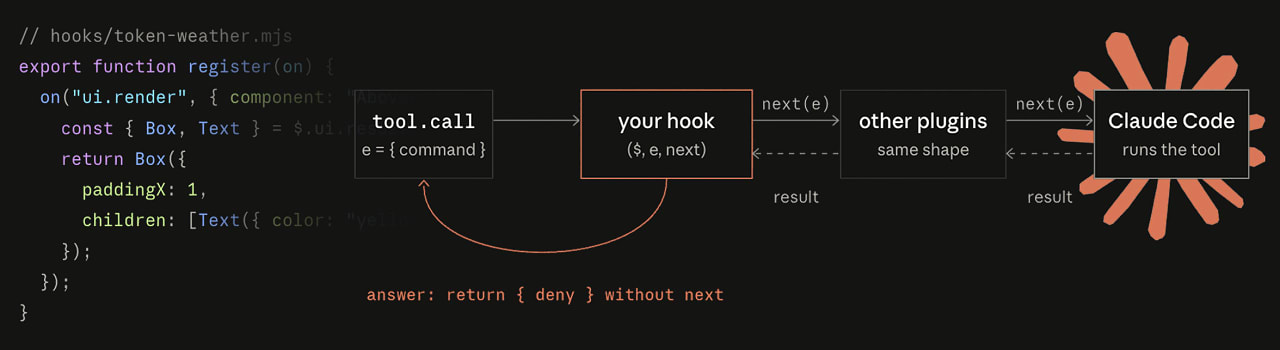
Development environments are also evolving on the agentic tooling front, with Addy Osmani highlighting the introduction of Mods for Claude Code. This new capability allows developers to extend the agentic coding harness using JavaScript, providing hooks to monitor events, modify behavior, and render custom user interfaces directly within the workspace. Demonstrating the flexibility of the new system, Osmani built a custom mod in roughly eighty lines of code designed to display a live forecast of the context window. This kind of extensibility points toward an era where AI-assisted coding tools can be deeply customized to fit individual developer workflows and project requirements.
Infrastructure efficiency continues to be a major priority for large-scale engineering teams, as demonstrated by Ilya Malyavin’s recent insights from Booking.com. The company successfully reduced the operational costs of a major Node.js service by 38 percent through a strategic architectural shift. By transitioning away from PM2 and adopting Platformatic Watt’s worker threads, alongside a comprehensive rework of their load balancing and worker configuration strategies, the engineering team achieved significant financial and computational savings without sacrificing application performance or stability.
Type safety and code readability are also receiving innovative attention across the community. Rahul M. Juliato published an exploration into building readable regular expressions for TypeScript using a composable, named approach inspired by Emacs. By breaking down complex patterns—such as the Semantic Versioning regular expression—into manageable, self-documenting pieces, developers can write maintainable regex logic with robust type backing. Complementing this focus on type systems, Radosław Miernik examined the nuances of automatic type refinements in TypeScript, breaking down precisely which filter callbacks successfully allow the compiler to narrow an array’s type and which fail to do so, helping developers write more predictable and error-free code.
As development practices continue to shift toward high-performance runtimes and intelligent developer tooling, upcoming industry events are providing spaces for the community to connect. The Mozilla Foundation is preparing to host the Mozilla Festival in Barcelona, bringing together developers, creatives, and open-source advocates to share ideas and collaborate on the future of the web. Simultaneously, production infrastructure platforms like Trigger.dev are seeing increased adoption for running complex TypeScript agents and workflows with built-in queueing, robust retries, and support for long-running asynchronous tasks.









No comments yet. Be the first to join the conversation!