

The JavaScript and web development ecosystem is undergoing a significant wave of performance optimization, major architectural overhauls, and enhanced developer tooling. Recent updates from key projects across the industry highlight a concerted push toward leaner runtimes, greater efficiency, and smarter integration with agentic coding environments. From major milestone releases like Preact 11 and Effect 4.0 to innovative approaches in cost reduction at scale and extensible AI coding harnesses, developers have access to an increasingly powerful suite of tools designed to streamline modern application development.

Leading the frontend ecosystem update, the Preact team has officially announced the release of Preact 11, arriving six years after the initial discussions and groundwork began on the long-term roadmap. Preact, widely recognized as a lightweight alternative to React that maintains compatibility with the same modern API, brings several critical improvements in its latest iteration. The new version features enhanced hydration capabilities, automatic ref forwarding to simplify component composition, and a transition to an ESM-only package structure, aligning the library more closely with modern native module standards. The comprehensive upgrade guide details the migration path for teams looking to adopt the new release and leverage its performance benefits in production environments.
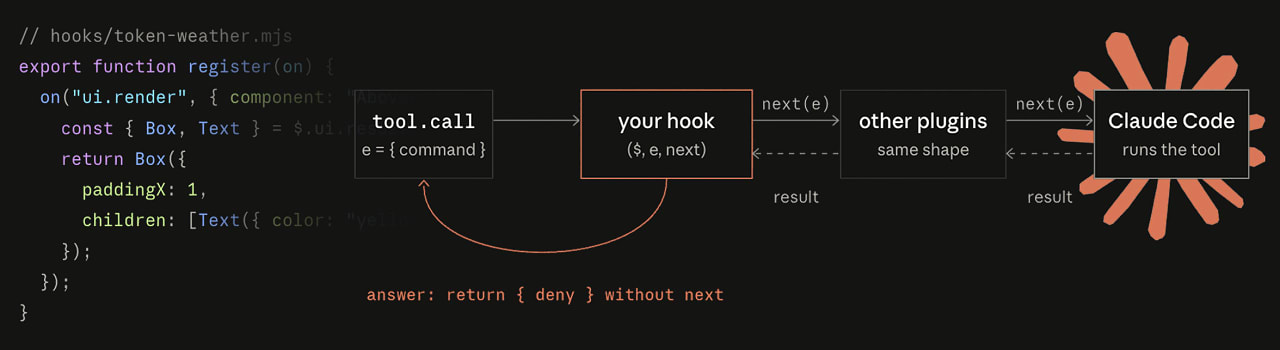
In the realm of developer tooling and artificial intelligence, the landscape is rapidly expanding to accommodate agentic workflows. Addy Osmani recently highlighted the introduction of Mods for Claude Code, a new capability designed to extend agentic coding harnesses using JavaScript. This feature allows developers to observe runtime events, dynamically alter behavior, and render custom user interfaces directly within their development workflow. Demonstrating the flexibility of the system, Osmani built a custom mod in approximately eighty lines of code that provides a live, real-time forecast of the context window, offering developers deeper visibility into how their tools consume resources during complex tasks.

Infrastructure efficiency and cost management continue to be top priorities for large-scale web applications, as demonstrated by engineering teams optimizing massive deployments. Ilya Malyavin detailed how Booking.com successfully cut its Node.js service costs by an impressive thirty-eight percent. This substantial reduction was achieved by transitioning away from PM2 and adopting Platformatic Watt’s worker threads, alongside a thorough restructuring of load balancing and worker configuration strategies. By rethinking how concurrency and resource allocation are managed at the infrastructure layer, the team was able to achieve dramatic financial and performance efficiencies without sacrificing reliability.
Type safety and code readability are also seeing innovative advancements within the TypeScript ecosystem. Rahul M. Juliato shared a novel approach to building readable regular expressions in TypeScript, drawing direct inspiration from Emacs’ rx macro. By reconstructing the standard Semantic Versioning regular expression out of named, composable pieces, the technique demonstrates how complex validation logic can be made significantly more maintainable and self-documenting. Complementing this, Radosław Miernik published an exploration into automatic type refinements in TypeScript, examining precisely which filter callbacks successfully enable the compiler to narrow an array’s type automatically and which patterns fail to trigger the expected type guards.
Further pushing the boundaries of high-performance architecture, Sebastian Lorenz announced the release of Effect 4.0, representing a ground-up rewrite of the popular library designed for building robust and reliable applications. Effect handles complex architectural challenges such as resource management, concurrency, retries, and typed errors. The fourth major version introduces a significantly reduced core and a completely rebuilt runtime, boasting a fivefold reduction in minimal bundle sizes and an eighty-six percent decrease in memory usage per concurrent task, making it an exceptionally attractive option for resource-constrained or high-throughput environments.
The broader developer ecosystem continues to foster collaboration and address production challenges through community gatherings and robust infrastructure solutions. Organizations and creators are preparing for upcoming events such as the Mozilla Festival, scheduled to take place in Barcelona, providing a collaborative space for developers to connect and share innovative ideas. Meanwhile, production platforms like Trigger.dev continue to address the operational complexities of running TypeScript agents and workflows in live environments, offering native support for queues, automatic retries, and the elimination of traditional timeouts for long-running computational tasks.










No comments yet. Be the first to join the conversation!