

The era of government-backed monopolies on global positioning, navigation, and timing is facing an unprecedented commercial challenge. Xona Space Systems, a venture-backed startup seeking to redefine how the world calculates location and time, is preparing to go live with the first precision commercial alternative to the Global Positioning System (GPS). This milestone is set to begin later this month when a SpaceX rocket delivers a batch of six new satellites into low-Earth orbit.
For decades, standard satellite navigation has relied entirely on free signals provided by national governments, including the United States’ GPS, Europe’s Galileo, China’s BeiDou, and Russia’s GLONASS. While these massive analog and digital networks provide incalculable value to the global economy, they also suffer from inherent limitations. Traditional signals are remarkably easy to jam or spoof—a vulnerability that has grown increasingly prominent in modern geopolitical conflicts—and they simply are not precise enough to serve as a standalone navigation solution for advanced applications like agricultural automation, robotics, and autonomous driving.
Challenging a multi-billion-dollar government-run paradigm might seem foolhardy at first glance. However, Xona’s founders believe the opportunity lies not in replacing the free broadcast, but in addressing the urgent performance demands of the hardware market.
Xona was founded in 2019 by a close-knit team of five engineers who originally met in Stanford University’s demanding aerospace engineering graduate program. Among them was Tyler Reid, who went on to complete his PhD by writing a groundbreaking thesis on the vast possibilities of utilizing low-Earth orbit satellites to vastly improve navigation capabilities. During casual "pizza and beer chats" on campus, the friends began to grapple with whether resolving the well-known shortcomings of traditional GPS could form the basis of a viable commercial business.
Reflecting on those early discussions, Xona CEO Brian Manning recalled his initial skepticism during a recent interview at the company’s headquarters. His gut reaction was that the idea was fundamentally flawed, questioning why anyone would ever want to compete with a service that is entirely free. Yet, as he dug deeper into the economics of the industry, his perspective shifted dramatically.
Manning realized that while consumers view GPS as a free utility, the true economic engine of the market is the hardware itself. With billions of devices sold globally every year requiring reliable location and timing data, there is an immense, underserved market desperately searching for vastly superior performance.
Despite recognizing the market demand, translating that vision into a functioning space-based architecture presented formidable technical hurdles. Traditional navigation satellites rely heavily on expensive, heavy onboard atomic clocks to maintain precise time. Xona needed to pioneer a unique architecture that bypassed this requirement. By leveraging the spacecraft’s much closer proximity to Earth and maintaining constant, close communication with reliable ground-based sources of truth, the company successfully engineered a system capable of keeping hyper-accurate time without the traditional hardware burden.

Another critical engineering challenge involved compatibility. Xona needed to ensure that its newly minted signals could be successfully received by existing GPS receivers through a relatively simple software modification. Solving this problem was a major breakthrough, granting the startup immediate access to an existing global market while significantly smoothing the often complex regulatory path required for broadcasting commercial navigation signals.
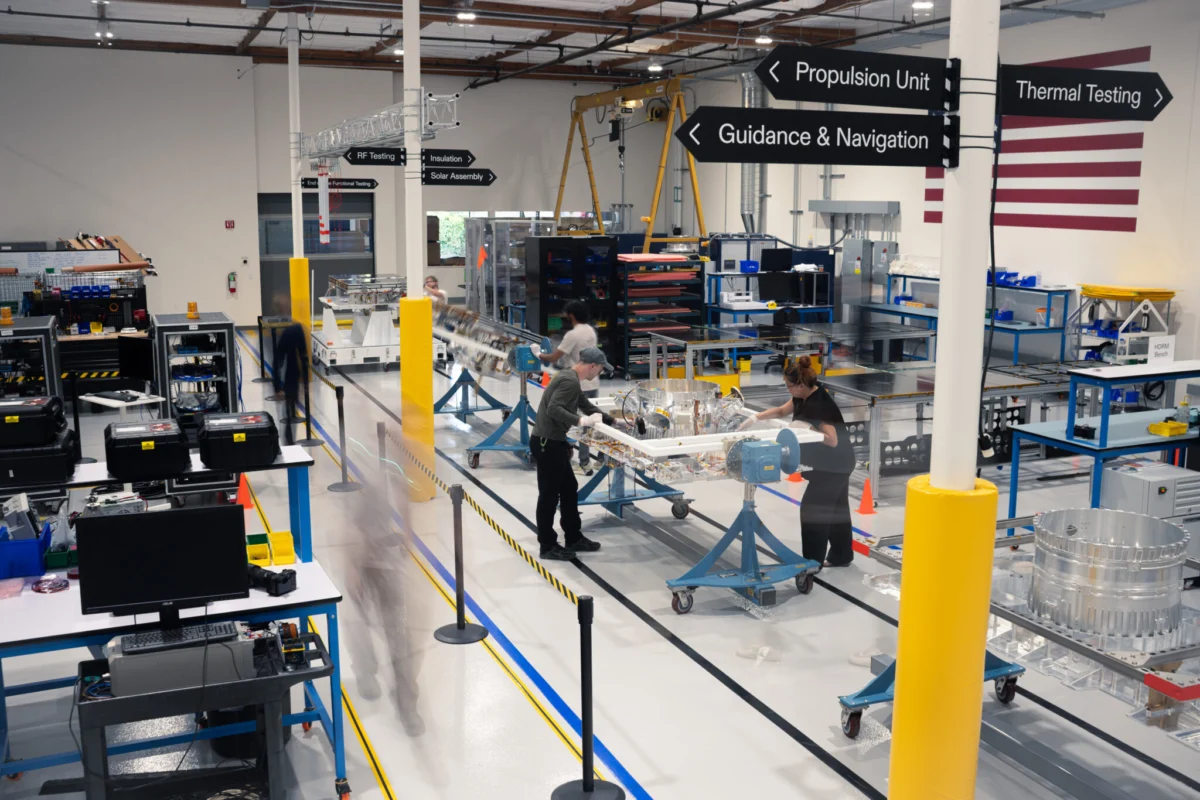
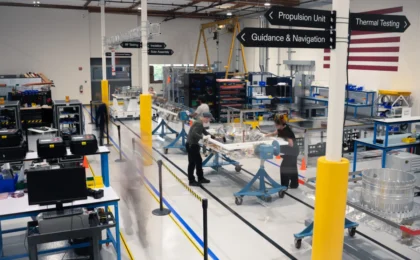
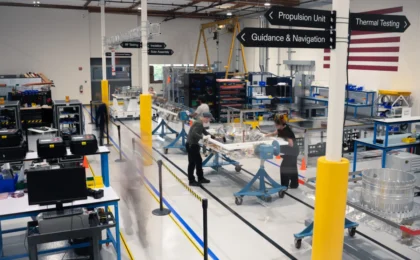
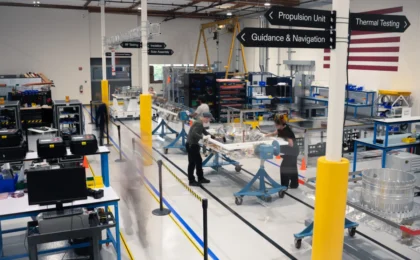
The upcoming SpaceX launch represents a critical inflection point for these technological achievements. Four of the six satellites heading to orbit are iterations of a successful prototype the company launched last year to prove its core concepts in space, built around a robust satellite platform from Aerospace Labs. The remaining two spacecraft were designed and manufactured entirely in-house by Xona at its facility in Burlingame, California. These two internally built units are designed to serve as the structural foundation of the company’s planned 258-satellite operational constellation, which has been christened Pulsar.
Once fully deployed, Pulsar is designed to deliver centimeter-level precision for geolocation, a massive leap forward from the traditional meter-level accuracy provided by conventional GPS. Furthermore, the Pulsar signal is engineered to be powerful enough to penetrate deep inside buildings and dense urban canyons where standard satellite signals routinely fail. Manning also emphasizes that the sheer strength of the signal makes it robust enough to naturally deter would-be adversaries attempting to jam or spoof the navigation data.
Initial validation of the system will commence shortly after the satellites reach orbit and begin passing overhead across the mid-latitudes roughly eight times a day. During this phase, Xona will initiate beta-testing of the Pulsar network with real-world enterprise customers.
Among the early participants is TimeBeat, a specialist firm in electronic timing systems. Ian Gough, the CEO of TimeBeat, noted that this initial pilot program will enable his engineering teams to rigorously check, verify, and correct the timing data provided by their devices deployed all over the world. Looking further ahead, Xona has set an ambitious timeline to achieve full commercial coverage across the United States, Europe, Japan, and South Korea by the year 2028.
To date, Xona has raised just over $300 million from venture capital investors since its inception, a total that includes a $20 million strategic investment from the U.S. Space Force. Although Xona’s primary focus remains commercial enterprise applications, the intense interest from the American defense sector highlights the urgent need for resilient navigation alternatives as electronic interference becomes a routine feature of modern warfare.
Beyond national security and defense, the company is positioning itself squarely at the forefront of the burgeoning autonomy revolution. Tyler Reid, whose doctoral thesis initially inspired the startup and who now serves as Xona’s Chief Technology Officer, spent time working on autonomous vehicle development at Ford Motor Company. During that tenure, he recognized firsthand that technologies like self-driving cars would ultimately require a vastly superior navigation network to safely unlock their full commercial potential.
Back at Xona’s headquarters, the office offers a striking view of commercial airliners regularly touching down at nearby San Francisco International Airport. Gazing out at the incoming jets, Manning draws a parallel between the future of road travel and the rigorous safety standards of the aviation industry. He points out that across all forms of mass transportation, civil aviation remains the undisputed gold standard for safety. By providing autonomous vehicles with the same level of precise, reliable positioning data, Xona hopes to give passengers the confidence to take their hands off the steering wheel and relax just as comfortably as they would reclining in an airline seat.









No comments yet. Be the first to join the conversation!