

The landscape of global satellite navigation is on the verge of a historic shift as Xona Space Systems prepares to launch the first precision commercial alternative to the United States military-backed Global Positioning System. Later this month, a SpaceX rocket is scheduled to lift off carrying six satellites designed and built to fundamentally transform how industries track location, synchronize global networks, and power autonomous technology. For decades, standard satellite navigation has remained a government-run utility, providing free signals to billions of devices worldwide. However, as modern applications demand unprecedented accuracy, reliability, and security, venture-backed startups are increasingly setting their sights on disrupting traditional space monopolies.
The journey toward establishing this commercial alternative began years ago at Stanford University’s aerospace engineering graduate program. In 2019, a tight-knit cohort of five engineers founded Xona after countless casual discussions over pizza and beer, exploring whether they could build a viable business by solving the inherent limitations of legacy networks. One of the co-founders, Tyler Reid, pursued a doctorate specifically focusing his thesis on the potential applications of utilizing satellites in low-Earth orbit to drastically improve modern navigation and timing capabilities.
While traditional networks like GPS—alongside analog satellite constellations operated by Europe, China, and Russia—deliver immense global value, they are not without significant vulnerabilities. These legacy systems are notoriously easy to jam and spoof, posing severe security risks, and they lack the pinpoint accuracy required for advanced, safety-critical applications such as precision farming robots or fully autonomous vehicles. When Xona’s current Chief Executive Officer, Brian Manning, first considered the concept, his initial reaction was skepticism. During a recent visit to the company’s headquarters, Manning recalled thinking that attempting to build a competitor to a globally entrenched, free service sounded counterintuitive.
However, as Manning and his co-founders dug deeper into the economics of the industry, they realized that while the end-user service of GPS is provided free of charge, the true powerhouse of the market lies within the hardware. With billions of devices manufactured and sold every year, manufacturers and developers are desperately seeking vastly superior performance that legacy architectures simply cannot deliver.
Delivering such a high-performance commercial service, however, presented formidable technical hurdles. Improving upon GPS required developing a robust signal capable of offering significantly more precise timing and location data. The engineering team had to invent a unique architecture that enabled their spacecraft to maintain highly accurate time without relying on heavy and prohibitively expensive onboard atomic clocks. They achieved this by cleverly capitalizing on the satellites’ close proximity to Earth and maintaining continuous, low-latency communication with ground-based sources of truth.
Another critical engineering feat involved ensuring compatibility with existing hardware. Xona successfully engineered its signals so they can be received directly by pre-existing GPS receivers through a relatively simple software modification. This strategic design decision grants the startup immediate access to an expansive existing market while simultaneously streamlining the complex regulatory hurdles typically associated with broadcasting novel navigation signals.

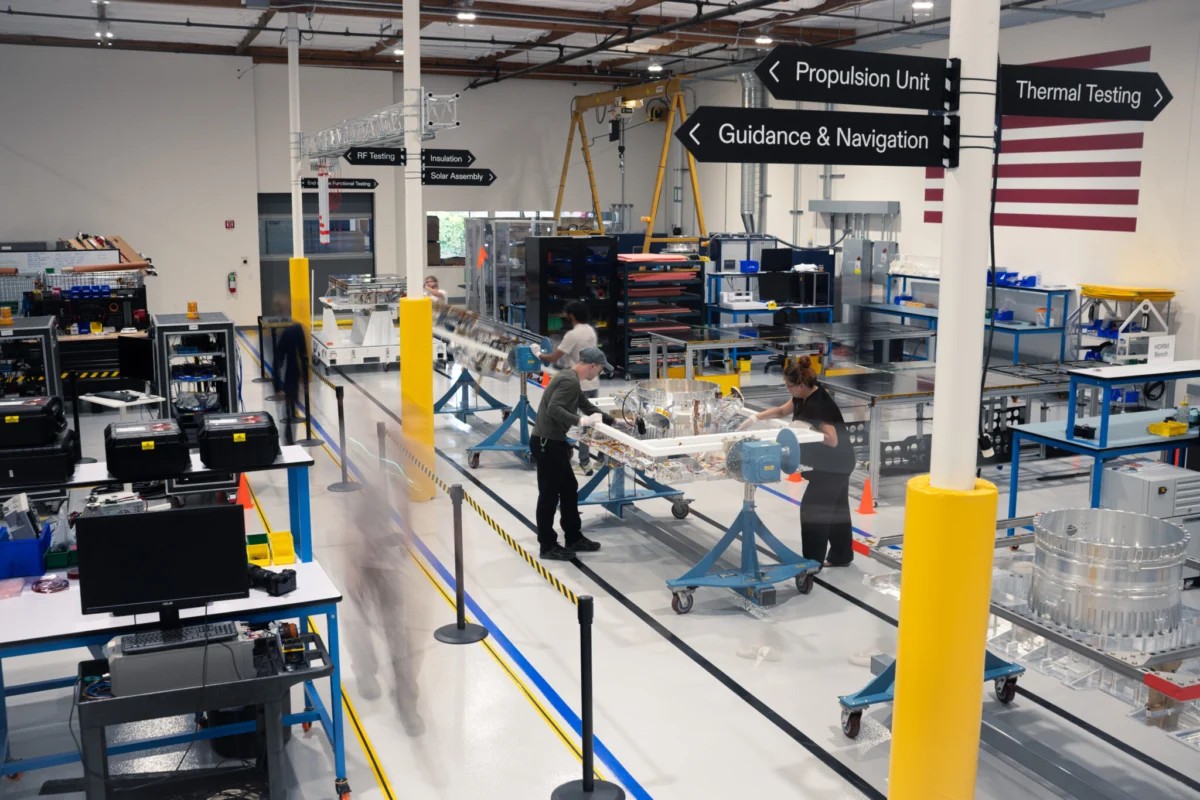
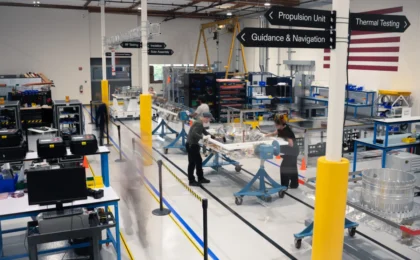
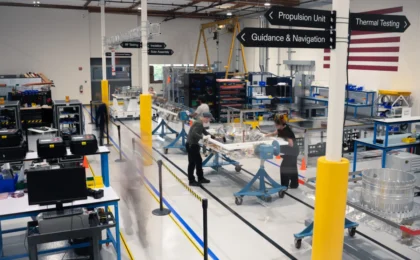
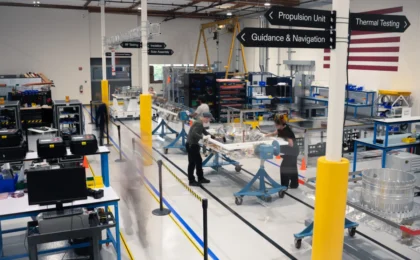
The upcoming SpaceX rideshare mission will deploy a total of six satellites for Xona, marking a major operational milestone for the company. Four of the spacecraft are structurally similar to a successful prototype launched last year that thoroughly validated the startup’s underlying technology, having been built around a satellite platform supplied by Aerospace Labs. Meanwhile, the remaining two satellites were constructed entirely in-house at Xona’s facility in Burlingame, California, serving as the foundational building blocks for the company’s planned 258-satellite operational constellation, designated as Pulsar.
Once fully deployed and operational, the Pulsar constellation promises to deliver centimeter-level precision for geolocation, a dramatic leap forward from the meter-level accuracy provided by standard GPS. Furthermore, the constellation’s signal strength is engineered to be powerful enough to penetrate dense urban canyons and even be detected reliably inside buildings. Manning also notes that the sheer strength of the signal makes it substantially more resilient against malicious attempts at jamming and signal spoofing.
As soon as the upcoming batch of satellites reaches orbit and begins routinely passing over the mid-latitudes approximately eight times a day, Xona will initiate comprehensive beta-testing programs with real-world enterprise customers. Ian Gough, the chief executive officer of electronic timing specialist firm TimeBeat, noted that this initial pilot phase will grant his engineering team the vital opportunity to rigorously check, verify, and correct the timing data supplied by their devices across the globe. Looking further ahead, Xona aims to achieve full commercial coverage across the United States, Europe, Japan, and South Korea by the year 2028.
Financial backing for these ambitious goals has steadily accumulated over the years. Since its inception, Xona has successfully raised just over $300 million from venture capital investors. Notably, this funding includes a $20 million investment from the U.S. Space Force, signaling strong government interest in commercial navigation alternatives as military conflicts increasingly feature electronic warfare, including the routine jamming and spoofing of satellite navigation channels.
Beyond commercial applications and defense considerations, Xona is positioning its technology at the forefront of the burgeoning autonomy revolution. Reid, whose original doctoral thesis inspired the formation of the company and who now serves as its Chief Technology Officer, previously worked on autonomous vehicle development at Ford. During that time, he recognized firsthand that next-generation services like Pulsar would be an absolute prerequisite for unlocking the true potential of self-driving machinery across every industry.
From Xona’s corporate headquarters, visitors are treated to a sweeping view of commercial jets landing at nearby San Francisco International Airport. Watching the airliners touch down, Manning reflects on the ultimate benchmarks for safety and reliability in modern technology. Pointing out that civil aviation stands as the gold standard of safety among all forms of mass transportation, Manning envisions a future where the infrastructure Xona is building plays a central role in extending that level of absolute trust to everyday driving, allowing motorists to feel just as safe taking their hands off the steering wheel as passengers do relaxing inside a commercial airliner.









No comments yet. Be the first to join the conversation!