

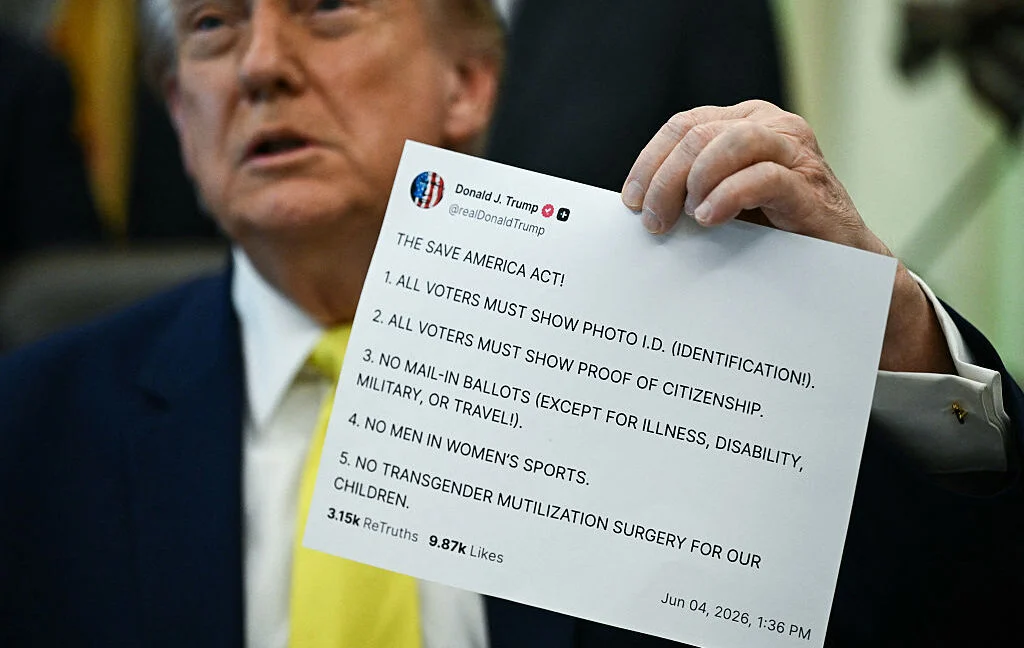
In the coming weeks, a federal judge is expected to issue a pivotal ruling that could fundamentally reshape the intersection of executive communication, government transparency, and private profit. At the center of the dispute is an unprecedented legal challenge regarding whether President Donald Trump can personally profit from selling early, high-speed access to official government information disseminated through his social media platform, Truth Social.
The case, which recently moved through a heated hearing in federal court, pits a coalition of news organizations against the Department of Justice. The plaintiffs argue that the current administration’s decision to gatekeep crucial government announcements behind a paywall of up to $100,000 per month for API (Application Programming Interface) access violates the foundational principles of a free press and the constitutional obligations of the presidency.
The Core Conflict: Public Policy or Private Profit?
During a hearing held on Wednesday, Department of Justice civil attorney Brantley Mayers defended the administration’s position, asserting that there is no inherent conflict of interest in the current arrangement. The government maintains that Truth Social, the platform owned by Trump Media & Technology Group—of which President Trump is the majority owner and largest stakeholder—is acting within its rights as a private entity.
However, the "private" nature of the platform is precisely what critics contend is a facade. Because the platform serves as the primary, and often sole, venue for major government announcements—including military strikes, international trade tariffs, diplomatic ceasefires, and shifts in immigration policy—the information provided through the API is arguably the property of the public. By charging exorbitant fees for the ability to ingest this data instantly, the administration is effectively monetizing the office of the presidency, creating a tiered system where only the most well-funded media organizations can provide real-time coverage of executive decisions.
The plaintiffs argue that this scheme violates the First Amendment, which protects the right of the press to gather and report news, and the Presidential Records Act, which governs the management of records created or received by the president. By restricting access to these digital "records" through a high-priced API, the government is arguably privatizing information that belongs to the public domain.
Furthermore, the legal complaint highlights potential violations of the Fifth Amendment. The news organizations contend that the government is prohibited from charging unreasonable sums that lack a direct, justifiable relationship to the cost of providing a service. More broadly, the plaintiffs argue that granting preferential, high-speed access to vital government information based on a six-figure monthly fee constitutes an arbitrary and irrational barrier that undermines the public’s right to be informed.
The "Fireside Chat" Defense
The defense offered by the Department of Justice during the hearing drew immediate attention for its historical framing. Attorney Brantley Mayers attempted to contextualize President Trump’s social media usage by comparing it to the "fireside chats" of President Franklin D. Roosevelt. In the 1930s and 40s, Roosevelt used radio broadcasts to communicate directly with the American public, bypassing traditional media filters to explain complex policies and instill confidence during the Great Depression and World War II.
Mayers argued that President Trump’s personal feed acts as an "unvarnished public service." In the government’s view, the President is merely utilizing modern technology to communicate directly with his constituents, just as FDR did. According to this logic, the profit generated by the API access is not a "greedy grab," but a standard business practice for a media company hosting the platform upon which the President chooses to speak.
The comparison, however, faced immediate scrutiny from U.S. District Judge Paul Oetken. The court pushed back on the historical analogy, noting the obvious discrepancy in accessibility. "Well, President Roosevelt didn’t charge money for his fireside chats, did he?" Judge Oetken asked.
The question struck at the heart of the plaintiffs’ argument: that the President’s communication methods have been transformed from a public utility into an exclusive, for-profit commodity. When prompted to reconcile this, Mayers attempted to equate the cost of the API access to the technological limitations of the mid-20th century. He suggested that while FDR’s broadcasts were technically "free," there were still "barriers to entry" for the average citizen at the time, specifically the cost of purchasing a radio. In his view, the inability of some news organizations to pay $60,000 to $100,000 for Truth Social’s API is structurally similar to the inability of some Americans in the 1930s to afford a radio receiver.
The Implications of a Ruling
The financial scale of the arrangement is significant. With individual subscribers potentially paying upwards of $1.2 million annually for this early access, the potential for personal enrichment is substantial. Because the value of the Truth Social API is inextricably linked to the President’s role as the head of state, critics argue that the platform is effectively extracting "rent" from the public for the privilege of reporting on the activities of the federal government.
The judicial intervention comes at a time of deep anxiety regarding the role of private platforms in public discourse. As government agencies increasingly rely on social media to issue official notices and statements, the distinction between a politician’s personal platform and an official government channel has become blurred.
The news organizations involved in the suit emphasize that they are not seeking to prevent the President from using social media. Rather, they are challenging the creation of a pay-to-play architecture that prioritizes those with deep pockets while hindering the ability of smaller, independent, or less-funded outlets to report on the activities of the White House. They argue that when the government uses a private platform to conduct official business, that platform must adhere to the same transparency and access requirements as any other government agency.
As the case moves toward a decision, the legal community is watching closely to see how the court balances the executive’s right to choose their medium of communication against the constitutional requirements of a transparent democracy. Judge Oetken’s skepticism toward the DOJ’s attempt to equate modern API fees with the democratization of radio suggests that the court is taking the issue of "barriers to access" seriously.
The upcoming ruling will likely set a major precedent for the digital age. If the court finds in favor of the plaintiffs, it could force a radical change in how government information is disseminated, potentially requiring the administration to provide equal, non-discriminatory access to its digital announcements regardless of a platform’s profit-making schemes. Conversely, a ruling in favor of the government could solidify a new era where executive communication is treated as a proprietary asset, subject to the rules of the marketplace rather than the requirements of public oversight.
For now, the legal battle remains in a period of anticipation. The tension between the administration’s claim of providing an "unvarnished" direct line to the people and the critics’ claim of institutionalized gatekeeping has set the stage for what many consider to be one of the most important First Amendment cases of the decade. The judge’s final determination will dictate whether the President’s digital voice remains a private revenue stream or returns to its role as a public asset.




No comments yet. Be the first to join the conversation!