

The web development ecosystem is experiencing a significant wave of architectural updates, major framework milestones, and performance breakthroughs. From long-awaited framework upgrades to foundational runtime overhauls and infrastructure optimizations, developers are being handed new tools designed to enhance efficiency, reduce costs, and streamline complex workflows. Leading these developments is the official release of Preact 11, alongside major version drops from libraries like Effect and strategic cost-cutting engineering wins from large-scale tech companies like Booking.com.

Six years after the initial planning and community discussions began on the road to Preact 11, the latest iteration of the popular alternative to React has officially arrived. Preact has long maintained its reputation as a lightweight drop-in alternative to React, offering the same modern application programming interface while demanding a fraction of the bundle size. The newly released version 11 brings substantial improvements to the table, most notably enhanced hydration strategies, automatic ref forwarding, and a shift to an exclusively ECMAScript Modules (ESM) package structure. These updates aim to modernize the framework’s internal architecture, aligning it more closely with modern JavaScript standards and build tooling. The Preact team has published a comprehensive upgrade guide to assist developers in navigating the transition and adopting the new paradigms smoothly.
In the realm of robust, enterprise-grade application architecture, the Effect ecosystem has reached a major milestone with the release of Effect 4.0. Described by its maintainers as a ground-up rewrite, Effect 4.0 targets the notoriously tricky challenges of application development, including resource management, complex concurrency, operation retries, and typed error handling. Sebastian Lorenz, contributing to the release, highlights that version 4.0 boasts remarkable performance metrics, achieving minimal bundles that are five times smaller than previous iterations, alongside an 86 percent reduction in memory usage per concurrent task. This overhaul signals a maturing landscape for functional programming patterns in TypeScript environments, giving developers finer control over asynchronous workflows without the historical overhead.

Infrastructure and deployment efficiency continue to be major focal points for engineering teams operating at scale. A notable case study published by Ilya Malyavin details how Booking.com successfully slashed the operational costs of a major Node.js service by 38 percent. The significant financial and performance savings were achieved by moving away from PM2 process management and transitioning to Watt worker threads. By completely reworking their load balancing strategies and refining worker configurations, the engineering team was able to optimize resource utilization, demonstrating that careful tuning of Node.js runtime environments can yield massive dividends in cloud computing expenses.
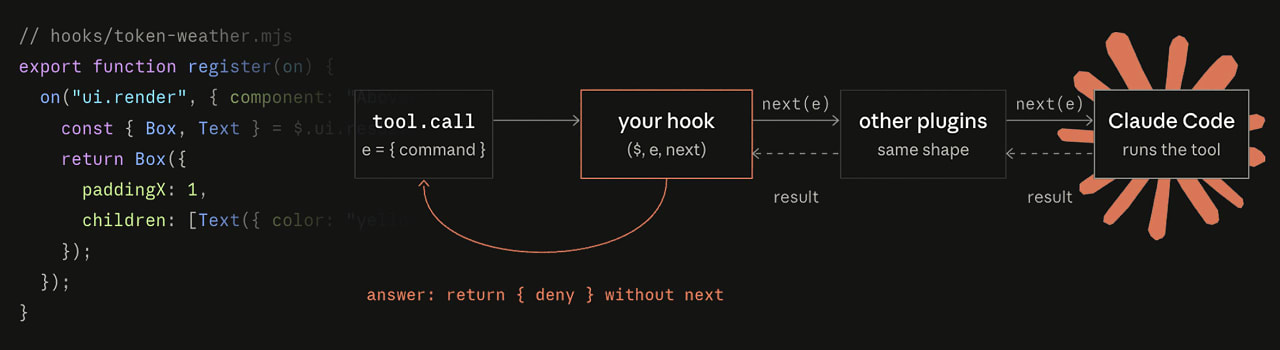
Tooling within the agentic coding and developer assistance space is also rapidly evolving. Addy Osmani recently highlighted the introduction of Mods for Claude Code, a new extensibility feature designed to let developers customize and expand agentic coding harnesses using JavaScript. By writing custom code, developers can observe runtime events, dynamically alter agent behavior, and render custom user interfaces directly within their development environment. To showcase the power and flexibility of this new capability, Osmani built a custom mod in roughly 80 lines of code that provides a live visual forecast of the assistant’s context window usage, illustrating how developers can tailor AI tooling to their exact workflow requirements.
Meanwhile, the TypeScript community continues to push the boundaries of type safety and developer ergonomics through innovative utility libraries and pattern exploration. Rahul M. Juliato published an exploration into building readable, composable regular expressions for TypeScript inspired by Emacs, successfully reconstructing standard version-matching semantics out of named, modular pieces. Complementing this, Radosław Miernik shared insights into automatic type refinements in TypeScript, analyzing precisely which array filter callbacks successfully allow the compiler to narrow types automatically, and which patterns fail to do so, providing developers with clearer mental models for writing type-safe data transformations.
The broader web ecosystem is also seeing a steady stream of supplementary tools and community gatherings designed to foster collaboration and production readiness. Projects like TanStack continue to expand their ecosystem reach, while infrastructure solutions such as Trigger.dev offer specialized environments for running TypeScript-based agents and long-running background workflows in production without standard timeout constraints. Furthermore, organizations and developers are preparing for upcoming collaborative events, such as the Mozilla Festival scheduled to take place in Barcelona, providing a physical venue for creators and technologists to connect and share innovative ideas. As these diverse updates demonstrate, the web development landscape remains dynamic, with a unified focus on performance, scalability, and developer experience.











No comments yet. Be the first to join the conversation!