

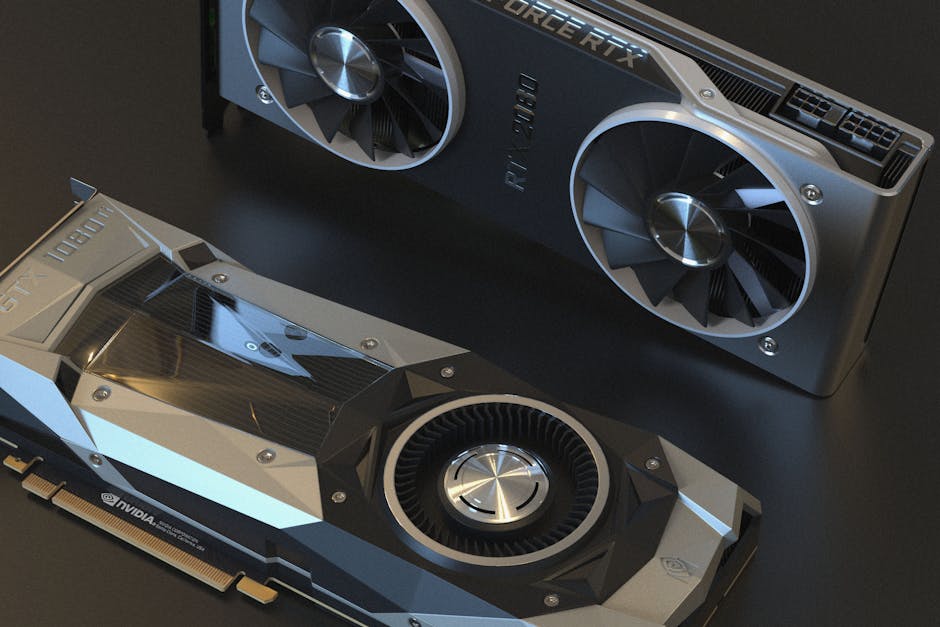
Nvidia’s Tegra 2 3D: Revolutionizing Mobile and Embedded Visual Computing
Nvidia’s Tegra 2 3D chipset represents a significant leap forward in mobile and embedded visual processing capabilities, positioning the company at the forefront of the rapidly evolving 3D technology landscape. This System-on-a-Chip (SoC) architecture is not merely an iterative improvement but a foundational shift, enabling a new generation of devices that can deliver truly immersive and interactive 3D experiences without the need for specialized glasses. The implications of Tegra 2 3D are far-reaching, impacting everything from high-end smartphones and tablets to next-generation gaming consoles, automotive infotainment systems, and industrial augmented reality applications. Understanding the core technologies and strategic advantages of Tegra 2 3D is crucial for comprehending Nvidia’s current dominance and future trajectory in these competitive markets.
At the heart of the Tegra 2 3D’s groundbreaking performance lies its unique dual-core ARM Cortex-A9 MPCore CPU architecture, coupled with an integrated NVIDIA GeForce GPU. This dual-core CPU configuration provides substantial processing power for demanding applications, multitasking, and complex operating system operations. However, the true game-changer is the GeForce GPU. Unlike many contemporary mobile SoCs that feature integrated graphics cores with limited capabilities, Nvidia has leveraged its deep expertise in discrete graphics to equip Tegra 2 3D with a GPU that rivals the performance of many desktop-class graphics cards from just a few years prior. This potent GPU is not only responsible for rendering incredibly detailed and fluid 2D graphics but is specifically architected to handle stereoscopic 3D rendering with remarkable efficiency and speed.
The stereoscopic 3D (S3D) rendering capability is the defining characteristic of the Tegra 2 3D. Nvidia achieved this by implementing a specialized S3D pipeline directly within the GPU hardware. This pipeline allows the Tegra 2 3D to render two distinct images – one for the left eye and one for the right eye – simultaneously, at high frame rates. This is critical for achieving a smooth and comfortable 3D viewing experience, mitigating motion sickness, and enabling true depth perception. The hardware acceleration for S3D rendering offloads the significant computational burden from the CPU, ensuring that even complex 3D scenes can be rendered without impacting overall system responsiveness. This hardware-level integration is a key differentiator, as software-only solutions for S3D rendering are often computationally expensive and result in compromised performance.
Furthermore, Tegra 2 3D’s architecture is optimized for a variety of display technologies that support autostereoscopic 3D. Autostereoscopy, the ability to perceive 3D images without eyewear, is achieved through techniques such as lenticular lenses or parallax barriers integrated into the display panel itself. The Tegra 2 3D chipset is designed to work seamlessly with these displays, intelligently interleaving or manipulating image data to create the illusion of depth for each individual viewer. This eliminates the inconvenience and cost associated with traditional 3D glasses, making 3D content consumption and interaction significantly more accessible and practical for everyday use.
The impact of Tegra 2 3D extends beyond consumer electronics. In the automotive sector, for instance, Tegra 2 3D is poised to revolutionize in-car infotainment and driver information systems. Imagine dashboards that display navigation data with a tangible sense of depth, allowing drivers to intuitively grasp distances and spatial relationships. Advanced driver-assistance systems (ADAS) can leverage Tegra 2 3D to render complex 3D representations of the vehicle’s surroundings, providing drivers with enhanced situational awareness. The ability to process and display rich 3D graphics in real-time opens up possibilities for augmented reality navigation overlays, where virtual information is seamlessly integrated with the real-world view. This not only enhances the driving experience but also contributes to improved safety and efficiency.
In the realm of gaming, Tegra 2 3D empowers mobile devices to deliver console-quality gaming experiences. The GeForce GPU’s raw power, combined with the efficient S3D rendering pipeline, enables developers to create visually stunning and deeply immersive 3D games. This means richer graphics, more complex environments, and the ability to experience games with a new dimension of realism. The accessibility of glasses-free 3D gaming further broadens the appeal of mobile gaming, attracting a wider audience seeking next-level entertainment on the go. Nvidia’s commitment to developer support through its CUDA architecture and extensive software development kits (SDKs) further facilitates the creation of compelling 3D content optimized for Tegra 2 3D.
The industrial and professional markets also stand to benefit significantly from Tegra 2 3D’s capabilities. In fields like engineering, architecture, and product design, the ability to visualize complex 3D models with realistic depth and detail is paramount. Tegra 2 3D can drive high-resolution stereoscopic displays used for CAD/CAM applications, allowing professionals to inspect designs with greater accuracy and identify potential issues before physical prototyping. Furthermore, the burgeoning field of augmented reality (AR) finds a powerful enabler in Tegra 2 3D. AR applications, which overlay digital information onto the real world, can leverage the chipset’s 3D rendering capabilities to create more convincing and interactive experiences for training, maintenance, and remote assistance. Imagine a technician wearing an AR headset powered by Tegra 2 3D, receiving real-time 3D schematics and instructions overlaid directly onto the machinery they are working on.
The efficiency of the Tegra 2 3D is another critical aspect of its success. Despite its powerful performance, Nvidia has meticulously engineered the SoC to optimize power consumption. This is essential for mobile devices, where battery life is a primary concern. The combination of energy-efficient ARM cores and intelligent power management features ensures that Tegra 2 3D can deliver demanding 3D graphics performance without rapidly draining the battery. This balance of performance and efficiency is a testament to Nvidia’s holistic approach to SoC design, considering not just raw power but also the practical constraints of mobile and embedded environments.
Nvidia’s strategic advantage with Tegra 2 3D is rooted in its deep integration of hardware and software. The company’s extensive experience in developing graphics drivers, rendering APIs, and parallel computing technologies like CUDA provides a robust ecosystem for developers. This allows for greater optimization of 3D applications and ensures that the full potential of the Tegra 2 3D hardware can be realized. By controlling both the silicon and the software stack, Nvidia can offer a more cohesive and performant experience compared to competitors who rely more heavily on third-party software solutions. This integrated approach is a significant competitive differentiator, allowing Nvidia to set the pace in the 3D mobile and embedded computing space.
The underlying architecture of Tegra 2 3D also includes support for a wide array of connectivity options and multimedia processing capabilities, making it a truly versatile platform. This includes high-definition video encoding and decoding, advanced image processing, and support for various display interfaces, all essential for creating rich and interactive user experiences. The ability to handle these diverse tasks on a single chip simplifies device design, reduces bill of materials costs, and further enhances power efficiency.
In conclusion, Nvidia’s Tegra 2 3D chipset represents a pivotal moment in the evolution of visual computing. Its groundbreaking stereoscopic 3D rendering capabilities, powered by a potent GeForce GPU and efficient dual-core CPU, unlock unprecedented possibilities for mobile, automotive, gaming, and industrial applications. By offering compelling glasses-free 3D experiences, enhancing situational awareness, and enabling console-quality gaming on mobile devices, Tegra 2 3D is not just pushing the boundaries of what is technically possible but also redefining user expectations. Nvidia’s integrated hardware and software strategy, coupled with a relentless focus on performance and efficiency, positions the company as a dominant force in the rapidly expanding market for immersive and interactive 3D technologies. The long-term implications of Tegra 2 3D are profound, promising a future where three-dimensional experiences are seamlessly integrated into our daily lives, driven by Nvidia’s continued innovation in visual processing. The momentum built by Tegra 2 3D suggests a sustained leadership for Nvidia in shaping the future of mobile and embedded visual computing.









No comments yet. Be the first to join the conversation!