

The Algorithmic Epoch: Charting the Future of Technology
The trajectory of technological advancement is no longer a linear progression but an exponential surge, driven by the ever-increasing sophistication of algorithms and the symbiotic relationship between data, processing power, and connectivity. We stand at the precipice of what can be termed the "Algorithmic Epoch," where artificial intelligence, machine learning, and deep learning are not merely tools but foundational elements shaping every facet of human existence. This epoch is characterized by a shift from explicit programming to implicit learning, where systems adapt, evolve, and predict based on vast datasets, ushering in an era of unprecedented automation, hyper-personalization, and potentially, unforeseen societal transformations. The internet of things (IoT), once a nascent concept, is now maturing into a pervasive network of interconnected devices, generating an avalanche of data that fuels these algorithmic engines. From smart homes and cities to industrial automation and wearable health trackers, every interaction, every sensor reading, contributes to a continuously growing data pool. This data, in turn, allows algorithms to refine their understanding, enhance their predictive capabilities, and execute tasks with ever-increasing efficiency and accuracy. The implications are profound, promising solutions to complex global challenges, from climate change modeling and disease eradication to personalized education and resource optimization. However, this rapid evolution also necessitates a critical examination of ethical considerations, security vulnerabilities, and the potential for exacerbating existing societal inequalities.
The bedrock of this impending technological revolution lies in the exponential growth of computational power and the refinement of algorithms. Moore’s Law, though perhaps facing physical limitations, continues to be outpaced by breakthroughs in parallel processing, quantum computing, and specialized AI hardware like TPUs (Tensor Processing Units) and GPUs (Graphics Processing Units). This raw computational muscle, when coupled with increasingly sophisticated algorithms, unlocks capabilities previously confined to science fiction. Machine learning, particularly deep learning with its multi-layered neural networks, excels at pattern recognition and complex data analysis, enabling applications ranging from natural language processing (NLP) that allows machines to understand and generate human language, to computer vision that empowers them to "see" and interpret their surroundings. The synergy between these components means that systems are not only performing tasks but are learning to perform them better with each iteration, driving a continuous cycle of improvement. Consider the advancements in drug discovery, where AI algorithms can sift through millions of molecular compounds to identify potential candidates for new treatments orders of magnitude faster than traditional methods. Similarly, in materials science, AI is accelerating the discovery of novel materials with specific properties, revolutionizing industries from aerospace to renewable energy. The sheer volume of data generated by IoT devices, coupled with enhanced processing capabilities, allows for the training of ever more complex and accurate AI models. This feedback loop is the engine of the Algorithmic Epoch, ensuring that progress is not static but dynamic and accelerating.
The pervasive integration of artificial intelligence is perhaps the most defining characteristic of the future of technology. AI is moving beyond narrow applications to become a general-purpose technology, capable of impacting virtually every industry. In healthcare, AI is revolutionizing diagnostics, personalized treatment plans, and even robotic surgery. Predictive analytics powered by AI can identify patients at risk of developing certain conditions, allowing for early intervention and preventive care. Drug development is being accelerated, with AI identifying novel drug candidates and optimizing clinical trial design. In finance, AI algorithms are employed for fraud detection, algorithmic trading, and personalized financial advice. The customer service sector is witnessing a significant shift with AI-powered chatbots and virtual assistants handling a growing proportion of inquiries, freeing up human agents for more complex tasks. The automotive industry is on the cusp of a complete transformation with the advent of autonomous vehicles, a direct result of sophisticated AI systems enabling perception, decision-making, and control. Education is also being reshaped, with AI tutors providing personalized learning experiences, adapting to individual student paces and learning styles. The creative arts are not immune, with AI generating music, art, and even written content, raising new questions about authorship and originality. This ubiquity of AI, driven by advancements in deep learning and reinforcement learning, promises to automate repetitive tasks, enhance human capabilities, and unlock new avenues of innovation. The ability of AI to learn from experience and adapt to new situations is what truly distinguishes this epoch.
The interconnectedness fostered by the Internet of Things (IoT) and the nascent stages of the Internet of Everything (IoE) are integral to the future of technology. Billions of devices, embedded with sensors and connected to networks, are creating a global nervous system. This interconnectedness generates unprecedented volumes of real-time data, which then serves as the fuel for AI algorithms. From smart cities optimizing traffic flow and energy consumption to smart homes anticipating user needs, the IoT is creating a more responsive and efficient environment. Industrial IoT (IIoT) is transforming manufacturing through predictive maintenance, optimizing supply chains, and enabling hyper-personalized production. Wearable technology, beyond fitness tracking, is evolving into sophisticated health monitoring devices, providing continuous data streams for personalized healthcare and early disease detection. The IoE extends this concept further, encompassing not just devices but people, processes, and data, all interconnected and interacting. This hyper-connectivity presents immense opportunities for efficiency, convenience, and problem-solving. However, it also introduces significant cybersecurity challenges. The sheer number of connected devices creates a vastly expanded attack surface, making robust security protocols and proactive threat detection paramount. The potential for data breaches, system manipulation, and even physical world disruption necessitates a multi-layered security approach, including encryption, authentication, and continuous monitoring. The ethical implications of ubiquitous data collection and surveillance are also brought to the forefront by this hyper-connected future.
The advent of quantum computing represents a paradigm shift in computational capability, promising to solve problems currently intractable for even the most powerful supercomputers. While still in its nascent stages, quantum computing harnesses the principles of quantum mechanics, such as superposition and entanglement, to perform calculations in fundamentally new ways. This has profound implications for fields like cryptography, drug discovery, materials science, and artificial intelligence. For instance, quantum algorithms could break current encryption methods, necessitating the development of quantum-resistant cryptography. In drug discovery, quantum computers could simulate molecular interactions with unprecedented accuracy, accelerating the development of new medicines. Materials science could see breakthroughs in designing novel materials with specific properties. The ability of quantum computers to explore vast solution spaces simultaneously opens up new possibilities for optimizing complex systems, from financial portfolios to logistics networks. The integration of quantum computing with AI is a particularly exciting prospect, potentially leading to the development of truly general artificial intelligence and solving some of the most complex scientific and engineering challenges facing humanity. The journey to fully realized quantum computing is long and fraught with technical hurdles, but its potential impact is so significant that research and development are accelerating rapidly across both academic and industrial sectors.
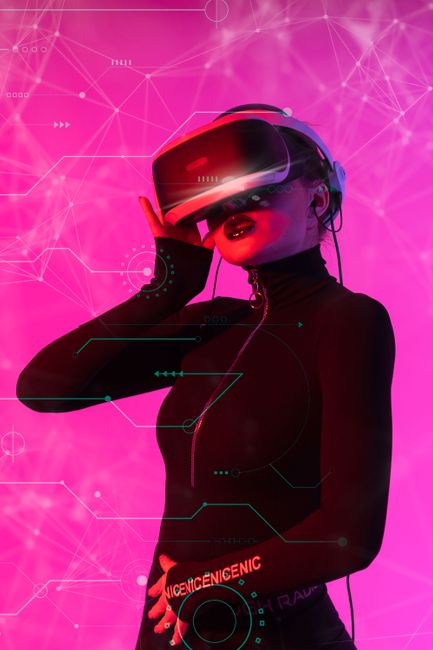
The future of technology is intrinsically linked to the evolution of human-computer interaction, moving towards more intuitive, immersive, and seamless experiences. Augmented reality (AR) and virtual reality (VR), collectively known as extended reality (XR), are poised to revolutionize how we learn, work, and play. AR overlays digital information onto the real world, enhancing our perception and interaction with our surroundings, with applications in education, training, design, and navigation. VR creates fully immersive digital environments, offering novel ways to experience entertainment, engage in simulations, and collaborate remotely. Brain-computer interfaces (BCIs) represent a more radical frontier, aiming to establish a direct communication pathway between the brain and external devices. While still largely experimental, BCIs hold immense promise for individuals with disabilities, enabling them to control prosthetics, communication devices, and even computers with their thoughts. As BCIs mature, they could unlock entirely new modes of human-computer interaction, blurring the lines between thought and action. The development of haptic feedback technologies will further enhance the realism and sensory experience of these immersive environments, allowing users to not only see and hear but also feel digital interactions. This evolution in human-computer interaction is driven by advancements in sensor technology, processing power, and increasingly sophisticated algorithms that can interpret complex biological signals.
Ethical considerations and the need for responsible innovation are no longer secondary concerns but fundamental requirements for navigating the future of technology. As AI becomes more autonomous and pervasive, questions of bias, fairness, transparency, and accountability become critical. Algorithms trained on biased data can perpetuate and even amplify existing societal inequalities. Ensuring fairness in AI decision-making, particularly in areas like hiring, lending, and criminal justice, is paramount. The "black box" nature of some deep learning models poses challenges for transparency and explainability; understanding why an AI made a particular decision is crucial for trust and accountability. The proliferation of AI-generated content and deepfakes raises concerns about misinformation and the erosion of trust in digital media. Developing robust mechanisms for detecting and combating these malicious uses of AI is essential. Furthermore, the potential for widespread job displacement due to automation necessitates proactive strategies for workforce retraining and the development of new economic models. The concentration of technological power in the hands of a few entities also raises concerns about monopolistic practices and the need for equitable access to technological advancements. Establishing ethical guidelines, regulatory frameworks, and public discourse around the development and deployment of new technologies is crucial to ensure that they serve humanity’s best interests. This proactive approach to ethical development is not an impediment to progress but a necessary foundation for sustainable and beneficial technological advancement. The societal impact of these technologies necessitates a parallel evolution in our legal, ethical, and social frameworks.
The future of technology is not a predetermined destination but a landscape actively shaped by ongoing research, development, and societal choices. From the intricate dance of algorithms and data to the immersive worlds of XR and the profound possibilities of quantum computing, the Algorithmic Epoch promises a radical reshaping of our reality. Success in navigating this epoch hinges on a commitment to innovation coupled with a profound understanding of its ethical implications, ensuring that technological advancement serves to uplift and empower humanity, rather than to divide or endanger it. The ongoing dialogue between technologists, policymakers, ethicists, and the public will be crucial in charting a course that maximizes the benefits of these transformative technologies while mitigating their inherent risks. The next few decades will witness an unprecedented acceleration of change, demanding adaptability, critical thinking, and a shared vision for a future where technology enhances, rather than dictates, the human experience. The pursuit of innovation must be inextricably linked with the pursuit of equity and well-being.












No comments yet. Be the first to join the conversation!