

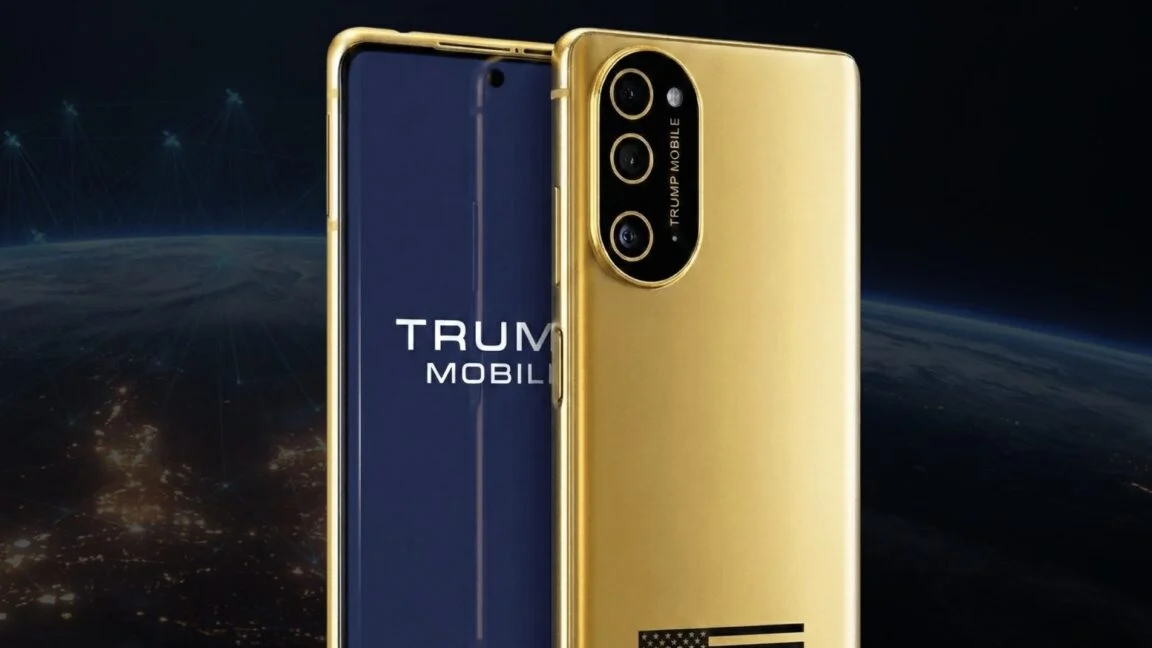
The operations of Trump Mobile, a telecommunications venture that has faced a turbulent path since its inception, are coming under heightened scrutiny from federal lawmakers. At the center of the controversy are questions regarding the company’s ownership structure, its reliance on a Florida-based "enabler," and its potential failure to adhere to federal transparency requirements regarding foreign influence.
A recent inquiry into the company’s business model has raised significant concerns about whether the firm is properly disclosing its ownership stakes to the Federal Communications Commission (FCC). Such disclosures are not mere bureaucratic formalities; they are critical safeguards designed to allow the FCC to assess potential national security risks. According to correspondence sent by officials, these filings are mandatory for all carriers, whether they operate their own proprietary network infrastructure or function as Mobile Virtual Network Operators (MVNOs). As an MVNO, Trump Mobile does not build its own cell towers or maintain a nationwide physical network; instead, it resells mobile service provided by other carriers. Despite this secondary market position, the regulatory burden remains, as the underlying risks of data management and foreign influence persist regardless of the specific business model.
Ties to Liberty Mobile raise questions
The inquiry specifically probes the opaque relationship between Trump Mobile and Liberty Mobile Wireless, a Florida-based MVNO. Public statements made by Trump Mobile representatives earlier this year have only served to deepen these questions. In February, officials from the company informed The Verge that Liberty Mobile serves as the "enabler" and "backbone" of their entire operation. According to those same representatives, Liberty Mobile is responsible for the lion’s share of Trump Mobile’s technical, legal, and financial infrastructure.
Beyond the logistical reliance, the statements suggested a deeper, perhaps indistinguishable, management structure. Officials indicated that the two companies are essentially steered by the same personnel, raising the question of whether Trump Mobile effectively owns, operates, or controls Liberty Mobile. This blurred line is precisely what federal regulators look for when attempting to map out corporate liability and influence.
The regulatory concerns are bolstered by historical precedents regarding the risks of telecommunications firms with undisclosed foreign ties. The correspondence cites a pivotal 2012 FCC ruling against another carrier, which underscored that international telecommunications companies failing to obtain the necessary Section 214 authority risk compromising national security, law enforcement capabilities, and broader trade policy interests. The FCC noted at the time that these authorities are essential to maintaining the integrity of U.S. communications infrastructure.
Furthermore, the inquiry points to the landmark 2021 revocation of the operating authority held by China Telecom Americas. In that case, the FCC determined that a carrier controlled by a foreign government could be leveraged to access, monitor, store, disrupt, or even misroute U.S. communications, potentially facilitating state-sponsored espionage. By invoking these past enforcement actions, the inquiry into Trump Mobile emphasizes that the FCC’s authorization process is a front-line defense against the weaponization of domestic telecommunications by bad actors. If Trump Mobile is utilizing a backbone provider with unclear or foreign-linked ownership, regulators argue that the public is entitled to know exactly who is handling their data and what foreign entities might have access to the underlying infrastructure.
Missing robocall database filings
The questions regarding corporate structure and national security are merely the latest chapter in a series of setbacks for the brand. When Trump Mobile first emerged on the market, its marketing was defined by a bold, nationalistic promise: the sale of a smartphone manufactured entirely within the United States. This "Made in the USA" branding was a central pillar of its pitch to consumers. However, that claim was quickly abandoned as the realities of global supply chains and manufacturing costs set in.
The company’s struggles extended well beyond its marketing claims. Consumers who placed preorders for the promised device faced significant delays, with the phone arriving nearly a year behind the original schedule. To add to the frustration of early adopters, the price point for the device saw a sharp increase, jumping from the initially advertised $499 to $749.
The hardware itself has also become a focal point of criticism. Rather than the bespoke American-made device once teased by the company, reports suggest the phone is a near-exact match for the HTC U24 Pro. The U24 Pro is a device launched in 2024 and manufactured in China, a fact that stands in stark contrast to the company’s original promise of a domestic product.
This hardware revelation, combined with the company’s opaque relationship with Liberty Mobile, has drawn attention to broader compliance issues. The inquiry notes that Trump Mobile appears to have neglected key filings required for the FCC’s Robocall Mitigation Database. This database is a critical tool in the agency’s ongoing battle against illegal robocalling, which continues to plague millions of American consumers. By failing to provide the necessary information, the company has bypassed the transparency protocols that other carriers must follow to help verify the origin of calls and prevent the proliferation of spam.
As the regulatory pressure mounts, the core issue remains the same: the intersection of political branding and the highly regulated telecommunications industry. The FCC’s requirements are designed to ensure that any entity providing mobile services in the U.S. is transparent about its operations, its ownership, and its data-handling practices. For a company that built its identity on a promise of domestic transparency and American manufacturing, the current regulatory scrutiny presents a significant challenge to its credibility.
The inquiry into Trump Mobile’s operations highlights a growing concern among federal regulators regarding the rise of MVNOs and the often-hidden relationships between small-scale operators and their "backbone" providers. While these smaller companies may offer niche services, they are integrated into the same national network infrastructure as the major carriers. Consequently, any failure to disclose foreign ownership or to adhere to federal communication mandates can potentially leave the entire system vulnerable.
As it stands, Trump Mobile faces a difficult road ahead. It must reconcile its original marketing claims with the reality of its hardware, while simultaneously addressing the formal questions raised by federal oversight bodies. The lack of clarity surrounding its corporate structure and its relationship with Liberty Mobile remains a point of significant contention. Until the company provides clear, verifiable answers to the FCC and other regulatory authorities, questions about its long-term viability, its security practices, and its compliance with federal law will likely continue to loom over the venture. For the company’s customers, the situation serves as a stark reminder of the complexities of the modern mobile landscape, where the promise of a simple, American-made product can often be complicated by the opaque nature of global telecommunications operations.








No comments yet. Be the first to join the conversation!