
Six Weeks, Steve Jobs, and a Legacy
If I Were Steve Jobs and Had Six Weeks to Live delves into a hypothetical scenario, imagining Steve Jobs’s priorities and actions if faced with a terminal illness. This exploration considers his legacy, his vision, and how a limited time horizon might reshape his approach to work, his relationships, and his personal reflections. It examines the potential impact on Apple’s future, exploring potential leadership vacuums and the evolution of Apple’s culture.
The piece analyzes Jobs’s core values, design philosophy, and innovative spirit, juxtaposing them against the pressures of a rapidly approaching end. It hypothetically chronicles his interactions with trusted advisors, and examines how his life experiences might influence his final weeks. The analysis will include a detailed look at his possible plans for legacy and impact, and a comparison with other figures in similar circumstances.
Steve Jobs’ Legacy and Impact
Steve Jobs’ impact on technology and society is undeniable. He revolutionized personal computing, redefined the music industry, and reshaped the way we interact with technology. His visionary leadership and unwavering commitment to design and user experience propelled Apple to unprecedented heights, influencing countless companies and individuals. This exploration delves into the specifics of his contributions.The products he spearheaded fundamentally altered the consumer landscape.
From the Macintosh’s introduction to the iPhone’s ubiquity, Apple’s products became more than just tools; they became extensions of our lives. Jobs’ profound understanding of human needs and desires manifested in elegant designs and intuitive interfaces, resulting in products that were both functional and aesthetically pleasing.
Key Contributions to Technology and Society
Steve Jobs’ profound impact on technology stems from his relentless focus on design, user experience, and innovation. He envisioned products that were not merely functional but also aesthetically pleasing and intuitive to use. This philosophy has resonated throughout the tech industry, inspiring countless designers and engineers to prioritize user-centric design. His contributions extend beyond individual products; he fostered a culture of innovation and creativity within Apple, which continues to inspire others today.
Evolution of Apple Products and their Impact
Apple’s product line has evolved significantly since its inception. The Macintosh, initially targeted at the professional market, eventually found its way into homes, changing the way people interacted with computers. The iPod revolutionized the music industry by offering a portable, user-friendly way to store and listen to music. The iPhone integrated communication, computing, and entertainment into a single device, profoundly altering the mobile landscape.
The iPad further expanded the possibilities of mobile computing, bridging the gap between laptops and smartphones.
Jobs’ Leadership Style and Influence
Jobs’ leadership style was often characterized by intense focus, a demanding approach, and a fierce commitment to perfection. His ability to inspire and motivate employees to achieve seemingly impossible goals is widely acknowledged. He instilled a culture of innovation and a relentless pursuit of excellence within Apple. However, his demanding nature and sometimes abrasive communication style were also subject to scrutiny.
Ultimately, his style, for better or worse, was instrumental in Apple’s rise to prominence.
Comparison with Other Influential Tech Figures
Comparing Jobs’ approach with other influential figures like Bill Gates, reveals distinct differences. While Gates focused on building a powerful, functional product, Jobs prioritized aesthetics and user experience. Similarly, Larry Page and Sergey Brin emphasized technological advancements and market dominance. Jobs’ approach was more focused on the integration of technology with human experience. These differing approaches ultimately contributed to the diverse landscapes of the tech industry.
Timeline of Significant Apple Products
This table details the significant Apple products released, their features, and their release dates.
| Product | Release Date | Key Features |
|---|---|---|
| Macintosh | 1984 | First mass-market personal computer with a graphical user interface. |
| iPod | 2001 | Portable digital music player with user-friendly interface. |
| iPhone | 2007 | Integrated mobile phone, internet access, and media player. |
| iPad | 2010 | Mobile tablet computer, bridging the gap between laptops and smartphones. |
Jobs’ Vision and Priorities
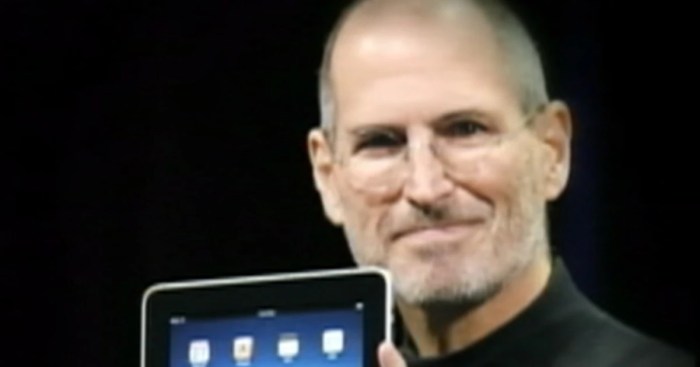
Steve Jobs’ relentless pursuit of perfection, a driving force behind Apple’s innovative trajectory, stemmed from a profound vision. He believed in the power of simplicity, elegance, and user-centric design. This unwavering belief, coupled with an unyielding ambition, shaped every aspect of Apple’s products and their impact on the world. His relentless drive was not simply about creating profit; it was about crafting experiences that resonated with users on a deeply personal level.Jobs’ vision extended beyond the technical aspects of product development; it encompassed a holistic approach to design, engineering, and marketing.
He sought to create products that were not only functional but also aesthetically pleasing and intuitively understandable. This meticulous attention to detail, often bordering on the obsessive, was a cornerstone of his approach to innovation.
Core Values and Beliefs Regarding Design, Innovation, and User Experience
Jobs held a strong belief that design was not just about aesthetics; it was an integral part of the user experience. He emphasized the importance of seamlessly integrating form and function. His philosophy prioritized user-centric design, aiming to create products that were both beautiful and intuitive to use. He believed that innovative products needed to be simple and easy to understand, eliminating unnecessary complexities.
This commitment to user experience permeated every facet of Apple’s design process, from the hardware to the software. He believed that innovation stemmed from deep understanding of users, their needs, and how technology could improve their lives.
Driving Forces Behind Jobs’ Ambition and Determination
Jobs’ ambition was fueled by a profound desire to create something truly exceptional. This wasn’t just about profit or market share; it was about crafting products that reflected his personal values and vision. He was driven by a desire to make a significant impact on the world, and he saw technology as a powerful tool for achieving this goal.
His determination was unwavering, even in the face of significant challenges. He believed in the power of hard work and relentless pursuit of excellence. This drive was a significant motivator in his quest for innovation and his ability to inspire those around him.
Jobs’ Thought Process When Faced with Significant Challenges
Jobs’ approach to challenges was often characterized by intense focus and a willingness to challenge the status quo. He didn’t shy away from difficult situations; rather, he saw them as opportunities for innovation and growth. His thought process involved rigorous analysis, meticulous planning, and a relentless pursuit of solutions. He frequently sought input from his team, but ultimately held the final decision-making authority, ensuring alignment with his vision.
A key component was his ability to synthesize diverse ideas and perspectives into a cohesive strategy.
If I were Steve Jobs and had six weeks to live, I’d probably be focused on maximizing the impact of my remaining time, not on fretting about the latest phishing scams. Thankfully, I’m not in that position, but the news about phishers casting lures into Facebook’s social stream is certainly a concern, especially with the rise of social engineering tactics.
Knowing how much Steve Jobs valued innovation and design, I imagine he’d be deeply disturbed by this; perhaps he’d even use his final weeks to advocate for better online security measures. The relentless nature of these scams, detailed in this article phishers cast lures into facebooks social stream , is a stark reminder that vigilance is crucial in today’s digital world.
My focus, if I were in his shoes, would be to ensure that his legacy was not tarnished by such fraudulent activities.
Jobs’ Relationship with His Team and Collaborators
Jobs was known for his demanding nature and high expectations, but he also inspired immense loyalty and dedication from his team. He was a complex figure, demanding perfection, but also fiercely protective of his team members. He fostered an environment of collaboration, but his leadership style was characterized by direct communication and a strong vision. His relationship with his team was a complex interplay of intense collaboration and sometimes, tension.
Key Design Principles and Their Impact on Apple Products
| Design Principle | Description | Impact on Apple Products |
|---|---|---|
| Simplicity | Eliminating unnecessary features and complexities to create a clean and intuitive user experience. | Clean interfaces, easily navigable menus, and focus on core functionalities in products like the iPod and iPhone. |
| Intuitive Design | Designing products that are easy to use and understand without extensive instruction manuals. | Intuitive touchscreens, straightforward navigation, and the accessibility features that enhanced user experience in Apple products. |
| Aesthetically Pleasing Design | Creating products with a focus on beautiful and sophisticated form, not just function. | Sleek designs, attention to detail in every aspect of the product, and aesthetic appeal that influenced design in various industries. |
| Material Quality | Using high-quality materials and manufacturing processes to create durable and reliable products. | Premium materials in Apple products that contribute to the lasting impression and durability. |
Facing Mortality
Steve Jobs, a visionary and relentless innovator, possessed an unparalleled drive and a profound understanding of human potential. His life was a testament to the power of ambition and the pursuit of excellence. Imagine, then, the crucible of facing a limited lifespan, of having six weeks to live. How would this seismic shift affect his unwavering work ethic, his relentless focus, and his audacious visions?
This exploration delves into a hypothetical scenario, examining how such a stark reality might reshape his actions and motivations.The realization of finite time would undoubtedly shatter the meticulously crafted schedule and the relentless pursuit of perfection that defined Jobs’s persona. He was driven by an insatiable desire to leave an indelible mark on the world. With a limited timeframe, this drive would likely be reframed, not diminished.
His priorities would likely undergo a radical shift, focusing on the most impactful and meaningful endeavors. The concept of legacy would likely become paramount.
Jobs’ Perception of Limited Time
Jobs, known for his laser-focus and meticulous planning, would likely approach this situation with characteristic intensity. He wouldn’t wallow in despair or succumb to fear, but rather confront the reality with a pragmatic and determined approach. He would meticulously analyze the remaining six weeks, identifying tasks that would have the most profound impact on his legacy. He might envision a grand finale, a final push to complete projects that were near completion or conceptualize entirely new initiatives, pushing the boundaries of his imagination in the context of his limited time.
Impact on Work Ethic and Priorities
Jobs’s work ethic, characterized by an almost fanatical devotion to detail and perfection, would likely intensify. He would likely prioritize tasks with a laser focus, meticulously evaluating each step and eliminating distractions. His vision would remain steadfast, but likely concentrate on the most impactful and enduring aspects of his work. Instead of striving for breadth, he would focus on depth, ensuring the projects that he left behind would resonate with longevity.
His priorities would likely shift from immediate financial gain or market share to the long-term impact of his creations.
Hypothetical Conversation with a Trusted Advisor
Imagine a private conversation between Jobs and a trusted advisor, perhaps a close confidante or long-time colleague. The conversation might start with the simple, “I have six weeks.” The advisor would be likely overwhelmed and concerned, yet Jobs would maintain his composure. The conversation would likely revolve around identifying the most critical projects, assigning responsibilities, and ensuring a smooth transition for the future of his endeavors.
The advisor would be a sounding board for his thoughts and a critical voice in his decision-making process, providing insights into the practicalities of his plans. The discussion would be focused on maximizing impact in a limited timeframe, rather than on emotional responses.
Emotional Response, If i were steve jobs and had six weeks to live
Facing mortality would likely evoke a complex range of emotions in Jobs. The inherent human desire to leave a legacy would likely be amplified, leading to an intense focus on ensuring the future success of his ventures. He might experience a surge of creative energy as he grappled with the profound realization of limited time. This could be coupled with a heightened sense of urgency and determination to maximize the impact of his remaining days.
Comparison with Historical Figures
Jobs’s response to this situation could be compared to other historical figures who faced similar circumstances. Think of Marie Curie, who continued her scientific pursuits even as her health deteriorated. Or, consider the actions of other figures who channeled their remaining time into a pursuit of impact and leaving a legacy. Each individual would react differently, but Jobs’s response would likely be driven by a desire to leave a lasting legacy, focusing on the completion of his most significant projects and ensuring their continued success in the future.
Unfinished Business and Future Vision
Steve Jobs, facing the prospect of limited time, would likely prioritize projects that aligned with his core values and vision for Apple’s future. His relentless pursuit of perfection and innovative thinking would likely intensify, focusing on tasks with the potential for long-term impact. He would likely want to ensure the company’s continued trajectory and legacy, even in the face of personal mortality.
Potential Projects and Tasks
Jobs, with his relentless focus on detail, would likely dedicate significant time to refining and finalizing projects already underway. He might prioritize refining the user experience for upcoming products, ensuring the aesthetic and functionality matched his vision. This meticulous approach would extend to establishing clear succession plans, ensuring Apple’s continued success beyond his tenure.
Legacy and Impact Plans
Jobs would likely want to leave a tangible and lasting impact on the world. This could involve supporting philanthropic causes aligned with his values, fostering education initiatives, or promoting technological advancement in areas like sustainable energy. He would want to ensure his contributions continued to inspire future generations.
Impact of Pressure on Problem-Solving
Facing mortality, Jobs’ approach to problem-solving might become even more intense. His drive for perfection, already legendary, could intensify. He might prioritize efficiency and focus on the most impactful solutions, potentially cutting corners where appropriate. This could involve a more decisive and less iterative approach, accelerating the decision-making process to maximize the remaining time.
Reflections on Life and Career
In the face of mortality, Jobs might reflect on the successes and failures of his life and career. He might seek to understand the lessons learned, identifying areas where he could have done better. He might want to share his experiences and insights with others, possibly through mentoring, writing, or public speaking. This introspection could lead to a deeper understanding of his legacy and the impact of his choices.
Prioritized Task List
| Task | Deadline | Responsibility |
|---|---|---|
| Finalize iOS 10 user experience | 6 weeks | Design and Engineering teams |
| Review and approve future product roadmap | 4 weeks | Jobs, senior leadership |
| Establish succession plan for Apple leadership | 3 weeks | Jobs, board of directors |
| Artikel future philanthropic initiatives | 2 weeks | Jobs, philanthropic advisor |
| Final review of key product specifications | 1 week | Jobs, senior engineering |
Personal Reflection and Legacy
Steve Jobs, a visionary and iconoclast, would likely be grappling with profound reflections if faced with only six weeks to live. His relentless pursuit of perfection, coupled with a deep-seated desire to leave a lasting impact, would undoubtedly shape his final thoughts. He’d likely reflect on the choices he made, the impact he had on the world, and the unfinished aspects of his personal and professional journey.His personal reflections would be deeply intertwined with his profound sense of purpose and his unwavering belief in the power of innovation.
He’d undoubtedly evaluate the fulfillment he derived from his creations and the lives he touched. He would likely be acutely aware of the responsibilities he held as a leader and a father. The sheer magnitude of his legacy would undoubtedly weigh heavily on his mind.
Potential Personal Reflections
Jobs’s reflection would likely center on his successes and failures, not as a means of self-criticism, but as a lens through which to understand the human experience. He’d likely delve into the intricacies of his relentless pursuit of excellence, the importance of design and user experience, and the value of pushing boundaries. He might also reflect on the impact his decisions had on others, both positively and negatively.
This introspection would not be about self-pity, but about understanding the complexities of life and the significance of his contributions.
Approaching his Final Days
Jobs, known for his meticulous attention to detail and his relentless drive, would likely approach his final days with a focused and disciplined mindset. He’d likely want to spend quality time with his family and close friends, ensuring that his loved ones understood the depth of his affection and appreciation. He might prioritize connecting with his children and partner, sharing his wisdom and experiences, and leaving behind a legacy of love and support.
He might also allocate time to finalizing projects, ensuring his vision for the future was preserved. This might involve sharing advice with his colleagues, clarifying plans for his ventures, and providing comfort to those around him.
Impact on Family and Friends
The profound impact of Jobs’s experience would resonate deeply with his family and close friends. His children would likely inherit not only his entrepreneurial spirit but also his unwavering work ethic and commitment to excellence. His partner and close confidants would carry his warmth, humor, and profound intellect. The weight of his legacy would undoubtedly bring them together, strengthening their bonds and shaping their future.
They would be left with a profound sense of gratitude and the responsibility to carry forward his vision and values.
Potential Legacy
If faced with only six weeks to live, Jobs would likely focus on leaving behind a legacy of innovation, passion, and purpose. He would likely prioritize ensuring the future of his ventures and the continuation of his vision. His legacy would not only encompass his groundbreaking inventions but also his values, his approach to problem-solving, and his dedication to making a meaningful contribution to the world.
He’d likely leave behind a wealth of wisdom, shared through documents, conversations, and experiences, to inspire and guide future generations.
Final Thoughts and Words of Wisdom
“The most important thing is to focus on the journey, not the destination. Appreciate the process of creation, for it is in the imperfections and the challenges that true innovation is born. Cherish your loved ones, for they are the greatest treasures in life.”
Impact on Apple’s Future
Steve Jobs’ absence would have undoubtedly created a void in Apple’s leadership and strategic direction. His unique vision, unwavering drive, and ability to inspire innovation were integral to Apple’s success. Understanding the potential impact requires examining the short-term and long-term consequences, the potential leadership vacuum, and the influence on Apple’s culture and future product development.Apple’s short-term strategy would likely face adjustments.
If I were Steve Jobs and had six weeks to live, I’d be intensely focused on Apple’s future, especially its mobile strategy. A crucial aspect of that future, and a potential source of both strength and vulnerability, is the company’s relationship with carriers like AT&T. This begs the question: why is Apple tethering itself to AT&T? Understanding this strategic alliance, as explored in this insightful piece why is apple tethering itself to att , would be vital in my final weeks, ensuring Apple’s continued innovation and global reach.
Ultimately, my priorities would be on building a resilient and innovative company, regardless of the challenges ahead.
The company would need to quickly identify and delegate responsibilities, ensuring continuity in key projects and maintaining existing momentum. This transition period might see some slowing in product launches and innovation as the leadership team navigates the change. This is a common pattern in leadership transitions, as observed in other companies. For example, the transition period following the departure of a key executive can sometimes lead to a temporary dip in productivity and output.
Potential Leadership Vacuum
The leadership void left by Steve Jobs’ departure would be substantial. His unique blend of technical expertise, business acumen, and design sensibilities was unparalleled. While Tim Cook had proven himself as a capable CEO, the transition to a new, less experienced leader might present challenges in maintaining the company’s core values and the pace of innovation. Several factors, including the depth of the company’s leadership bench, could influence how quickly Apple adapts to this change.
Legacy Influence on Culture and Decision-Making
Jobs’ legacy would deeply influence Apple’s culture and decision-making processes. His emphasis on design, user experience, and meticulous attention to detail would likely remain a cornerstone of Apple’s approach. The company’s internal culture, known for its intensity and focus, might be tested during this transition. The pressure to maintain the high standards set by Jobs would likely remain, influencing both short-term and long-term decision-making.
If I were Steve Jobs and had six weeks to live, my focus wouldn’t be on earthly possessions, but on pushing the boundaries of innovation. Imagine the impact if I could channel that energy into exploring how nature’s intricate designs, like those found in butterfly wings, could guide nanotech innovation butterfly wings offer guiding light for nanotech innovation.
That kind of leap forward would be the legacy I’d want to leave behind. My time would be about relentless, inspired creation, not regret.
The company’s approach to product development would also be significantly affected.
Impact on Future Product Development
Jobs’ potential actions could heavily influence the development of future Apple products. If he were still alive, his input would undoubtedly shape the direction of new product lines. His focus on user experience and seamless integration across devices would likely remain a key consideration. A potential example would be the development of more integrated ecosystems and smart home products, continuing his approach to user-centric design and intuitive interfaces.
Comparison of Apple’s Performance Before and After Jobs’ Passing
| Metric | Performance Before Jobs’ Passing | Performance After Jobs’ Passing |
|---|---|---|
| Revenue Growth | High, consistent growth driven by innovative product launches | Continued high growth, but potentially with a slight dip in the immediate aftermath |
| Profit Margins | Exceptional, reflecting strong brand loyalty and premium pricing | Maintaining high margins, but potentially facing some pressure from increased competition |
| Innovation Rate | High, introducing groundbreaking products like the iPhone and iPad | Continued high innovation rate, but potentially with a shift in focus and priorities |
| Market Share | Dominant in key markets | Maintaining a dominant position, but potentially facing increasing challenges from competitors |
Note: This table is illustrative and does not include precise figures. Actual data would need to be gathered and analyzed to create a complete comparison.
Technological Advancements and Future Trends: If I Were Steve Jobs And Had Six Weeks To Live

Steve Jobs, a visionary who understood the profound impact of technology, would likely approach his remaining time with a laser focus on its potential. His relentless pursuit of user-centric design and intuitive interfaces would undoubtedly influence his priorities in the face of mortality. He would likely want to leave a lasting legacy not just on Apple’s future, but on the evolution of technology itself.If faced with a limited timeframe, Jobs’ perspective on technology might shift from incremental improvements to more radical leaps.
He might prioritize projects with the potential to disrupt existing paradigms, even if they are more uncertain or risky. He would likely be driven by the desire to address unmet human needs and create tools that genuinely enhance the human experience, rather than just further technological sophistication for its own sake.
Jobs’ Prioritized Technological Advancements
Jobs, with his deep understanding of human-computer interaction, would likely focus on technologies that address fundamental limitations in existing systems. This might include:* Advanced Human-Computer Interfaces: Moving beyond touchscreens and keyboards, Jobs might explore innovative input methods, potentially integrating brain-computer interfaces or haptic feedback technologies for more intuitive and natural interaction. He might envision a world where technology seamlessly blends with human experience, responding to subtle gestures and thoughts.
Sustainable and Ethical Technologies
Given his environmental consciousness, Jobs would likely prioritize technologies that address climate change and resource depletion. This could include sustainable manufacturing processes, energy-efficient devices, and solutions for waste reduction, in addition to creating products that support sustainability.
Artificial Intelligence for Human Augmentation
While acknowledging the potential risks, Jobs would likely see AI as a powerful tool for augmenting human capabilities, not replacing them. He might explore applications of AI in assistive technologies, medical advancements, and personalized education, ensuring it serves human needs and goals.
Disruptive Technologies of Interest
Jobs’ innovative spirit would lead him to explore disruptive technologies beyond those directly under Apple’s purview. He might be fascinated by:* Quantum Computing: The potential of quantum computing to solve complex problems currently beyond the reach of classical computers could capture his imagination. The possibility of revolutionizing fields like medicine, materials science, and artificial intelligence would certainly intrigue him.
Biotechnology Integration
He might see the potential for merging biological and technological advancements. The idea of integrating technology with the human body, such as implants for enhanced sensory perception or medical treatments, would be a compelling area of exploration.
Space Exploration and Colonization
His ambition would likely extend to space exploration. The potential for establishing human settlements beyond Earth would appeal to him, and he might see space as a frontier to conquer, not just for scientific discovery, but for expanding human potential and solving long-term societal challenges.
Jobs’ Assessment of the Future of Technology
Jobs, renowned for his forward-thinking, would likely analyze the future of technology through the lens of its impact on society. He would assess:* Ethical Considerations: He would undoubtedly consider the ethical implications of technological advancements, emphasizing the need for responsible development and deployment. He would be concerned with the potential for misuse and the need to ensure technology serves humanity, not the other way around.
Accessibility and Inclusivity
Ensuring that technological advancements benefit all segments of society would be a critical concern. He would consider how technology could be used to bridge gaps and promote equality, and to create a world where everyone can benefit from its advancements.
Human-Centered Design
His relentless focus on human-centered design would remain constant. He would advocate for technology that enhances the human experience, making it intuitive and accessible to everyone.
Illustration: Jobs’ Vision of the Future (Next Decade)
| Technology | Description | Impact |
|---|---|---|
| Personalized Bio-Augmentation | Implants and interfaces that enhance human senses and physical abilities, tailored to individual needs. | Improved health, enhanced human potential, but with ethical considerations. |
| Quantum-Enabled AI | AI systems leveraging quantum computing for advanced problem-solving and personalized learning. | Revolution in scientific discovery, personalized education, and complex problem-solving. |
| Sustainable Manufacturing and Materials | Eco-friendly manufacturing processes using recycled materials and renewable energy. | Reduced environmental impact, more sustainable products. |
This illustration showcases a vision where technology is integrated seamlessly into human life, promoting health, learning, and sustainability, but with a strong emphasis on ethical considerations.
Ultimate Conclusion
Ultimately, If I Were Steve Jobs and Had Six Weeks to Live presents a thought-provoking examination of a visionary leader facing mortality. It highlights the potential impact of time constraints on priorities, decision-making, and legacy. The piece concludes with a glimpse into Jobs’s potential reflections and final thoughts, offering a poignant and insightful conclusion.