Why Innovation Really Doesnt Matter
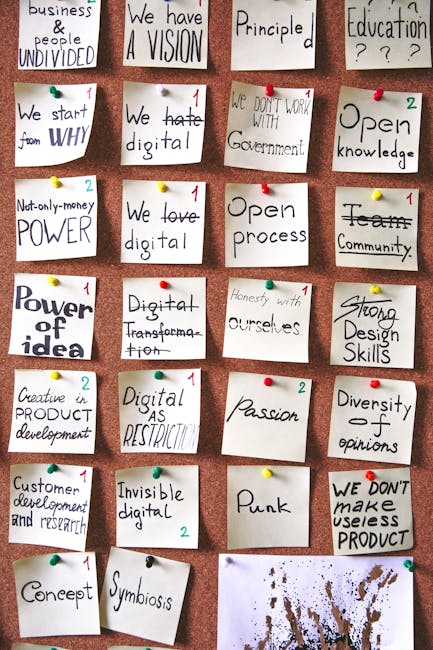
The Illusion of Innovation: Why True Progress Lies Elsewhere
The relentless pursuit of innovation has become a cultural mantra. Businesses, governments, and individuals alike are bombarded with the imperative to innovate, to disrupt, to create something entirely new. Yet, a critical examination reveals that this obsession with novelty is often a distraction, a glittering bauble that obscures the true drivers of progress. Innovation, as it is commonly understood – the creation of new products, services, or processes – frequently fails to deliver on its promised transformative impact. The real engine of advancement lies not in invention for its own sake, but in the meticulous refinement, effective implementation, and widespread adoption of existing, proven ideas.
Consider the historical arc of human development. The wheel, fire, the printing press, the agricultural revolution – these were not necessarily "innovations" in the modern sense of groundbreaking, never-before-seen concepts. They were often the synthesis of existing knowledge, the application of observed phenomena in novel ways, or the significant improvement of existing tools. The impact of the printing press, for instance, wasn’t solely in its mechanical ingenuity, but in its ability to democratize access to information, a consequence of its efficient replication of existing texts. The true value resided in dissemination and accessibility, not the mere existence of the movable type. Our modern understanding of innovation often narrowly focuses on the genesis of an idea, neglecting the arduous and critical stages that precede and follow its conception.
Many so-called innovations fail to gain traction because they are solutions searching for problems, or because they fail to address a genuine, felt need in a practical, accessible way. The history of technology is littered with brilliant inventions that never achieved widespread adoption, not due to a lack of ingenuity, but due to a disconnect with user needs, prohibitively high costs, or a failure to integrate seamlessly into existing social and economic structures. The Segway, once hailed as a revolutionary personal transportation device, largely fizzled into a niche product due to its cost, regulatory hurdles, and practical limitations in urban environments. This wasn’t a failure of innovation; it was a failure of relevance and accessibility. The underlying technology, while novel, didn’t solve a widespread problem in a way that resonated with the masses.
The emphasis on radical innovation often leads to a neglect of the crucial, yet less glamorous, process of continuous improvement. Incremental advancements, the slow and steady refinement of existing products and processes, have historically delivered far more substantial and sustainable progress than sporadic bursts of disruptive innovation. Think of the evolution of the automobile. While revolutionary in its initial conception, its true impact has been shaped by decades of incremental improvements in fuel efficiency, safety features, comfort, and reliability. Each iteration, while not a radical departure, has cumulatively made the automobile a more indispensable and beneficial part of modern life. The pursuit of the "next big thing" can blind organizations to the immense value locked within optimizing what they already have.
Furthermore, the business world’s obsession with innovation is often driven by a competitive imperative that prioritizes perceived differentiation over actual value creation. Companies chase patents and new product launches to signal dynamism to investors and competitors, even if these endeavors yield little tangible benefit for customers or the bottom line. This can lead to a proliferation of minor variations on existing themes, a phenomenon often referred to as "feature creep," where products become bloated with unnecessary functionalities that complicate rather than enhance user experience. The pressure to appear innovative can result in a misallocation of resources, diverting them from proven, revenue-generating activities towards speculative ventures with low probabilities of success.
The implementation and adoption phases of any new idea are far more critical to its success than its initial conception. An ingenious invention that remains locked in a laboratory or on a drawing board is, in essence, worthless. The ability to translate a concept into a marketable product, to scale production, to build a robust distribution network, and to educate consumers about its benefits are the true hallmarks of progress. These are operational challenges, requiring strategic planning, efficient execution, and a deep understanding of human behavior and market dynamics, rather than pure inventive genius. The iPhone, while undeniably innovative, wouldn’t have achieved its world-altering status without Apple’s mastery of supply chain management, marketing, and user interface design. The innovation was the spark, but the execution was the wildfire.
The hype surrounding innovation can also create unrealistic expectations, leading to disappointment and cynicism when these grand pronouncements fail to materialize. The constant narrative of impending disruption can foster a sense of perpetual dissatisfaction with the status quo, even when significant progress is being made through more conventional means. This can be particularly detrimental in public policy, where the allure of a revolutionary "silver bullet" solution can overshadow the need for carefully considered, evidence-based approaches to complex societal problems. The focus shifts from solving the problem to finding a novel way to address it, which is a crucial distinction.
Moreover, the definition of "innovation" itself is often too narrowly construed. It frequently excludes the crucial, yet less celebrated, fields of process improvement, organizational development, and the refinement of existing services. The operational excellence achieved by companies like Toyota, through its Toyota Production System, revolutionized manufacturing and had a profound impact on global commerce. This was not about inventing a new car, but about innovating the way cars were made. Similarly, advancements in educational pedagogy, public health strategies, or the delivery of social services, while perhaps not yielding dramatic technological leaps, represent vital forms of progress that are often overlooked in the prevailing narrative of disruptive innovation.
The relentless drive for innovation can also stifle valuable existing practices and knowledge. When companies are solely focused on the "next big thing," they may devalue or discard established methods that, while not novel, are highly effective and efficient. This can lead to a loss of institutional memory and a disregard for the accumulated wisdom that underpins successful operations. The embrace of digital solutions, for instance, has sometimes led to the premature abandonment of effective analog systems, causing unforeseen problems in areas where the digital transition was not fully thought through or adequately implemented.
Ultimately, the true measure of progress lies not in the novelty of an idea, but in its ability to improve human lives, enhance societal well-being, and drive sustainable economic growth. This is achieved through the judicious application of knowledge, the meticulous optimization of existing systems, and the unwavering commitment to effective implementation and widespread adoption. The obsession with innovation, while understandable in a competitive landscape, frequently diverts attention from these more foundational elements of real and lasting advancement. The world does not need more ideas; it needs better execution of the good ideas it already has. The real work, the work that truly matters, lies in making the familiar better, more accessible, and more impactful. This is the unglamorous, yet profoundly powerful, engine of genuine progress, an engine that often operates far from the spotlight of "innovation."