Toshiba Making Passes At 3d Tv Without Glasses
Toshiba’s Pursuit of True Autostereoscopic 3D Television: The Future of Immersive Viewing Without Glasses
Toshiba, a long-standing innovator in consumer electronics, has consistently demonstrated an ambition to push the boundaries of visual technology. One area where the company has shown significant and persistent interest is the development of glasses-free 3D television, often referred to as autostereoscopic 3D. This pursuit is not merely a fleeting exploration but a strategic endeavor aimed at overcoming the primary barrier that has historically hindered mainstream adoption of 3D content: the need for cumbersome and often uncomfortable eyewear. Toshiba’s commitment to this technology signals a potential paradigm shift in home entertainment, promising a more accessible and immersive viewing experience for a broader audience.
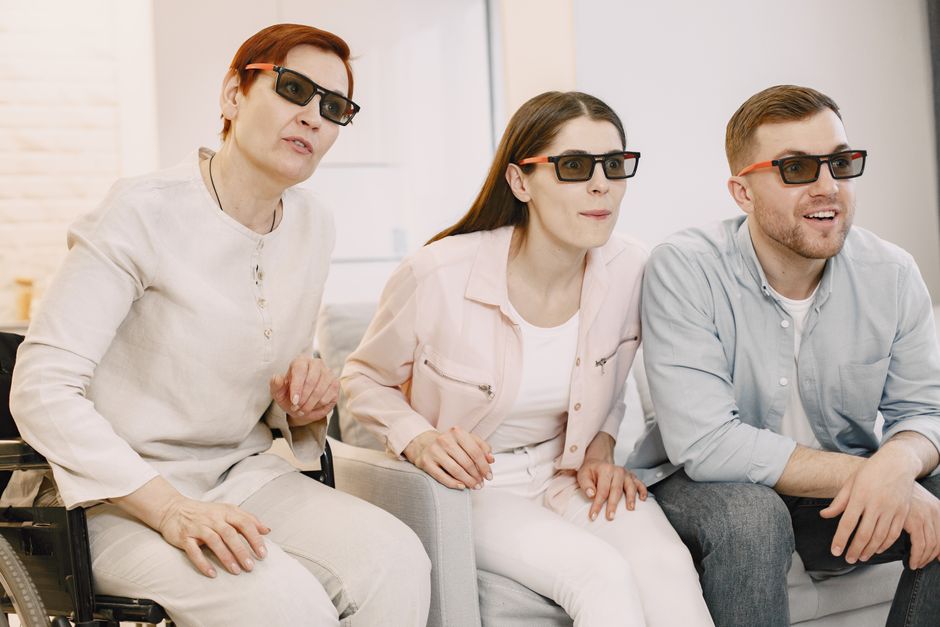
The fundamental challenge of autostereoscopic 3D lies in its ability to deliver separate, slightly different images to each eye without external optical aids. Humans perceive depth through stereopsis, a binocular vision phenomenon where the brain interprets the slight disparity between the images received by the left and right eyes. Traditional 3D television, whether active-shutter or passive polarized, relies on glasses to manipulate the light reaching each eye. Active-shutter glasses rapidly alternate between blocking and allowing light for each eye in sync with the displayed image, while passive polarized glasses use different polarization filters for each eye, separating the images at the display level and then directing them to the appropriate eye.
Toshiba’s approach to glasses-free 3D aims to replicate this stereoscopic effect directly through the display panel itself. This typically involves creating an "image splitting" mechanism within the display. One common method is the use of a lenticular lens array or a parallax barrier placed in front of the LCD panel. A lenticular lens array consists of a series of convex lenses arranged in parallel rows. As the display’s pixels emit light, these lenses focus and redirect the light to specific viewing angles. For autostereoscopic 3D, the pixel arrangement and the lenticular lens pitch are precisely engineered so that certain pixels are visible from the left eye’s perspective and adjacent pixels are visible from the right eye’s perspective, creating the illusion of depth. A parallax barrier, on the other hand, is a layer of opaque vertical strips placed in front of the display. These barriers block light from specific pixels, allowing light from other pixels to pass through to a particular eye, thereby separating the images.
Toshiba’s early forays into this technology were evident in their development of autostereoscopic displays for portable devices like the Toshiba Regza Personal, a line of portable LCD TVs that featured glasses-free 3D capabilities. These devices, while not achieving mass market penetration as a primary television technology, served as crucial testing grounds for Toshiba’s autostereoscopic technology, allowing them to refine the underlying principles and identify key technical hurdles. The challenges were significant, including achieving a wide enough "sweet spot" or viewing cone, where the 3D effect is visible without significant distortion or ghosting. Early autostereoscopic displays often suffered from a narrow viewing angle, meaning the 3D effect was only perceivable from a very specific, often limited, position in front of the screen. Moving even slightly to the side could result in image crosstalk, where elements of the image intended for the other eye become visible, or a complete loss of the 3D effect.
Furthermore, the resolution of autostereoscopic displays presented a significant hurdle. To create the separate images for each eye, the display’s pixel real estate must be effectively divided. This means that if a display has a certain native resolution, the effective resolution perceived by each eye is halved. For example, a full HD (1920×1080) display capable of autostereoscopic 3D might render each eye’s image at a resolution closer to 960×1080. This reduction in resolution can lead to a less sharp and detailed image, which can detract from the overall viewing experience, even with the novelty of glasses-free 3D. Toshiba has actively worked on mitigating this resolution compromise through advanced image processing techniques and by exploring higher native resolution displays to compensate for the perceived reduction when splitting the image.
Another critical aspect of Toshiba’s research and development in this field has been the pursuit of multi-view autostereoscopic displays. While basic autostereoscopic displays offer a single optimal viewing position, multi-view systems aim to expand the viewing zone by generating multiple different perspectives of the 3D image. This allows a larger audience to experience the 3D effect simultaneously, without needing to gather in a single, precise viewing spot. Advanced multi-view systems can generate anywhere from five to nine distinct views, catering to a small group of viewers. Toshiba’s involvement in multi-view technology signals an understanding that for widespread adoption, a glasses-free 3D TV must be a shared experience, not an isolated one. This requires sophisticated optical and processing capabilities to manage the complexity of rendering and directing multiple images accurately.
The implications of Toshiba successfully perfecting glasses-free 3D television are far-reaching. For consumers, it would mean the removal of a significant barrier to entry for 3D content. The inconvenience of locating, wearing, and potentially sharing 3D glasses, especially for multiple viewers with varying prescription needs, has been a major deterrent for many. A glasses-free solution would make 3D viewing as effortless as watching a standard 2D broadcast or streaming service. This accessibility could revitalize interest in 3D content, which, despite some initial excitement, has struggled to gain consistent traction beyond the cinema.
From a content creation perspective, a widely adopted glasses-free 3D TV standard could incentivize further investment in stereoscopic filmmaking and gaming. Developers and studios might be more inclined to produce 3D content knowing that a larger, more accessible audience is equipped to experience it. This could lead to a richer and more diverse library of 3D entertainment, moving beyond the occasional blockbuster and encompassing a wider range of genres and applications.
Toshiba’s persistent focus on autostereoscopic 3D also places them in a competitive position within the rapidly evolving display technology landscape. While other manufacturers have explored various forms of 3D, the elimination of glasses remains a highly sought-after holy grail. Companies like Samsung, LG, and Sony have all experimented with glasses-free 3D in the past, with varying degrees of success and market penetration. However, Toshiba’s sustained commitment suggests a belief in the long-term viability and potential of this specific technology. Their ongoing research and development efforts, often in collaboration with academic institutions and other industry partners, aim to push the envelope on critical performance metrics like viewing angle, resolution, and the number of simultaneous views.
The economic drivers behind Toshiba’s pursuit are also significant. The global television market is fiercely competitive, and a breakthrough technology like truly seamless glasses-free 3D could offer a substantial competitive advantage. The ability to market a television that offers a genuinely novel and improved viewing experience without requiring additional purchases or accessories would be a powerful selling proposition. This could translate into increased market share and profitability for Toshiba, especially if they can achieve this innovation at a commercially viable price point.
The technological advancements required are considerable. Beyond the lenticular lenses or parallax barriers, Toshiba would need to develop sophisticated software and hardware to:
- Optimize Image Splitting: Algorithms that precisely divide the display’s pixels to create the left and right eye images while minimizing visual artifacts.
- Enhance Depth Perception: Techniques that dynamically adjust image contrast, color, and brightness for each eye to maximize the perceived depth and realism.
- Expand Viewing Zones: Dynamic switching between different parallax barriers or lenticular lens configurations to accommodate multiple viewers or a wider viewing area.
- Mitigate Motion Blur: Develop display technologies and processing that can handle the increased data bandwidth and complexity of displaying multiple perspectives without introducing noticeable motion blur.
- Improve Brightness and Contrast: The additional layers in autostereoscopic displays can sometimes reduce overall brightness and contrast. Toshiba would need to overcome these optical limitations.
- Develop 3D Content Creation Tools: To fully capitalize on their hardware, Toshiba might also need to support or encourage the development of tools and workflows that simplify the creation of glasses-free 3D content.
The future of home entertainment is increasingly focused on immersion and ease of use. Toshiba’s ongoing efforts in glasses-free 3D television align perfectly with these trends. By directly addressing the primary pain point of traditional 3D, Toshiba is aiming to unlock the full potential of stereoscopic viewing for a mainstream audience. While the path to a perfect, widely adopted autostereoscopic 3D television has been fraught with technical challenges, Toshiba’s sustained investment and innovation indicate a strong belief that this is not a matter of "if," but "when." The success of this venture could redefine how we experience visual media, making the immersive world of 3D a seamless and accessible reality for every living room. This persistent pursuit by Toshiba underscores the enduring appeal of a glasses-free 3D future, a future where the distinction between the digital and the real blurs effortlessly before our eyes.