Processor Claims Ratchet Up Tension Between Intel Nvidia
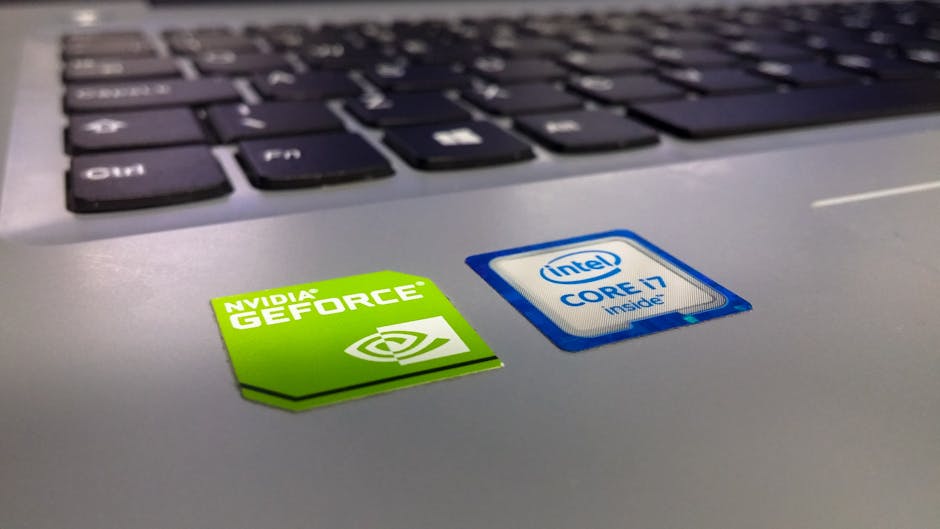
Processor Claims Ratchet Up Tension Between Intel and NVIDIA
The semiconductor landscape is a perpetual battleground, and the recent surge in aggressive processor claims from both Intel and NVIDIA has undeniably escalated the existing tension between these two titans. This isn’t just about market share; it’s about architectural supremacy, the definition of performance leadership, and the strategic positioning for the burgeoning AI and high-performance computing (HPC) markets. Intel, with its storied history in CPU dominance, is making a concerted push to reclaim its innovative edge, challenging NVIDIA’s long-held reign in the discrete GPU space, particularly in areas where integrated graphics once struggled to compete. NVIDIA, conversely, is not content to rest on its laurels, leveraging its established GPU architecture and software ecosystem to expand its reach into CPU territory, blurring the lines and creating direct competition where none previously existed.
Intel’s recent pronouncements, often centered on their new architectures like Meteor Lake and beyond, have been deliberately designed to highlight performance gains in areas historically dominated by discrete GPUs. These claims frequently target gaming performance, content creation workflows, and even the nascent field of integrated AI acceleration, directly encroaching on NVIDIA’s traditional stronghold. The strategy appears twofold: firstly, to convince consumers and businesses that their integrated solutions are now powerful enough to supersede the need for separate, expensive discrete GPUs for a significant portion of use cases. This democratizes high performance, making it more accessible and potentially disrupting NVIDIA’s lucrative high-end discrete GPU market. Secondly, these claims serve as a powerful counter-narrative to NVIDIA’s narrative of GPU indispensability. By showcasing impressive benchmarks and feature sets within their own silicon, Intel aims to undermine the perception that NVIDIA is the sole architect of accelerated computing. The very act of making these bold claims, even if subject to rigorous independent verification, forces NVIDIA to react, to re-evaluate its own roadmap, and to defend its territory with equally assertive, often forward-looking, statements.
NVIDIA, for its part, has not been a passive observer. Their response to Intel’s encroaching ambitions has been multifaceted. While their core business remains the design and sale of discrete GPUs, their strategic investments and public statements increasingly emphasize their expansion into CPU architectures through their ARM-based Grace and Grace Hopper Superchips. These offerings are not just designed for traditional HPC workloads; they are increasingly positioned as integrated solutions capable of handling both CPU and GPU tasks with unprecedented efficiency and performance. NVIDIA’s claims here focus on the synergy between their CPU and GPU cores, promising a level of co-design and optimization that rival integrated solutions might struggle to match. They are framing these as the future of data centers and high-performance computing, areas where Intel has traditionally held significant sway. By developing their own CPUs, NVIDIA is not just offering a competitor to Intel’s Xeon processors; they are creating a fully integrated system that bypasses the need for separate Intel CPUs in certain high-demand scenarios. This is a direct strategic challenge, forcing Intel to consider a future where its primary competitor is also its primary component supplier in some market segments, a dynamic that could dramatically reshape the competitive landscape.
The tension is further amplified by the differing architectural philosophies and market targets. Intel, historically a CPU-centric company, is leveraging its vast manufacturing capabilities and deep understanding of x86 architecture to integrate more advanced graphics and AI processing onto its existing silicon. Their claims often highlight the cost-effectiveness and power efficiency of these integrated solutions, appealing to mainstream consumers and enterprise clients seeking simplified deployments and reduced total cost of ownership. They are essentially attempting to offer a more holistic computing solution within a single package. NVIDIA, on the other hand, built its empire on the parallel processing power of GPUs, originally for graphics, but now for an astonishing array of compute-intensive tasks. Their expansion into CPUs is a logical, albeit aggressive, evolution, aiming to leverage their expertise in specialized processing to create hybrid architectures that excel in AI inference, machine learning training, and massive data analytics. Their claims are often focused on raw computational throughput and specialized acceleration capabilities, targeting the bleeding edge of scientific research and enterprise AI deployments.
The public discourse surrounding these claims is also a critical battleground. Both companies engage in a strategic dance of benchmark reveals, technical presentations, and carefully worded press releases. Intel’s pronouncements often emphasize their progress in graphics performance, touting superior frame rates in gaming or faster rendering times in professional applications for their integrated graphics solutions. They will often compare their integrated performance directly against mid-range or even lower-end discrete GPUs from NVIDIA, aiming to position themselves as a viable alternative. NVIDIA, in response, will often highlight the sheer scale of their GPU compute power, emphasizing the performance advantages of their dedicated AI accelerators and their ability to handle workloads that integrated solutions simply cannot. They will also stress the maturity of their software ecosystem, particularly CUDA, which provides a massive advantage for developers building AI and HPC applications, a point that Intel’s less mature software stacks have historically struggled to counter effectively.
The “processor claims” themselves are the fuel for this escalating tension. These are not mere marketing platitudes; they are often backed by performance figures, architectural roadmaps, and strategic partnerships. When Intel claims its integrated graphics can compete with discrete NVIDIA cards in specific gaming scenarios, it directly impacts NVIDIA’s consumer GPU sales projections. When NVIDIA claims its Grace Hopper architecture can outperform traditional CPU-GPU combinations in AI training, it challenges Intel’s dominance in the server and HPC markets. Each claim is a calculated move, designed to capture mindshare, influence purchasing decisions, and signal future direction to investors and the industry at large. The intensity of these claims suggests a fundamental shift in the competitive dynamics, moving beyond incremental improvements to a more direct confrontation for leadership in key emerging markets.
Furthermore, the ongoing chip shortages and supply chain complexities have added another layer of strategic importance to these processor claims. Companies that can demonstrate a clear path to higher performance and greater efficiency, whether through integrated solutions or specialized architectures, are in a stronger position to secure market share and attract crucial investment. Intel’s push for integrated graphics leadership can be seen as a strategy to maximize the utility of its existing fabrication capacity and offer more compelling, readily available solutions. NVIDIA’s move into CPU territory, while requiring significant R&D and partnerships, signals a long-term vision of controlling the entire compute stack, offering a more vertically integrated and potentially more resilient supply chain for its target markets.
The implications of this escalating tension are far-reaching. For consumers, it promises more powerful and potentially more affordable computing options. The competition could drive innovation in integrated graphics, making high-end gaming and creative workloads more accessible on laptops and desktop PCs without the need for expensive discrete components. For businesses and researchers, the battle for AI and HPC supremacy will likely lead to more powerful and specialized hardware, accelerating advancements in fields ranging from drug discovery to climate modeling. However, it also creates complexity. Consumers will need to navigate increasingly nuanced product offerings, and businesses will need to carefully assess which architecture best suits their specific workloads.
The strategic positioning of both companies is also critical. Intel’s claims are often about reclaiming lost ground and reasserting its position as an innovator. Its integrated graphics push is a direct challenge to NVIDIA’s pricing and performance dominance in the discrete GPU market, aiming to offer a compelling alternative for a broad range of users. NVIDIA’s expansion into CPUs is a more audacious move, a deliberate attempt to disrupt Intel’s core business and to offer a complete, highly optimized computing platform. Their claims are designed to highlight the limitations of traditional architectures and to showcase the power of their specialized, co-designed solutions.
In conclusion, the processor claims being bandied about by Intel and NVIDIA are not just boastful pronouncements; they are strategic maneuvers in a high-stakes technological arms race. The tension between these two giants is palpable, driven by competing visions for the future of computing, the insatiable demand for performance, and the lucrative opportunities in the rapidly expanding AI and HPC markets. The aggressive nature of their claims suggests that the competitive landscape is undergoing a profound transformation, and the lines between traditional CPU and GPU dominance are becoming increasingly blurred, setting the stage for an exciting, albeit intensely competitive, future.