Category Mobile Phone Repair
Expert Mobile Phone Repair: Reviving Your Digital Lifeline
Mobile phones have become indispensable extensions of our lives, serving as communication hubs, information portals, entertainment devices, and essential tools for work and daily management. When this vital device malfunctions, a broken screen, dead battery, or software glitch can bring life to a standstill. Professional mobile phone repair services are crucial for restoring functionality, preserving data, and extending the lifespan of these sophisticated devices. Understanding the common issues, the repair process, and how to choose a reputable service provider is paramount for any mobile phone owner facing a technical challenge. The complexity of modern smartphones, packed with intricate components and delicate circuitry, necessitates specialized knowledge and tools that only experienced technicians possess. Attempting DIY repairs without the proper expertise can lead to further damage, voiding warranties and escalating repair costs. Therefore, seeking professional assistance is not merely a convenience but often a necessity for effective and safe restoration. The prevalence of smartphone usage across all demographics underscores the constant demand for reliable repair solutions. From cracked screens on the latest flagship models to charging port issues on older devices, the spectrum of problems is broad, and so is the need for adept technicians.
Common Mobile Phone Repair Issues
The most frequent mobile phone repair requests revolve around physical damage and battery degradation. Cracked or shattered screens are arguably the most common complaint. Drops and impacts can compromise the protective glass, affecting touch responsiveness and visual clarity. Repair typically involves replacing the entire screen assembly, which includes the display panel, digitizer (for touch input), and often the front glass. The complexity and cost vary significantly depending on the phone model, with high-end devices featuring OLED or AMOLED displays commanding higher repair prices. Another prevalent issue is battery problems. Over time, smartphone batteries lose their capacity to hold a charge, leading to rapid depletion and the need for frequent recharging. This degradation is a natural part of lithium-ion battery aging. Symptoms include the phone shutting down unexpectedly, even with a reported charge percentage, or the battery swelling, which can be a safety hazard. Battery replacement is a standard procedure, usually involving careful disassembly of the phone to access and swap out the old battery for a new one.
Beyond physical damage, charging port malfunctions are a recurring problem. Dust, debris, and the constant plugging and unplugging of charging cables can lead to corrosion, loose connections, or internal damage to the port. This prevents the phone from charging or syncing data effectively. Repair often involves cleaning the port or, if the damage is significant, replacing the charging port module, which can be integrated with the motherboard or a separate component. Water damage is a severe and often irreversible issue, but professional repair services can sometimes salvage water-affected phones. Immediate action and professional intervention are crucial for increasing the chances of recovery. Technicians use specialized equipment to clean internal components, remove corrosion, and dry the device thoroughly. However, success is never guaranteed, and often data recovery becomes the primary focus if the device cannot be fully restored.
Audio issues, such as a malfunctioning speaker, microphone, or headphone jack, are also common. These problems can stem from debris obstructing the components, loose connections, or damaged internal parts. Repair involves diagnosing the specific audio component at fault and replacing it if necessary. Button failures, including power buttons, volume rockers, or home buttons (on older models), can be caused by wear and tear, dirt ingress, or internal damage. These repairs typically involve replacing the button assembly or its associated flex cable.
Software-related problems, while less physically evident, are equally disruptive. Software glitches, boot loops, and app crashes can render a phone unusable. These issues often require a factory reset, firmware reinstallation, or advanced diagnostic procedures to identify and resolve corrupted software or conflicting applications. Data loss can be a significant concern with software issues, making professional data recovery services an essential part of the repair process for some users. Furthermore, camera malfunctions, whether the lens is cracked, the autofocus is failing, or the image quality is poor, can be addressed by replacing the camera module. The intricate nature of smartphone cameras means that even minor damage can significantly impact their performance.
The Mobile Phone Repair Process
A professional mobile phone repair process is typically structured to ensure efficiency, accuracy, and customer satisfaction. It begins with a diagnostic assessment. Upon receiving a device, a qualified technician will perform a thorough examination to identify the root cause of the problem. This involves visual inspection, functional testing of all components (screen, battery, camera, ports, buttons, audio), and sometimes running diagnostic software. This stage is crucial for accurately determining the required repairs and providing a precise cost estimate. Transparency at this stage is key to building customer trust.
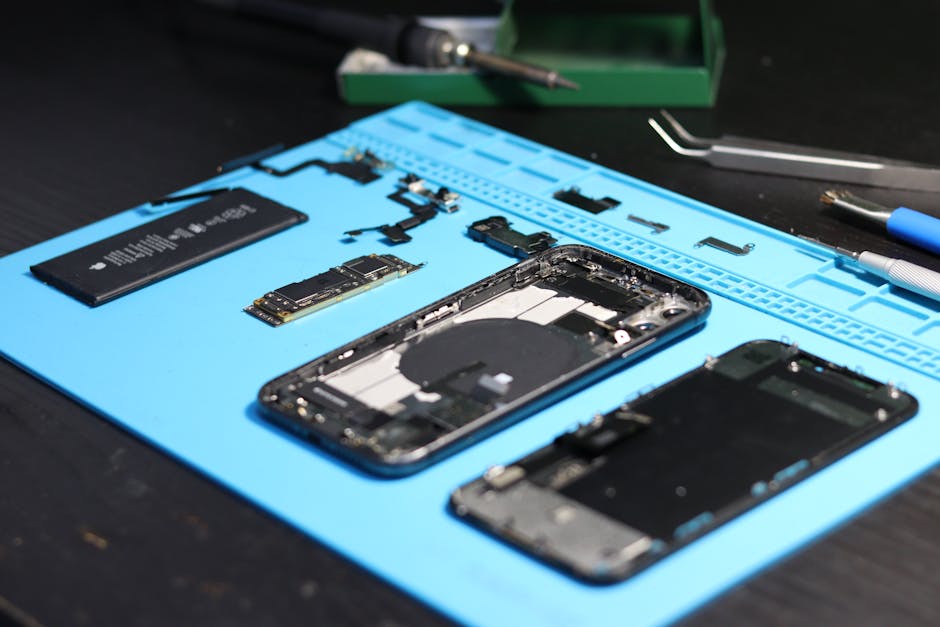
Once the diagnosis is complete and the customer approves the repair quote, the disassembly phase commences. This is a delicate process, especially for modern smartphones that are often sealed with adhesive and feature numerous tiny screws and connectors. Technicians use specialized tools, such as heat guns, prying tools, and precision screwdrivers, to carefully separate the phone’s components without causing further damage. Different phone models have unique disassembly procedures, and technicians must be familiar with these specific layouts.
The component replacement or repair is the core of the service. If a part is faulty, such as a screen or battery, it will be replaced with a high-quality compatible part. In some cases, specific components might be repairable, but often, replacement is more practical and cost-effective. For instance, a damaged charging port might be desoldered and a new one soldered onto the logic board, but often, pre-assembled modules are used for speed and reliability.
Following the replacement, the device undergoes reassembly. This is the reverse of the disassembly process, carefully putting all components back together, ensuring all connectors are properly seated, and adhering to original sealing methods where applicable, especially for water-resistant devices. Strict adherence to the original assembly process is vital for maintaining the device’s structural integrity and functionality.
Finally, a comprehensive quality control and testing phase is conducted. The technician will test all repaired functions to ensure they are working correctly and that no new issues have arisen during the repair. This includes testing touch sensitivity, battery performance, camera functions, audio output, charging, and connectivity. The device is then returned to the customer with a clear explanation of the repairs performed and any warranty information.
Choosing a Reputable Mobile Phone Repair Service
Selecting the right repair service is critical to ensure your device is handled by skilled professionals using quality parts. Expertise and Experience are paramount. Look for repair shops with certified technicians who have extensive experience with a wide range of mobile phone brands and models. Certifications from organizations like CompTIA or manufacturer-specific training indicate a commitment to professional development. Reviews and Reputation are invaluable indicators. Websites like Google Reviews, Yelp, and industry-specific forums can offer insights into customer experiences. Look for consistently positive feedback regarding repair quality, turnaround time, and customer service.
Quality of Parts is a significant factor. Inquire about the type of replacement parts used. Reputable shops will use high-quality OEM (Original Equipment Manufacturer) or equivalent aftermarket parts that meet or exceed the original specifications. Avoid shops that only use generic, low-quality parts, as these can lead to premature failure and further issues. Warranty and Guarantees provide peace of mind. A reputable repair service will offer a warranty on their workmanship and the parts they use, typically ranging from 30 days to a year. This protects you against defects in the repair itself.
Turnaround Time is an important consideration. While complex repairs may take longer, a reasonable turnaround time is expected for common issues. Inquire about their typical repair times and whether expedited services are available. Customer Service and Transparency are hallmarks of a good repair shop. They should be willing to answer your questions, explain the repair process clearly, provide upfront pricing, and keep you informed of the progress. Avoid shops that are evasive about pricing or the repair procedure.
Specialized Services like data recovery for severely damaged phones or micro-soldering for complex logic board issues are offered by some advanced repair centers. If you have a particularly complex problem, research shops that specialize in those areas. Price is naturally a factor, but it should not be the sole determinant. Extremely low prices can sometimes indicate the use of inferior parts or inexperienced technicians. Compare quotes from several reputable shops, but prioritize quality and reliability over the cheapest option. Finally, local vs. mail-in services have their pros and cons. Local shops offer immediate drop-off and pick-up, fostering personal interaction, while mail-in services can offer convenience and access to specialized expertise for those in less populated areas, but require longer wait times and trust in shipping.
The Importance of Professional Mobile Phone Repair
The decision to entrust your mobile phone to professional repair services extends beyond mere convenience; it’s about preserving the functionality, longevity, and data integrity of a device that has become an extension of ourselves. Attempting DIY repairs, while seemingly cost-effective in the short term, often carries significant risks. Modern smartphones are marvels of miniaturization and engineering, featuring intricate circuitry, delicate flex cables, and adhesive seals that require specialized tools and a deep understanding of their internal architecture. Without this expertise, amateur repairs can easily lead to irreparable damage, such as tearing ribbon cables, short-circuiting components, or compromising water resistance. Furthermore, many manufacturers impose strict warranty terms, and unauthorized modifications or repairs can void these warranties, leaving you without recourse for future issues.
Professional technicians undergo extensive training and possess the necessary certifications and experience to navigate these complexities. They have access to specialized diagnostic equipment that can accurately pinpoint the root cause of a problem, ensuring that only necessary repairs are performed. This precision not only saves time and money but also prevents the unnecessary replacement of functional parts. The use of high-quality, often OEM-grade replacement parts by reputable repair services is also a critical factor. These parts are designed to meet the original specifications of your device, ensuring optimal performance and durability. Inferior aftermarket parts can lead to compatibility issues, reduced performance, and a shorter lifespan for the repaired component.
Beyond the technical aspects, professional repair services offer invaluable peace of mind. The prospect of losing precious photos, contacts, or critical work-related data due to a malfunctioning device is a constant worry for many. Reputable repair shops prioritize data integrity, employing secure methods for data backup and recovery. In situations of severe damage, such as liquid intrusion or logic board failure, specialized data recovery techniques can often salvage vital information that would otherwise be lost forever. Moreover, the investment in professional repair often proves more economical in the long run. While the upfront cost might seem higher than a DIY attempt, the likelihood of a successful and lasting repair significantly reduces the need for repeated interventions or premature device replacement. Extending the life of your current smartphone through expert repair is an environmentally responsible choice, reducing electronic waste and promoting sustainability.
In conclusion, the realm of mobile phone repair is multifaceted, encompassing a wide array of technical challenges and solutions. From the ubiquitous cracked screen to the more complex logic board issues, understanding the common problems and the professional repair process is vital. Choosing a reputable service provider, prioritizing expertise, quality parts, and transparent practices, ensures that your valuable device is restored to its optimal functionality. In an era where our smartphones are integral to our daily lives, professional mobile phone repair stands as a crucial service, safeguarding our digital connections, preserving our memories, and extending the lifespan of these indispensable technological companions. The continued evolution of smartphone technology necessitates an equally evolving and professional approach to their maintenance and repair, ensuring that users can rely on their devices for years to come.