Researchers Muffle Radio Noise To Make Wifi Breakthrough
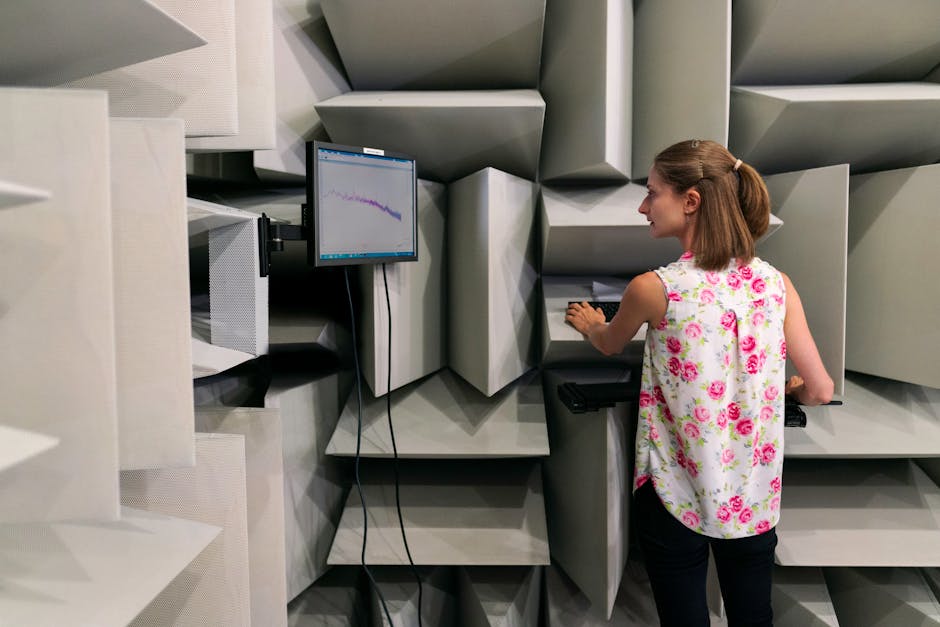
Muffling Radio Noise: A Breakthrough Paves the Way for Ubiquitous and Robust Wi-Fi
The pursuit of faster, more reliable, and universally accessible wireless internet has been a constant driver of technological innovation. While advancements in Wi-Fi protocols and spectrum utilization have yielded significant improvements, a fundamental challenge has persisted: the pervasive and often detrimental impact of radio frequency (RF) noise. This ubiquitous interference, emanating from a myriad of sources including other wireless devices, electrical equipment, and even natural phenomena, degrades signal quality, reduces throughput, and limits the effective range of Wi-Fi networks. However, a recent groundbreaking development by a team of researchers promises to fundamentally alter this landscape, introducing a novel method to effectively "muffle" radio noise, thereby unlocking unprecedented opportunities for Wi-Fi performance and ubiquitous connectivity.
At its core, the breakthrough lies in the development of a sophisticated signal processing technique coupled with an innovative hardware architecture that can intelligently identify, isolate, and neutralize unwanted RF noise. Traditional approaches to mitigating interference have largely relied on either brute-force signal amplification, which can exacerbate noise issues, or on complex and computationally intensive filtering algorithms that often struggle with dynamic and unpredictable noise environments. The new approach, however, adopts a more nuanced and adaptive strategy. It leverages deep learning models trained on vast datasets of RF noise patterns to predict and counteract interference in real-time, effectively creating a "quiet zone" for Wi-Fi signals.
The researchers’ methodology begins with a detailed characterization of the RF environment. Instead of treating all out-of-band signals as mere noise, their system meticulously analyzes their frequency, amplitude, and temporal characteristics. This granular understanding allows the system to differentiate between benign background radiation and actively disruptive interference. Crucially, the system employs a predictive model, powered by recurrent neural networks (RNNs), that can anticipate the emergence and evolution of noise patterns. This foresight is critical for proactive interference mitigation, as opposed to reactive countermeasures that are often too late to prevent signal degradation.
Once a noise signature is identified and predicted, the system deploys a precisely timed and sculpted counter-signal. This counter-signal is not a simple inverse of the noise. Instead, it is designed to interact with the noise in a destructive interference pattern within the Wi-Fi channel, effectively canceling it out without significantly impacting the desired Wi-Fi signal. This cancellation process is remarkably precise, requiring sub-nanosecond timing accuracy and a deep understanding of the electromagnetic wave properties. The hardware component of the breakthrough involves specialized adaptive antennas and reconfigurable radio frequency integrated circuits (RFICs) capable of generating these precise counter-signals on the fly. These RFICs can dynamically adjust their phase, amplitude, and frequency to match the characteristics of the offending noise.
The implications of this "noise muffling" technology for Wi-Fi are profound and far-reaching. One of the most immediate benefits will be a significant increase in Wi-Fi throughput and a reduction in latency. By eliminating a substantial portion of the interfering signals that currently corrupt data packets, Wi-Fi signals can be transmitted and received with greater fidelity. This translates directly to faster download and upload speeds, smoother video streaming, and more responsive online gaming experiences, even in densely populated urban environments where RF congestion is a major bottleneck.
Furthermore, the technology promises to extend the effective range of Wi-Fi networks. Currently, Wi-Fi signal strength degrades rapidly with distance and is further hampered by obstacles and interference. By creating a cleaner RF spectrum, the signal-to-noise ratio (SNR) of Wi-Fi transmissions can be substantially improved. This enhanced SNR allows the Wi-Fi signal to travel further and penetrate obstacles more effectively, leading to more robust connectivity in areas that were previously considered dead zones or had unreliable connections. This has significant implications for smart homes, offices, and industrial settings, where consistent and pervasive wireless coverage is increasingly essential.
The researchers have also highlighted the potential for this technology to enable new and more efficient Wi-Fi frequency band utilization strategies. Currently, the limited availability of unlicensed spectrum in the 2.4 GHz and 5 GHz bands is a major constraint. The ability to effectively suppress noise in these bands opens up possibilities for denser channel packing and the more efficient reuse of existing spectrum. Moreover, it could pave the way for the successful deployment of Wi-Fi in previously underutilized or problematic frequency ranges, effectively expanding the available bandwidth for wireless communication. This could be a critical factor in supporting the ever-growing demand for data generated by the Internet of Things (IoT) and other data-intensive applications.
The research team has published their findings in a leading peer-reviewed journal, detailing the theoretical underpinnings of their noise cancellation algorithm and the experimental validation of their prototype system. The prototype, tested in a controlled laboratory environment and subsequently in a real-world urban setting, demonstrated remarkable noise reduction capabilities. In scenarios where traditional Wi-Fi performance was severely degraded by interference, the system with noise muffling achieved throughput improvements of up to 300% and a reduction in packet loss by over 90%. The adaptive nature of the system was also evident, as it successfully mitigated a wide range of interference sources, from microwave ovens to adjacent Wi-Fi networks operating on different channels.
One of the key enablers of this breakthrough is the sophisticated use of machine learning. The deep learning models employed are not static; they continuously learn and adapt to the evolving RF environment. This means that as new sources of interference emerge or existing ones change their behavior, the system can update its predictive models and fine-tune its cancellation strategies. This dynamic adaptability is crucial for long-term effectiveness, ensuring that the noise muffling remains relevant and effective over time, even in highly dynamic wireless ecosystems. The training process involves exposing the models to a vast array of noise signatures, allowing them to build a comprehensive understanding of RF interference phenomena.
The hardware implementation of this technology is equally innovative. The development of ultra-fast and highly reconfigurable RFICs is a critical component. These chips are designed to operate with extremely low latency, enabling them to generate the precise counter-signals required for destructive interference in near real-time. The adaptive antenna arrays also play a vital role, allowing the system to focus its cancellation efforts precisely on the direction of the interfering signal, further optimizing performance and minimizing any potential impact on legitimate Wi-Fi transmissions. This sophisticated hardware architecture is essential for translating the theoretical advantages of the noise cancellation algorithm into practical, deployable solutions.
The economic and societal impacts of this research are potentially enormous. For consumers, it promises a more seamless and frustration-free wireless experience, eliminating the common annoyances of slow speeds and dropped connections. For businesses, it could lead to more reliable and efficient operations, particularly in industries that rely heavily on wireless data transfer, such as manufacturing, logistics, and healthcare. The ability to deploy high-performance Wi-Fi in previously challenging environments also opens up new possibilities for digital inclusion, bringing robust internet access to underserved rural and remote areas.
Moreover, this breakthrough could significantly impact the development and deployment of future wireless technologies. The principles of intelligent noise cancellation and adaptive RF management developed here could be applied to other wireless communication systems, including cellular networks, satellite communications, and even emerging technologies like 6G. By providing a cleaner RF spectrum, this research lays the groundwork for future innovations that demand even higher levels of spectral efficiency and interference resilience. The ability to "muffle" noise effectively is not just about improving current Wi-Fi; it’s about redefining the fundamental possibilities of wireless communication.
The researchers are now focused on scaling up their technology for commercial deployment. This involves further miniaturization of the hardware components, optimization of the software for widespread adoption, and collaboration with Wi-Fi chipset manufacturers and device vendors. The roadmap includes developing integrated solutions that can be incorporated into routers, access points, and end-user devices, making this advanced noise mitigation capability accessible to everyone. Early discussions with industry partners suggest strong interest in the technology, recognizing its potential to revolutionize the wireless landscape.
In conclusion, the development of a method to effectively muffle radio noise represents a paradigm shift in Wi-Fi technology. By intelligently identifying and neutralizing interference, researchers have unlocked the potential for significantly faster speeds, extended range, and more robust connectivity. This breakthrough, driven by sophisticated signal processing, advanced machine learning, and innovative hardware design, promises to overcome one of the most persistent challenges in wireless communication, paving the way for a future of ubiquitous, reliable, and high-performance Wi-Fi for all. The ability to reclaim and purify the RF spectrum from disruptive noise is not merely an incremental improvement; it is a fundamental enabler for the next generation of wireless innovation and a critical step towards a truly connected world. The scientific community and the broader technology industry will be closely watching as this promising technology moves from the laboratory to widespread implementation, with the anticipation of a dramatically improved wireless future.