

As enterprise technology continues to evolve at a rapid pace, security, digital autonomy, and foundational infrastructure have taken center stage. In a series of major updates released on November 6, 2026, Red Hat outlined significant industry developments, ranging from multibillion-dollar investments in shared software security to post-quantum cryptography readiness, AI sovereignty frameworks, and the latest iteration of the Fedora operating system.
Smart Talks with IBM: The $5 Billion Effort to Help Secure the World’s Shared Software
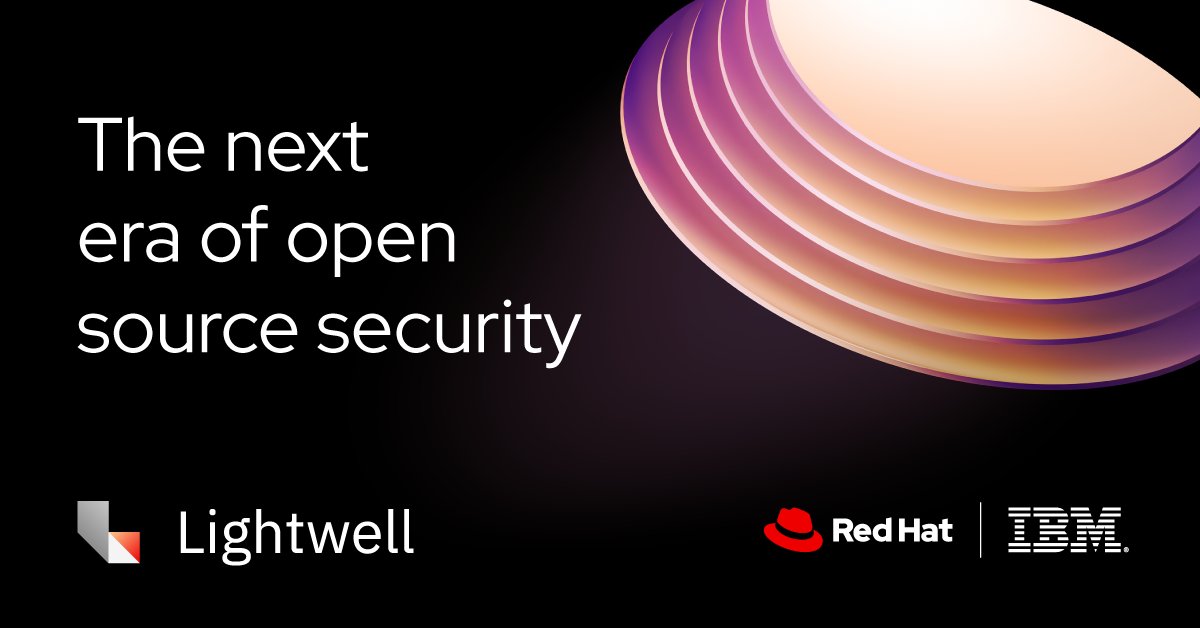
Securing the global open source software supply chain has long been a paramount concern for enterprises, governments, and developers alike. Addressing this massive systemic challenge, Project Lightwell represents a monumental commitment of $5 billion alongside an initiative to engage 20,000 engineers dedicated to helping secure shared open source software.

The initiative focuses heavily on the realities of modern threat landscapes, where malicious actors and defenders alike are increasingly turning to automation. Recently, Malcolm Gladwell sat down with Red Hat’s Gunnar Hellekson and other cybersecurity leaders for Smart Talks with IBM to discuss the implications of AI-driven vulnerability discovery. As artificial intelligence transforms how code is analyzed and exploited, defending shared digital infrastructure requires unprecedented collaboration, scale, and proactive defense mechanisms. Project Lightwell aims to bridge this gap by injecting substantial financial resources and engineering talent directly into the core layers of the open source ecosystem that power modern enterprise computing.

Join Us for a Global Virtual Event: What’s Next in Open Source Security
To help organizations navigate these shifting security paradigms, Red Hat announced its inaugural global virtual event, "What’s Next in Open Source Security," scheduled for November 12.
The event brings together a diverse assembly of security leaders, platform engineering teams, and developers from around the world. Attendees will engage in discussions centered on current open source security challenges, emerging threat vectors, and collaborative solutions designed to harden enterprise pipelines. As modern software delivery pipelines grow increasingly complex—spanning multi-cloud environments, containerized architectures, and edge deployments—understanding how to maintain robust security postures without sacrificing velocity has never been more critical.

Sovereignty in the AI Era: Choice, Control, and Autonomy
As artificial intelligence transitions from experimental workloads into core enterprise operations, organizations are increasingly grappling with questions of digital independence and data jurisdiction. Speaking on these challenges, Red Hat Senior Vice President and Chief Revenue Officer Andrew Brown emphasized that true AI sovereignty must be built on the pillars of choice, control, and trust.
Citing recent trends outlined by Forrester regarding sovereign AI, Brown detailed four essential dimensions that organizations must evaluate: data sovereignty, technical autonomy, operational control, and assurance. According to Red Hat, an open hybrid cloud foundation is essential to underpinning this digital independence. By avoiding vendor lock-in and ensuring that enterprises retain absolute control over their data models, training pipelines, and execution environments, businesses can safely adopt AI technologies while adhering to regional regulatory frameworks and internal governance policies.

Future-Proofing Enterprise AI: The Impact of Post-Quantum Cryptography on Red Hat AI Enterprise
The advent of cryptographically relevant quantum computers poses a theoretical yet increasingly urgent threat to modern digital security. Organizations face the looming risk of "harvest-now-decrypt-later" attacks, where malicious entities intercept and store encrypted enterprise data and AI models today with the intent of decrypting them once quantum computing hardware matures.

To counter this future threat, Red Hat is actively integrating National Institute of Standards and Technology (NIST) post-quantum cryptography standards into its enterprise portfolio. These advanced cryptographic protections are being woven directly into Red Hat Enterprise Linux (RHEL) and OpenShift, fundamentally reshaping Red Hat AI Enterprise across development workbenches, continuous integration pipelines, artifact registries, and model-serving infrastructure. By proactively hardening these environments, Red Hat aims to protect enterprise AI assets against the cryptographic vulnerabilities of tomorrow.

Announcing Fedora 45
On the operating system front, the Fedora Project has officially announced the release of Fedora Linux 45, bringing a robust suite of security enhancements, developer tools, and desktop updates to the community.

Fedora Linux 45 introduces enforced RPM signature checking enabled by default, significantly tightening package integrity verification across systems. Additionally, the release incorporates new kernel ptrace restrictions designed to limit unprivileged user access and enhance overall system hardening. Developers will find an updated GNU Toolchain featuring GCC 16.2, while desktop users can choose between the newly updated GNOME 51 and Plasma 6.8 desktop editions. Furthermore, the release enhances trust and verification through OpenPGP integration via Sequoia, continuing Fedora’s tradition of pioneering cutting-edge open source technologies in a stable, community-driven distribution.





No comments yet. Be the first to join the conversation!