


In the contemporary digital landscape, IT leaders face an increasingly complex balancing act. They must maintain the rock-solid reliability of core operational systems while simultaneously driving rapid infrastructure transformation to unlock new business value. Navigating tight budget constraints, managing complex multicloud architectures, accelerating developer productivity, and integrating artificial intelligence all at once have amplified the pressure to modernize legacy systems without introducing undue operational risk.
To meet these multifaceted demands, organizations spanning every major global industry are turning to Red Hat OpenShift as their unified application platform of choice across the hybrid cloud. Backed by extensive adoption across the Fortune Global 500 and Fortune 500, this platform has become a cornerstone for enterprises seeking to bridge the gap between traditional IT infrastructure and next-generation workloads. By examining how specific global enterprises are deploying Red Hat OpenShift today, industry observers can gain a clearer picture of how modern architecture is evolving to tackle complex challenges and prepare for future demands.
Emirates NBD: Unifying Virtual Machines, Containers, and AI
Serving more than 20 million customers across the financial services sector, Emirates NBD faced the critical challenge of maintaining continuous, around-the-clock banking services while simultaneously overhauling its core technical architecture. The institution required a centralized platform capable of supporting high-stakes financial transactions while offering the agility needed to modernize legacy systems. Grounded in open-source standards and the flexibility of hybrid cloud environments, the bank selected Red Hat OpenShift.
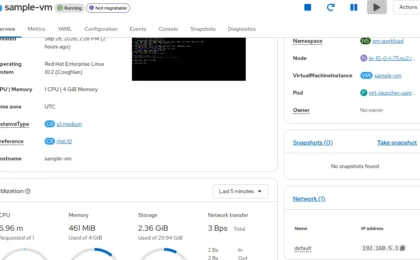
Through the implementation of Red Hat OpenShift Virtualization, Emirates NBD successfully broke down the traditional barriers separating legacy virtual machines from modern containerized applications. The platform allowed the institution to scale its operations to migrate as many as 140 virtual machines per night with minimal friction. Today, Emirates NBD runs approximately 9,000 virtual machines directly alongside containerized and AI-native workloads on a single, unified platform.
Furthermore, by integrating Red Hat OpenShift AI into its ecosystem, the bank optimized its underlying graphics processing unit resources, significantly accelerating the deployment of artificial intelligence initiatives. Miguel Rio-Tinto, Group Chief Digital and Information Officer at Emirates NBD, noted that Red Hat OpenShift Virtualization effectively eliminates the false choice between traditional and modern infrastructure. By running business-critical virtual machines and AI-native container workloads side-by-side on the same platform, the bank has achieved faster innovation, reduced operational complexity, and established a robust foundation ready for enterprise-wide AI at scale.
Aramco: Powering Upstream Efficiency and AI Scaling
In the energy sector, operational efficiency and advanced data modeling are paramount. Aramco required an enterprise-grade platform that could simplify user access to generative artificial intelligence while accelerating critical upstream tasks such as reservoir simulation, drilling optimization, and complex geological modeling.

To overcome these hurdles, Aramco engineered the Aramco GenAI Foundation, powered by Red Hat OpenShift. The platform’s microservices architecture, paired with built-in observability tools, provided Aramco with the enterprise-grade security and deep resource visibility necessary to onboard and deploy generative AI models in under an hour. When combined with the Red Hat Ansible Automation Platform, the organization witnessed a dramatic reduction in virtual machine deployment times, shrinking the process from weeks down to a matter of hours.
The business impact of this architectural shift was immediate and measurable. Drill and plant engineers, alongside data scientists, can now complete heavy data analysis tasks up to ten times faster than before. This substantial speed increase saves engineers and data scientists an average of two hours per day, freeing up valuable human capital to focus on strategic innovation and complex problem-solving rather than manual data processing.
CAE: Standardizing Hybrid Cloud and Developer Efficiency
As a global leader in civil aviation flight training and defense simulation—supporting an estimated 15,000 daily flights worldwide—CAE encountered the challenge of standardizing application development across a fractured landscape of cloud, hybrid, and on-premise systems. The organization needed a cohesive strategy to empower its workforce of 2,000 developers and engineers without stifling creativity or introducing security vulnerabilities.
By deploying Red Hat OpenShift alongside Microsoft Azure Red Hat OpenShift and Red Hat OpenShift Service on AWS (ROSA), CAE successfully established a consistent, cloud-agnostic developer experience spanning 12 distinct clusters across 7 geographic regions.
The integration of automated continuous integration and continuous deployment pipelines, reusable development templates, and centralized security monitoring via Red Hat Advanced Cluster Management and Red Hat Advanced Cluster Security allowed CAE to dramatically reduce its overall infrastructure overhead. Consequently, internal developers are now able to concentrate their efforts on engineering real-world simulation solutions rather than managing the underlying infrastructure that supports them.
Red Hat OpenShift for Today and Tomorrow
Whether organizations are looking to unify virtualized and containerized environments, streamline developer workflows across complex multicloud setups, or unlock the next frontier of enterprise generative AI, Red Hat OpenShift continues to provide a single, security-focused foundation for modern IT operations. As enterprises navigate the complexities of ongoing digital transformation, platforms that bridge the divide between legacy reliability and modern agility will remain essential to sustaining long-term business value.





No comments yet. Be the first to join the conversation!