

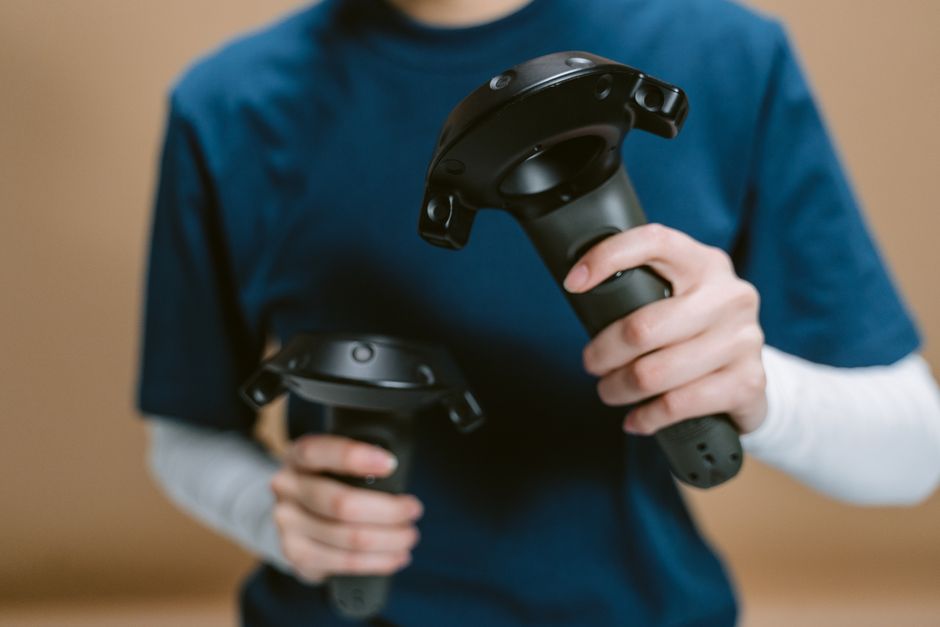
Kinect SDK: Unlocking New Frontiers in Motion-Controlled Interfaces
The advent of the Kinect SDK has fundamentally reshaped the landscape of human-computer interaction, transforming passive interfaces into dynamic, intuitive experiences driven by natural human motion. No longer are users tethered to keyboards and mice; the Kinect sensor, with its sophisticated depth-sensing and skeletal tracking capabilities, provides a rich stream of data that developers can harness to build truly immersive and responsive applications. This SDK acts as the crucial bridge, translating the physical world into a digital language that software can understand and act upon. The potential applications span a vast spectrum, from gaming and entertainment to healthcare, education, and industrial automation, each benefiting from the unparalleled fidelity of gesture recognition and body tracking.
At its core, the Kinect SDK’s power lies in its ability to capture and interpret human movement with remarkable accuracy. The sensor itself employs a combination of a standard RGB camera and an infrared projector/camera to generate a 3D depth map of its surroundings. This depth information is critical, allowing the SDK to discern objects and their distances from the sensor. But the true magic happens with the skeletal tracking algorithms. The SDK can identify up to 20 joints on a human body – including the head, shoulders, elbows, wrists, hips, knees, and ankles – and track their precise 3D positions in real-time. This skeletal data is then exposed through the SDK, providing developers with a robust framework to build applications that respond to the nuanced movements of the human form. This is a paradigm shift from traditional input methods, offering a more natural and accessible way for users to interact with technology, especially for those who may find conventional interfaces challenging.
The developer ecosystem fostered by the Kinect SDK has been instrumental in its widespread adoption and the exploration of its capabilities. Microsoft, the creator of Kinect, provided comprehensive documentation, code samples, and APIs that lowered the barrier to entry for developers of all skill levels. The SDK abstracts away the complexities of raw sensor data processing, allowing developers to focus on the creative aspects of application design. This accessibility has fueled innovation, leading to a diverse range of applications that showcase the versatility of motion control. From the early days of interactive games and fitness applications to more sophisticated uses in robotics, virtual reality training, and even artistic installations, the Kinect SDK has empowered a generation of creators to push the boundaries of what’s possible.
One of the most impactful areas where the Kinect SDK has opened new worlds is in the realm of immersive gaming and entertainment. The ability to control game characters with bodily movements, rather than button presses, offers a visceral and engaging experience. Games can leverage full-body gestures for actions like swinging a sword, throwing a ball, or performing complex dance routines. Beyond simple character control, the Kinect SDK enables sophisticated environmental interaction. Players can duck behind cover, lean to peek around corners, or even physically dodge projectiles, all translated into in-game actions. This level of immersion significantly enhances player engagement and enjoyment, making games feel more lifelike and interactive. The SDK’s capacity to track not just discrete movements but also the flow and continuity of motion is key to creating fluid and responsive gameplay. Furthermore, the SDK’s ability to differentiate between various body parts allows for fine-grained control, enabling developers to map specific gestures to specific actions with high precision.
The impact of the Kinect SDK extends far beyond the entertainment industry, finding significant utility in healthcare and rehabilitation. For patients undergoing physical therapy, the Kinect sensor can provide a motivating and engaging way to perform prescribed exercises. The SDK’s skeletal tracking can accurately measure range of motion, joint angles, and movement quality, providing objective data for therapists to monitor progress and tailor treatment plans. Gamified rehabilitation programs, powered by the Kinect SDK, can make repetitive exercises more enjoyable, leading to increased patient adherence and better outcomes. For instance, a patient recovering from a stroke might be tasked with reaching for virtual objects, with the Kinect SDK precisely measuring their arm’s trajectory and speed. This real-time feedback loop, both for the patient and the therapist, is invaluable. Moreover, the SDK’s ability to recognize subtle tremors or inconsistencies in movement can aid in the early diagnosis of neurological conditions.
Education is another sector ripe for transformation by the Kinect SDK. Interactive learning environments can be created that engage students through kinesthetic experiences. Imagine history lessons where students can physically enact historical events, or science classes where they can manipulate virtual molecules with their hands. The SDK facilitates the creation of educational games that teach complex concepts in a fun and memorable way. For example, in an anatomy lesson, students could virtually dissect a body by making precise hand movements, learning about different organs and their spatial relationships. This multisensory approach to learning caters to different learning styles and can significantly improve knowledge retention. The SDK’s depth-sensing capabilities can also be used to create interactive exhibits in museums and science centers, allowing visitors to engage with exhibits in a more hands-on and personalized manner.
The industrial and professional sectors are also reaping the benefits of Kinect SDK-powered motion control. In manufacturing, workers can be trained on complex assembly processes in a virtual environment, reducing the need for physical prototypes and minimizing safety risks. The SDK’s ability to track gestures and actions can be used to guide workers through intricate procedures, providing real-time feedback on their performance. This is particularly useful for repetitive tasks where precision and consistency are paramount. Furthermore, in fields like architecture and design, the Kinect SDK can enable immersive walkthroughs of virtual models, allowing clients to experience a building or product before it is constructed, and enabling designers to make real-time modifications based on user feedback. The SDK’s 3D scanning capabilities can also be utilized for quality control, allowing for rapid and accurate measurement of manufactured parts.
The technological underpinnings of the Kinect SDK are a marvel of modern engineering. The depth camera, typically a structured light system, projects a pattern of infrared light onto the scene. By analyzing how this pattern is distorted, the SDK can calculate the depth of each pixel in the image. This depth data is then fused with the RGB color data to create a rich, detailed representation of the environment. The skeletal tracking algorithms, which have undergone significant refinement since the SDK’s inception, employ advanced computer vision techniques to detect and track the human body. These algorithms are robust enough to handle variations in lighting, background clutter, and even occlusions, where parts of the body might be hidden from view. The SDK also provides access to raw depth data, allowing for more advanced applications that go beyond skeletal tracking, such as object recognition and environmental mapping.
The evolution of the Kinect SDK has been characterized by continuous improvement and expansion of its capabilities. Early versions focused on basic skeletal tracking and gesture recognition, while later iterations introduced features like improved accuracy, wider field of view, and the ability to track multiple users simultaneously. The introduction of the Kinect for Windows SDK democratized access to this powerful technology, allowing for a wider range of commercial and academic applications to be developed. While dedicated hardware has evolved, the core principles of depth sensing and skeletal tracking remain central to the SDK’s functionality, making it a foundational technology for understanding and interacting with the physical world through digital means. The ongoing development of AI and machine learning algorithms further enhances the SDK’s ability to interpret complex human behavior, moving beyond simple gesture recognition to understanding intent and context.
Looking ahead, the Kinect SDK continues to be a powerful enabler for the next generation of interfaces. As augmented reality (AR) and virtual reality (VR) technologies mature, the ability to interact with these digital environments using natural body movements will become increasingly crucial. The Kinect SDK, with its robust tracking capabilities, is perfectly positioned to be a key component in these immersive experiences. Imagine a future where virtual collaboration tools allow colleagues to interact with 3D models in a shared virtual space, using their actual body language to communicate and manipulate objects. The SDK can bridge the gap between the physical and digital realms, creating seamless and intuitive interactions. The ongoing research into advanced body pose estimation, hand tracking, and facial expression recognition, all enabled by the principles pioneered by the Kinect SDK, promises to further unlock new worlds of possibilities for human-computer interaction. The continued development of real-time analytics derived from motion data will also open new avenues for research and application in fields as diverse as sports performance analysis and urban planning.
The impact of the Kinect SDK on the accessibility of technology cannot be overstated. For individuals with physical disabilities that make traditional input methods difficult, Kinect offers a lifeline to engage with computers and the digital world. The ability to control a computer with gestures can empower individuals to communicate, work, and play in ways that were previously inaccessible. This democratizing effect of motion-controlled interfaces, facilitated by the Kinect SDK, is a testament to its transformative potential. By breaking down physical barriers to interaction, the Kinect SDK fosters inclusivity and broadens participation in the digital age, ensuring that technology can be a tool for everyone, regardless of their physical capabilities. This focus on inclusivity is a critical aspect of its long-term relevance and impact.
In conclusion, the Kinect SDK has not merely introduced a new input method; it has fundamentally reimagined the very nature of human-computer interaction. By providing developers with the tools to harness the power of natural human motion, it has opened up new worlds of possibilities across gaming, healthcare, education, industry, and beyond. Its sophisticated depth-sensing and skeletal tracking capabilities, coupled with a robust developer ecosystem, have fostered innovation and creativity, leading to applications that are more intuitive, immersive, and accessible. As technology continues to evolve, the principles and capabilities pioneered by the Kinect SDK will undoubtedly remain at the forefront of shaping the future of how we interact with the digital world, paving the way for even more profound and transformative experiences. The ongoing refinement of its algorithms and the exploration of its potential applications ensure that the legacy of the Kinect SDK as a catalyst for innovation in motion-controlled interfaces will continue to grow.











No comments yet. Be the first to join the conversation!