

The Rising Wave of Gamification A Deep Dive
The rising wave of gamification is transforming industries, from education to healthcare, and even finance. This isn’t just about adding points and badges; it’s about understanding user motivation and behavior to create engaging experiences. Gamification leverages game design principles to boost engagement, improve learning, and drive results. This exploration dives deep into the core concepts, applications, challenges, and future trends of this powerful approach.
Gamification isn’t just a passing fad; it’s a potent tool for fostering interaction, improving productivity, and motivating users in diverse sectors. From captivating learning experiences to driving sales, gamification has proven its effectiveness in boosting user engagement and creating memorable interactions. Understanding the mechanics behind reward systems, leaderboards, and storytelling is key to harnessing its full potential.
Introduction to Gamification
Gamification is the application of game design elements and game principles in non-game contexts. It leverages the motivational aspects of games to improve engagement, motivation, and participation in tasks and processes that might otherwise be perceived as mundane or tedious. This approach aims to transform user experiences by making them more enjoyable and rewarding, fostering a sense of accomplishment and progress.The core idea behind gamification is to tap into our innate human desires for competition, achievement, and social connection.
By incorporating game mechanics into everyday activities, gamification can increase user engagement, boost productivity, and drive desired behaviors. This is particularly effective in situations where intrinsic motivation is lacking or needs reinforcement.
Core Principles of Gamification
Gamification rests on several fundamental principles, which are often intertwined. These principles focus on creating systems that feel engaging and meaningful to users. A key component is understanding user psychology and tailoring the experience to their specific needs and preferences. The design must also address the intended outcomes and consider the user journey through the system.
Key Elements of a Gamified System
Gamified systems typically incorporate several key elements, each contributing to the overall experience. These elements are carefully chosen and balanced to create a sense of challenge, reward, and progress. The interplay between these elements determines the system’s effectiveness.
- Points and Badges: These provide tangible recognition for achievements and participation. Points are often accumulated through completing tasks or actions, while badges represent milestones or special accomplishments, serving as visible proof of progress and mastery.
- Leaderboards: These foster competition and showcase user performance relative to others. They can be a powerful motivator, driving users to strive for higher rankings and outperform their peers.
- Levels and Progression: These elements create a sense of progression and accomplishment. As users advance through levels, they unlock new content, features, or abilities, keeping them engaged and motivated to continue their journey.
- Challenges and Quests: These create a sense of purpose and drive users to overcome obstacles. Challenges can be designed to be progressively more difficult, encouraging mastery and sustained engagement.
Examples of Gamification in Various Sectors
Gamification is increasingly being adopted across diverse industries to achieve specific business goals. Its effectiveness lies in its ability to create engaging and motivating experiences, leading to increased user participation and improved outcomes.
- E-learning: Gamified learning platforms make educational content more engaging and interactive, motivating students to learn and retain information. Quizzes, points, and badges are often used to create a sense of accomplishment and progress.
- Customer Service: Gamified customer service platforms can motivate customer service representatives to provide excellent service, fostering a sense of accomplishment and reward for positive interactions. Points, badges, and leaderboards can incentivize higher quality service.
- Healthcare: Gamified health apps can motivate users to achieve health goals, encouraging consistent participation in their wellness routines. Progress tracking, rewards, and challenges can foster a sense of personal responsibility and achievement.
Comparing Gamification Approaches
Different approaches to gamification can be categorized and contrasted based on their core mechanics. The table below highlights some key distinctions.
| Approach | Mechanism | Pros | Cons |
|---|---|---|---|
| Points-based | Users earn points for completing tasks. | Simple to implement, tracks progress. | Can become overly focused on quantity over quality. |
| Badges | Users earn badges for specific achievements. | Visually rewarding, signifies mastery. | Badges can lose value if not earned through meaningful effort. |
| Leaderboards | Users are ranked against others. | Creates healthy competition. | Can lead to stress or disengagement if not managed appropriately. |
The Rise of Gamification
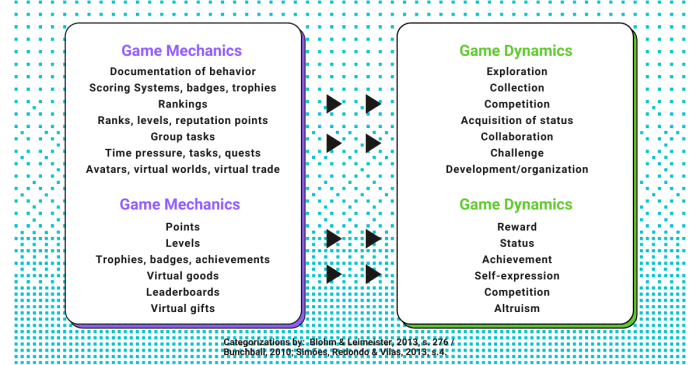
Gamification, the application of game design elements to non-game contexts, is rapidly transforming industries from education to e-commerce. Its increasing prevalence is driven by a multitude of factors, reflecting a growing understanding of human motivation and engagement. This evolution is more than just a trend; it’s a powerful tool that can significantly enhance user experience and drive desired behaviors.The core principle behind gamification is to leverage intrinsic human motivations, such as the desire for achievement, competition, and social connection.
This is accomplished by incorporating elements like points, badges, leaderboards, and challenges into tasks that might otherwise be perceived as mundane or tedious. The result is often increased user engagement, improved performance, and a more positive user experience.
The rising wave of gamification is everywhere, subtly weaving itself into everyday tasks. From productivity apps to social media platforms, the desire to make things more engaging and interactive is clear. This trend mirrors Google’s expansion into new territory, like their public DNS service, google expands its empire with public dns service , suggesting a larger strategy to further integrate user experience with its products.
This innovative approach ultimately underscores the pervasive influence of gamification in the digital landscape.
Factors Driving the Increasing Use of Gamification
Several key factors are propelling the widespread adoption of gamification. These factors highlight a fundamental shift in how companies interact with customers and employees. Firstly, the desire for increased user engagement and retention is paramount. Gamification provides a dynamic and engaging platform that can keep users coming back for more. Secondly, gamification enables the achievement of specific business objectives, like driving sales or improving employee productivity.
Furthermore, it fosters a sense of community and encourages healthy competition amongst users, ultimately improving the overall experience.
Trends Shaping the Current Gamification Landscape
The gamification landscape is constantly evolving, driven by technological advancements and shifting user expectations. A significant trend is the integration of gamification with other technologies, such as AI and augmented reality (AR). This integration allows for more personalized and immersive experiences. Another important trend is the move towards more subtle and less intrusive gamification strategies. Companies are increasingly integrating game mechanics seamlessly into the user experience, rather than employing overtly game-like interfaces.
This approach is more subtle and natural, leading to a better overall experience.
Evolving Needs and Expectations of Users Interacting with Gamified Systems
Users are increasingly sophisticated in their expectations of gamified systems. They are no longer satisfied with basic reward systems. The need for personalized experiences is paramount. Users want systems that understand their individual preferences and tailor the gamified elements accordingly. Furthermore, systems should offer a sense of progression and accomplishment.
Users want to feel that their efforts are valued and recognized.
Effectiveness of Gamification Across Different User Demographics
The effectiveness of gamification can vary across different user demographics. While certain elements may resonate with younger generations, other elements might be more effective with older users. For instance, social interaction-based gamification can be particularly effective in engaging younger users. However, systems that focus on mastery and skill development can be engaging across a broader range of ages.
Prominent Gamification Tools and Platforms
Numerous tools and platforms facilitate the implementation of gamification strategies. These tools offer a range of features and functionalities to support diverse needs. A few prominent examples include:
- Points and badges systems, such as Badgeville and Points.io, provide a fundamental framework for recognizing and rewarding user achievements.
- Leaderboard platforms, like Leaderboard.io, allow users to compete with each other and track their progress.
- Game mechanics providers, such as PlayFab and Gamification Engine, offer comprehensive solutions for incorporating various game mechanics into existing applications.
These platforms provide valuable support in implementing gamification strategies, catering to diverse needs and complexity levels.
Applications of Gamification: The Rising Wave Of Gamification

Gamification, the application of game design elements to non-game contexts, has exploded in popularity across various industries. This shift reflects a growing recognition of the power of intrinsic motivation and engagement in achieving desired outcomes, beyond the purely extrinsic rewards of traditional systems. It’s not just about adding points and badges; it’s about crafting experiences that resonate with users, fostering a sense of accomplishment and encouraging desired behaviors.
Gamification in Education
Gamified learning platforms are increasingly common, transforming the traditional classroom experience. These platforms often incorporate points, leaderboards, and challenges to motivate students and make learning more interactive and engaging. For example, Duolingo, a popular language learning app, employs gamified elements to encourage consistent practice and track progress, leading to increased user retention and improved learning outcomes. Interactive simulations and virtual worlds provide immersive learning experiences that can be especially effective for complex subjects.
This approach is particularly helpful in making abstract concepts more tangible and understandable.
Gamification in Marketing and Sales
Gamification in marketing and sales is designed to boost customer engagement and loyalty. Loyalty programs, for instance, use points and rewards to incentivize repeat purchases and build stronger customer relationships. Companies are using game mechanics to enhance customer journeys and create memorable experiences. For example, a company might offer a series of challenges or quests within its website or app to guide users through a product’s features or unlock exclusive content, thereby boosting customer engagement and brand loyalty.
Gamification in Healthcare
Gamification is showing promise in improving patient engagement and adherence to treatment plans. Health apps and programs use game mechanics to encourage healthy behaviors, like tracking steps, managing calorie intake, or taking medications. For example, programs that offer rewards for meeting health goals can motivate users to make positive lifestyle changes, potentially reducing chronic disease risk.
Gamification in Employee Engagement
Gamification can enhance employee engagement and productivity. Companies can design internal competitions or challenges to encourage teamwork, innovation, and skill development. This can manifest in training programs, knowledge sharing initiatives, and company-wide challenges. For example, a company might create a gamified onboarding program to make the transition for new hires smoother and more engaging, improving their retention rate.
Gamification in Finance and Other Industries
In the financial sector, gamified platforms can help educate customers about financial products and improve their understanding of personal finance. Furthermore, gamification can be applied to training programs for financial advisors, making the process more interactive and engaging. Outside of finance, gamification is being used in fields like manufacturing to improve efficiency, and in logistics to optimize delivery routes, creating a more engaging and motivating work environment.
Advantages and Disadvantages of Gamification in Different Sectors
| Sector | Advantages | Disadvantages |
|---|---|---|
| Education | Increased student engagement, improved learning outcomes, personalized learning experiences | Potential for over-reliance on extrinsic rewards, difficulty in adapting to diverse learning styles |
| Marketing/Sales | Enhanced customer engagement, increased brand loyalty, improved customer journey | Potential for perceived artificiality, difficulty in measuring ROI |
| Healthcare | Improved patient engagement, increased adherence to treatment plans, better health outcomes | Potential for misinterpretation of game mechanics, need for careful design to avoid creating unhealthy competition |
| Employee Engagement | Increased productivity, improved teamwork, enhanced employee morale | Potential for feelings of pressure or competition, difficulty in balancing intrinsic and extrinsic motivation |
| Finance | Improved customer understanding of financial products, increased financial literacy, enhanced advisor training | Potential for ethical concerns regarding financial products, need for accurate and transparent feedback mechanisms |
Challenges and Considerations
Gamification, while offering powerful engagement tools, presents several challenges. Careful planning and execution are crucial to avoid unintended consequences and maximize positive impact. Implementing gamified systems requires a nuanced understanding of potential drawbacks, ethical considerations, and user needs. Failing to address these aspects can lead to user frustration, decreased motivation, and ultimately, failure of the initiative.
The rising wave of gamification is everywhere, from educational apps to productivity tools. It’s fascinating how interactive elements are being woven into everything, but do you really want a smart tablet? do you really want a smart tablet ? Perhaps you’d be better off focusing on the underlying principles of gamification, like clear goals and rewarding progress, and applying those to existing tools.
This approach might just prove more effective in the long run for achieving your objectives. The key takeaway is that gamification, done right, can enhance any experience, from simple tasks to complex projects.
Potential Drawbacks of Implementing Gamification
Gamification, like any new technology, carries potential downsides. Poorly designed systems can lead to a negative user experience, undermining the very goals of engagement and motivation. For instance, overly complex or poorly explained game mechanics can confuse users and frustrate their attempts to interact with the system. Another potential pitfall is the development of a “reward-driven” culture, where users become overly focused on the extrinsic rewards rather than the intrinsic value of the activity itself.
This can negatively impact long-term engagement and create a dependency on external incentives. Finally, poorly designed leaderboards or competition features can exacerbate social anxieties and create unhealthy levels of competition among participants.
Ethical Concerns Related to Gamification
Ethical considerations are paramount when implementing gamified systems. One key concern is the potential for manipulation or exploitation of users. Gamified systems must be designed with ethical frameworks in mind to ensure fairness and transparency. Excessive pressure to achieve high scores or compete against others can potentially lead to stress and anxiety, particularly among vulnerable populations. Additionally, data privacy concerns regarding user information collected within gamified systems must be addressed.
Importance of User Experience in Gamified Systems
User experience (UX) is paramount in gamified systems. A positive UX directly correlates with increased user engagement and satisfaction. Gamified systems should prioritize intuitive interfaces, clear instructions, and a seamless user journey. A poorly designed interface can lead to user confusion and disengagement, making it critical to carefully consider the user’s needs and expectations. Gamified systems should provide users with appropriate feedback and support to navigate the system effectively.
Clear explanations and helpful resources are essential for a positive user experience. Testing and iterating on the user experience throughout the design process is crucial to ensuring that the system meets user needs.
Need for Clear Objectives and Measurable Outcomes
Success in gamification depends on clearly defined objectives and measurable outcomes. Before implementing a gamified system, it’s essential to establish specific, measurable, achievable, relevant, and time-bound (SMART) goals. Without clearly defined goals, it becomes difficult to track progress and assess the effectiveness of the system. For example, if the goal is to increase user engagement, the system should have metrics in place to track how users interact with the platform.
This could include the frequency of visits, time spent on tasks, and completion rates. These metrics provide insights into whether the system is achieving its intended outcomes.
Strategies to Avoid Over-reliance on Rewards
While rewards can be effective motivators in the short term, over-reliance on them can lead to issues. Systems should be designed to foster intrinsic motivation, encouraging users to engage with the content or activity for its inherent value. A balance must be struck between extrinsic rewards and intrinsic motivation. Incorporate elements of challenge, mastery, and progress to make the activity more rewarding in itself.
For example, provide users with badges, points, and leaderboards, but also allow them to feel a sense of accomplishment from mastering a skill or completing a challenge. This approach can foster a more sustainable and rewarding engagement pattern.
Maintaining User Motivation in Long-Term Gamified Programs
Sustaining user motivation in long-term gamified programs requires careful planning. The novelty of rewards can wear off over time, so the system must evolve to keep users engaged. Gamified systems should offer a variety of challenges and activities to maintain interest. Incorporating a sense of community, social interaction, and collaborative features can foster a sense of belonging and encourage users to continue their participation.
Providing opportunities for users to share their achievements and experiences with others can enhance their motivation. Regular updates and adaptations to the system based on user feedback are vital to keeping the program fresh and engaging.
The rising wave of gamification is taking over various sectors, from education to marketing. It’s intriguing how interactive elements are being woven into everyday experiences. However, as companies increasingly leverage these techniques, transparency becomes paramount. This is especially true now that the FTC is telling bloggers and advertisers to come clean here about sponsored content, ensuring consumers aren’t misled.
Ultimately, ethical practices are crucial to maintain the trust and engagement that gamification aims to foster.
Future of Gamification
The rise of gamification has irrevocably altered how we interact with software, education, and even everyday tasks. This shift is only accelerating, and the future of gamification promises even more innovative applications. We’re moving beyond simple points and badges to more sophisticated engagement models, deeply integrated with emerging technologies.Gamification is no longer a novelty; it’s a powerful tool that’s transforming various sectors.
The future trajectory will see a greater focus on personalization, adaptability, and seamless integration with AI and other advanced technologies. This evolution will redefine how we learn, work, and play, offering unprecedented opportunities for engagement and motivation.
Predicting Future Gamification Trends
The future of gamification will likely see a continued increase in its application across diverse sectors. Expect to see more complex and immersive experiences, driven by advancements in technology. The core principles of gamification – motivation, engagement, and learning – will remain central, but the methods and tools for achieving them will evolve. For instance, the use of virtual and augmented reality will likely create more interactive and engaging environments for gamified applications.
Emerging Technologies Influencing Gamification
Several emerging technologies will significantly impact the future of gamification. Virtual reality (VR) and augmented reality (AR) will create more immersive and interactive experiences, making learning and engagement more engaging and realistic. For example, a history lesson could be gamified using AR to overlay historical figures onto real-world locations. Similarly, the Internet of Things (IoT) will allow for more contextually relevant and personalized gamified experiences.
Imagine a smart home where daily tasks are gamified, and rewards are tied to energy efficiency or healthy habits.
Role of Artificial Intelligence in Future Gamification Systems
AI will play a pivotal role in shaping the future of gamification. AI-powered systems can analyze user behavior and tailor game mechanics to individual needs, creating personalized and adaptive learning experiences. This personalization can range from adjusting difficulty levels to suggesting relevant tasks or content based on progress and performance.
Impact of Personalized Learning and Adaptive Gamification
Personalized learning, powered by AI, will be crucial in the future of gamification. Adaptive gamification systems will adjust the difficulty, content, and rewards based on individual user performance. This creates an environment where each user progresses at their own pace and in a way that best suits their learning style. For example, an educational game could adjust the complexity of math problems based on a student’s accuracy and speed in answering them.
Comparison of Gamification Models for Future Scenarios
| Gamification Model | Strengths | Weaknesses | Future Applications ||—|—|—|—|| Points-Based System | Simple to implement, widely understood | Can become demotivating, lacks depth | Basic task completion, early-stage educational games || Badges and Achievements | Encourages progression, fosters a sense of accomplishment | Can feel superficial, lack meaningful connection | Motivating employees, acknowledging contributions || Leaderboards | Creates healthy competition, boosts engagement | Potential for unhealthy competition, focus on ranking over learning | Team-based projects, professional development || Challenges and Quests | Offers structured progression, encourages problem-solving | Can be challenging to design, may not suit all users | Complex problem-solving, professional skills development || Story-Driven Gamification | Creates a narrative, fosters emotional connection | Requires more design effort, may not appeal to all users | Educational simulations, role-playing games |
Influence of Gamification on Social Interactions
Gamification has the potential to reshape social interactions by fostering collaboration and engagement in new ways. Collaborative games can bring people together, encouraging teamwork and shared experiences. For example, a community-based game could encourage citizens to participate in local environmental projects. The rise of gamified social media platforms could also shape how we interact with friends and family, offering new ways to connect and share experiences.
Case Studies
Gamification, when implemented effectively, can transform various sectors. This section dives into specific case studies across education, business, healthcare, and marketing, demonstrating the tangible benefits and challenges of incorporating game mechanics. These examples highlight the potential of gamification to motivate, engage, and ultimately improve outcomes.
Successful Gamification in Education
Educational institutions are increasingly utilizing gamification to enhance student engagement and learning. A successful example is Duolingo, a language learning platform that employs a highly effective gamified approach. Points, badges, and leaderboards motivate users to practice regularly and achieve fluency milestones. The platform also incorporates progress tracking, adaptive learning, and personalized feedback, fostering a sense of accomplishment and progress, critical elements for effective learning.
Other examples include educational games that teach specific skills or concepts, like math or science, in an interactive and enjoyable way.
Gamification Success in a Corporate Setting
Gamification is proving valuable in boosting employee engagement and performance within corporate environments. A successful case study involves a large software company that introduced a gamified platform for employee training and knowledge sharing. The platform used points, leaderboards, and badges to incentivize participation in online courses and knowledge-sharing sessions. This led to a significant increase in employee engagement, knowledge retention, and ultimately, a higher skillset within the workforce.
The company observed a noticeable improvement in employee motivation and a boost in overall productivity.
Gamification in Healthcare
Healthcare professionals are leveraging gamification to improve patient engagement and adherence to treatment plans. A compelling example involves a gamified app designed to help patients manage their chronic conditions. The app provides rewards and recognition for achieving treatment goals, such as medication adherence, healthy eating, or exercise. The game mechanics, including progress tracking and challenges, motivate patients to actively participate in their health management, leading to better health outcomes.
This approach not only improves adherence but also fosters a sense of empowerment and ownership over their health journey.
Gamification Enhancing User Engagement
Gamification strategies are used to elevate user engagement across various platforms, including social media and e-commerce. A prime example involves a social media platform that introduced a points-based system for users who participate in community activities and share content. The gamified approach led to increased user activity, content creation, and overall platform engagement. This example showcases how gamification can transform passive users into active participants, boosting interaction and community building.
Gamified Marketing Campaigns, The rising wave of gamification
Gamified marketing campaigns are gaining popularity to enhance brand engagement and customer loyalty. A recent case study involved a retail company that launched a mobile game promoting their new product line. The game integrated the brand’s products and incorporated elements that rewarded users for interacting with the brand’s content and products. This campaign increased brand awareness, drove sales, and generated a strong sense of community around the brand.
Gamification is increasingly being used to engage customers in unique ways, fostering brand loyalty and promoting products.
Key Insights from Different Case Studies
| Case Study Area | Key Insights |
|---|---|
| Education | Gamification can motivate students and enhance learning outcomes. Personalized feedback and progress tracking are crucial. |
| Corporate | Gamification boosts employee engagement, knowledge retention, and productivity. Clear objectives and incentives are vital. |
| Healthcare | Gamification encourages patient engagement and adherence to treatment plans. Personalized rewards and recognition are effective. |
| User Engagement | Gamification transforms passive users into active participants, boosting interaction and community building. |
| Marketing | Gamified campaigns increase brand awareness, drive sales, and foster brand loyalty. Effective integration of the brand is essential. |
Deep Dive into Gamification Mechanics
Gamification is more than just slapping a few points and badges onto an existing system. It’s about deeply understanding and strategically implementing game mechanics to drive user engagement and achieve specific business objectives. This section delves into the core elements that make gamified experiences effective, exploring the interplay of reward systems, leaderboards, points, badges, narratives, and challenges.The success of a gamified system hinges on how well these mechanics are integrated.
A well-designed gamified environment should feel intuitive and rewarding, motivating users to actively participate and progress within the system.
Reward Systems in Gamified Environments
Reward systems are the lifeblood of any gamified experience. They are crucial for motivating users and driving desired behaviors. Effective reward systems are tailored to the specific goals of the gamified application. For example, in an educational platform, rewards might be tied to knowledge acquisition and skill development, while in a customer loyalty program, rewards might focus on purchase frequency and spending.
Rewards can be tangible, like discounts or merchandise, or intangible, like recognition and social status. The key is to align rewards with the user’s motivations and the overall goals of the gamified system.
Leaderboards and User Behavior
Leaderboards are a powerful tool for fostering competition and motivating users to strive for improvement. They provide a clear visual representation of progress and rankings, encouraging users to actively participate and achieve higher scores or positions. However, the design of leaderboards is crucial. If not managed effectively, leaderboards can sometimes create unnecessary stress or feelings of inadequacy.
Proper implementation includes clear ranking criteria, and considering the sensitivity of certain user groups.
Points and Badges
Points and badges are fundamental elements in gamified systems, acting as indicators of progress and achievements. Points serve as a quantifiable measure of user activity, while badges represent specific milestones or accomplishments. A well-structured point system allows for personalized progression and encourages sustained engagement. Badges, on the other hand, provide visual recognition and a sense of accomplishment, which can further motivate users.
Points and badges work best when they are meaningful and aligned with the overall goals of the gamified application.
Narratives and Storytelling in Gamified Experiences
Integrating compelling narratives and storytelling into gamified environments can significantly enhance user engagement and immersion. Stories provide context, build anticipation, and make the gamified experience more relatable and memorable. A good story can make users feel invested in the progress and outcomes, increasing their motivation to participate actively. This approach is effective in various contexts, from educational games to employee training programs.
Gamified Challenges and Quests
Challenges and quests are engaging tasks that provide structure and a sense of progression. They break down larger goals into smaller, manageable steps, making the overall experience less daunting. Effective challenges and quests should be tailored to the user’s skill level and provide appropriate levels of difficulty. Well-designed challenges keep users motivated and encourage continuous participation. For example, a gamified fitness application might offer a quest to reach a certain number of steps or calories burned.
Impact of Game Mechanics on User Engagement
| Game Mechanic | Impact on User Engagement | Example |
|---|---|---|
| Reward System | Motivates users, drives desired behaviors | Loyalty points for purchases in an e-commerce platform |
| Leaderboards | Fosters competition, motivates improvement | Ranking players in an online gaming tournament |
| Points | Quantifies progress, encourages participation | Points awarded for completing levels in a mobile game |
| Badges | Provides recognition, signifies achievements | Badges earned for reaching skill milestones in an educational app |
| Narratives | Enhances immersion, builds engagement | A compelling storyline in a role-playing game |
| Challenges/Quests | Provides structure, encourages progression | A series of missions to complete in a mobile strategy game |
Concluding Remarks
In conclusion, the rising wave of gamification is reshaping how we interact with products and services across various industries. While presenting numerous benefits, it also comes with challenges and ethical considerations. By understanding the core principles, applications, and potential pitfalls, businesses can leverage gamification effectively. The future of gamification is intertwined with emerging technologies and a deeper understanding of human behavior.
Ultimately, a well-designed gamified experience can foster motivation, engagement, and long-term success.