Is That A Computer Youre Wearing On Your Head
Is That a Computer You’re Wearing on Your Head? The Revolution of Wearable Computing
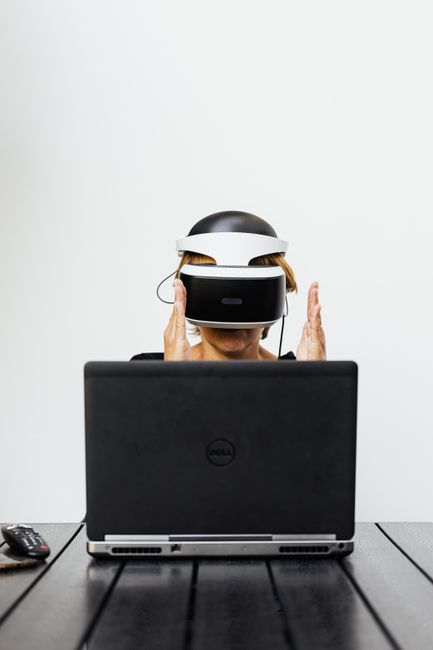
The question, "Is that a computer you’re wearing on your head?" is no longer a hypothetical musing about science fiction; it’s a direct interrogation of a rapidly evolving technological reality. Wearable computing, particularly head-mounted devices, has transitioned from niche concepts to powerful, multifaceted tools that are fundamentally altering how we interact with information, our environment, and each other. This burgeoning field encompasses a spectrum of devices, from augmented reality (AR) glasses that overlay digital information onto the real world, to virtual reality (VR) headsets that immerse users in entirely digital environments, and even sophisticated smart helmets designed for specific industrial and professional applications. The core functionality of these devices is undeniably computational, processing data, running applications, and facilitating communication, all while being physically integrated into headwear. Understanding the capabilities, applications, and future trajectory of these "computers on our heads" is crucial for navigating the transformative impact of wearable technology.
At its most fundamental, a computer is a device that can be programmed to carry out a sequence of arithmetic or logical operations automatically. Head-mounted computing devices meet this definition through their internal processors, memory, and storage capabilities, allowing them to execute complex software. AR glasses, for instance, contain microprocessors that interpret sensor data (like camera feeds and motion tracking), run algorithms to understand the user’s surroundings, and render digital graphics that are then displayed to the user. VR headsets employ even more powerful processors to render high-fidelity 3D environments in real-time, creating a sense of presence and immersion. Smart helmets, utilized in fields like construction, manufacturing, and healthcare, integrate communication modules, sensors, and sometimes even miniature displays to provide workers with crucial information and enhance safety. The "wearing" aspect isn’t merely a passive housing; it’s an integral design consideration that dictates the form factor, power efficiency, thermal management, and ergonomic integration of the computational components. This miniaturization and integration present significant engineering challenges, pushing the boundaries of silicon technology and battery life.
The applications of these head-mounted computers are expanding exponentially across diverse sectors. In the consumer realm, VR headsets are transforming gaming and entertainment, offering deeply immersive experiences previously confined to imagination. AR glasses are finding their way into everyday life, providing hands-free navigation, instant language translation, and the ability to access information contextually. Imagine walking down a street and having historical facts about buildings or real-time restaurant reviews appear in your field of vision. For professionals, the impact is even more profound. In manufacturing and logistics, AR glasses enable guided assembly processes, remote expert assistance, and inventory management, significantly reducing errors and improving efficiency. Technicians can receive step-by-step instructions projected directly onto their workspace, or a remote expert can see what they see and provide real-time guidance, saving travel time and reducing downtime. In healthcare, surgeons can access patient scans and vital signs overlaid onto their view during procedures, enhancing precision and patient outcomes. Medical students can train in simulated environments, experiencing complex surgeries without risk. The military is leveraging smart helmets for enhanced situational awareness, battlefield communication, and targeting systems.
The underlying technologies that power these head-mounted computers are a testament to rapid innovation. High-resolution micro-displays, often employing OLED or microLED technology, are essential for delivering crisp visuals without causing eye strain. Advanced optical systems, including waveguides and freeform lenses, are crucial for projecting digital images accurately and comfortably. Sophisticated sensor arrays, including cameras, inertial measurement units (IMUs), depth sensors, and sometimes even lidar, are vital for understanding the user’s environment and movements, enabling accurate spatial mapping and object recognition. Connectivity is another critical component, with Wi-Fi, Bluetooth, and increasingly 5G enabling seamless data exchange and communication with other devices and cloud services. The processing power required for real-time rendering and complex algorithms necessitates powerful yet power-efficient mobile processors, often custom-designed for these specific applications. Battery technology remains a significant bottleneck, as the demands of constant computation and display usage can drain power quickly, leading to ongoing research into more efficient battery chemistries and power management techniques.
The user interface (UI) and user experience (UX) are paramount for the adoption and effectiveness of head-mounted computers. Unlike traditional interfaces that rely on keyboards and mice, head-mounted devices typically utilize a combination of eye-tracking, hand gestures, voice commands, and sometimes even subtle head movements for interaction. This creates a more natural and intuitive way to engage with digital content, freeing up hands for other tasks. However, designing these interfaces requires a deep understanding of human perception and cognitive load. Developers must ensure that information is presented clearly and unobtrusively, avoiding sensory overload or distraction. The "computer on your head" needs to feel like an extension of the user, not a cumbersome appendage. This involves careful consideration of ergonomics, weight distribution, and thermal management to ensure comfort during prolonged use. The transition from a flat screen to a three-dimensional, spatial computing environment presents new challenges and opportunities for UI/UX designers.
Privacy and security are also significant considerations as these devices become more pervasive. Head-mounted computers, especially those with cameras and microphones, collect a wealth of personal data about the user and their surroundings. Robust security protocols are necessary to protect this data from unauthorized access and misuse. Furthermore, ethical guidelines are being developed to address concerns around surveillance, data ownership, and the potential for misuse of augmented and virtual reality technologies. As these devices become more integrated into our lives, the responsible development and deployment of this technology will be crucial for fostering public trust and ensuring equitable access. The potential for "digital ghettos" where only those with access to advanced head-mounted computers can fully participate in certain aspects of society is a concern that needs proactive addressing.
The future of head-mounted computing is incredibly promising, with continued advancements in miniaturization, processing power, battery life, and display technology. We can anticipate more sophisticated AI integration, enabling devices to understand context and anticipate user needs more effectively. The lines between AR and VR will likely blur further, leading to mixed reality (MR) experiences that seamlessly blend the digital and physical worlds. Haptic feedback technologies are also being developed to provide a more immersive and tangible interaction with virtual objects. The development of more affordable and consumer-friendly AR glasses could lead to mass adoption, similar to the smartphone revolution. As these devices become lighter, more stylish, and more powerful, the question will shift from "Is that a computer you’re wearing on your head?" to "What incredible things can this computer on my head do for me?" The ongoing evolution of these computational wearables promises to redefine human-computer interaction and unlock new frontiers of innovation and experience. The integration of advanced neural interfaces, allowing for more direct brain-computer interaction, is also on the horizon, further blurring the distinction between human and machine. The impact on education, remote work, social interaction, and even our understanding of consciousness itself could be profound.