The New Wave of App Development A Revolution
The new wave of app development is transforming the landscape, bringing innovative technologies and user-centric designs to the forefront. This revolution is driven by advancements in AI, machine learning, and augmented/virtual reality, along with the increasing importance of cloud computing and low-code/no-code platforms. Developers are embracing new methodologies, emphasizing user experience, and navigating a rapidly evolving market.
This in-depth exploration delves into the defining characteristics of this new wave, examining key trends, technologies, development methodologies, user experience considerations, market analysis, and future projections. We’ll also investigate real-world case studies that exemplify the innovative spirit of this exciting era in app creation.
Defining the New Wave
The landscape of app development is constantly evolving, with each “wave” bringing new technologies, paradigms, and opportunities. This new wave isn’t just a continuation of past trends; it represents a fundamental shift in how applications are designed, built, and deployed. It’s a confluence of advancements in several key areas, from the underlying infrastructure to the user experience. This new era emphasizes efficiency, accessibility, and user-centricity in ways never before seen.This new wave isn’t merely about faster speeds or sleeker interfaces; it’s a paradigm shift fueled by powerful trends.
The emphasis is on creating applications that seamlessly integrate into the user’s life, anticipating needs and providing solutions proactively. This shift is driven by the convergence of several technological forces and an evolving understanding of what constitutes a truly user-friendly and impactful application.
Key Characteristics of the New Wave
The new wave of app development distinguishes itself from previous iterations through several key characteristics. It’s characterized by a greater emphasis on user experience, innovative technologies, and an interconnected approach to application design.
- Focus on Seamless User Experience (UX): Modern users expect applications to integrate intuitively into their daily routines. The new wave prioritizes a smooth, almost invisible user experience, where the application becomes an extension of the user’s capabilities. This is achieved through proactive features, personalized experiences, and intuitive interfaces that anticipate user needs.
- Leveraging AI and Machine Learning (ML): AI and ML are transforming how applications interact with users. Applications are becoming more intelligent, providing personalized recommendations, automating tasks, and adapting to individual user preferences. Chatbots and predictive features are becoming commonplace, enriching user interactions.
- Emphasis on Cross-Platform Development: Developers are increasingly focused on building applications that can function seamlessly across various platforms (mobile, web, desktop) without requiring significant code changes. This approach reduces development time and cost while providing a consistent experience for the user.
Driving Technologies
Several key technologies are propelling this new wave of app development. These technologies are not isolated advancements but rather interconnected elements that amplify each other’s capabilities.
- Cloud Computing: Cloud platforms offer scalable infrastructure and readily available resources, enabling developers to build and deploy applications more efficiently and cost-effectively. Cloud-based services like databases, storage, and computing power are essential for supporting the demands of modern applications.
- Low-Code/No-Code Platforms: These platforms provide tools and interfaces that simplify the development process, making it accessible to a broader range of individuals and teams. This democratization of app development is crucial for fostering innovation and expanding the developer community.
- Progressive Web Apps (PWAs): PWAs combine the best of web and mobile applications, offering a consistent experience across different devices. They are increasingly popular due to their speed, accessibility, and seamless integration with other digital tools.
Comparison with Older Approaches
The new wave differs significantly from previous app development approaches in several aspects. Older methods often focused on platform-specific development, which could lead to fragmented user experiences and higher development costs.
| Characteristic | Older Approaches | New Wave |
|---|---|---|
| Development Platform | Platform-specific (e.g., native iOS or Android) | Cross-platform (e.g., React Native, Flutter) |
| User Experience | Platform-dependent user interface elements | Seamless and consistent user interface across platforms |
| Development Cost | Higher cost due to platform-specific development | Potentially lower cost due to cross-platform development and low-code/no-code tools |
Evolving Developer Landscape
The new wave is reshaping the developer landscape. The rise of new technologies and methodologies is creating new opportunities and roles. Specialized skills in areas like AI, ML, and cloud computing are in high demand.
- Specialized Skill Sets: Demand for developers with expertise in AI, ML, cloud computing, and cross-platform development is increasing significantly. This is crucial for building the applications that leverage these powerful tools and methodologies.
- New Roles and Responsibilities: The focus on user experience and cross-platform development has led to new roles, such as UX/UI designers specializing in cross-platform consistency. Roles focusing on cloud infrastructure and data management are also crucial.
- Importance of Collaboration: Complex applications often require collaboration among various specialists, from UX designers to back-end developers. Effective teamwork and communication are vital in the new wave.
Key Trends and Technologies

The new wave of app development is characterized by a rapid evolution, driven by powerful emerging technologies and changing user expectations. Developers are increasingly leveraging these advancements to create more intuitive, personalized, and engaging experiences. This shift necessitates a deep understanding of these trends and their implications for building robust and successful applications.The landscape of app development is undergoing a dramatic transformation, moving beyond traditional approaches.
This evolution is fueled by advancements in artificial intelligence, machine learning, augmented reality, and cloud computing. These technologies are not just adding features; they’re fundamentally altering how applications are conceived, designed, and deployed. Low-code/no-code platforms are also democratizing app development, allowing individuals with less technical expertise to create sophisticated applications. This new era requires developers to adapt and embrace these innovative tools to stay competitive and deliver exceptional user experiences.
Prominent Trends Shaping App Development
The rise of mobile-first strategies, coupled with the growing demand for seamless user experiences across diverse devices, has led to a significant focus on cross-platform development. Developers are seeking ways to optimize their codebase to accommodate different operating systems and hardware specifications. This has driven the adoption of cross-platform frameworks, which aim to streamline development efforts and reduce the need for separate codebases for various platforms.
The Significance of Emerging Technologies
Artificial intelligence (AI) and machine learning (ML) are transforming how applications interact with users. AI-powered chatbots provide personalized customer service, while ML algorithms enable applications to learn from user behavior and tailor their functionality accordingly. This personalized approach to user interaction creates a more engaging and efficient experience. Augmented reality (AR) and virtual reality (VR) are also playing increasingly important roles in app development.
The new wave of app development is seriously changing how we interact with digital content. It’s not just about sleek interfaces anymore; it’s about creating intuitive experiences that seamlessly integrate with our lives. Take, for example, how clicker charts the seas for online TV surfers , showcasing how apps can enhance the viewing experience and personalize it for individual preferences.
This trend is just the tip of the iceberg, and we’re only scratching the surface of what’s possible in the future of app development.
AR applications are used for interactive gaming, educational experiences, and product visualization, while VR is employed for immersive simulations and training programs.
The new wave of app development is really pushing boundaries, with AI integration and personalized experiences becoming the norm. This evolution, however, raises interesting questions about the reliability of information sources. For example, Wikipedia is taking steps to flag potentially questionable content by adding an orange cast to suspect entries, like in their recent initiative wikipedia to tinge suspect entries with orange cast.
This move reflects the growing need for accuracy and transparency in the digital age, which ultimately impacts how we consume and trust information, shaping the future of app development as well.
The Role of Cloud Computing and Serverless Architectures
Cloud computing and serverless architectures are reshaping application infrastructure. Cloud-based solutions offer scalable resources and reduce the burden of managing servers. This allows developers to focus on application logic rather than infrastructure management. Serverless architectures further enhance this by eliminating the need to manage server instances, allowing developers to focus entirely on the code. This approach is crucial for cost-effectiveness, scalability, and efficiency.
Impact of Low-Code/No-Code Platforms
Low-code/no-code platforms are simplifying the development process by providing visual tools and pre-built components. This empowers individuals with limited coding experience to create functional applications. This democratization of app development has accelerated innovation and opened new avenues for entrepreneurs and businesses. These platforms enable faster development cycles and reduce the cost of entry for creating applications.
Importance of Cross-Platform Frameworks and Tools
Cross-platform frameworks, such as React Native and Flutter, allow developers to create applications that run seamlessly across various operating systems. These frameworks leverage shared codebases, reducing development time and effort. This approach is crucial for achieving wider reach and accessibility, while maintaining consistency across platforms.
Innovative Applications Leveraging These Trends
Numerous innovative applications are leveraging these trends. For example, a fitness app utilizing AI to personalize workout routines, or an educational app employing AR to visualize historical events, or a gaming app leveraging VR to create immersive experiences. These examples demonstrate the potential of these technologies to transform various sectors.
Key Trends and Technologies Table
| Trend | Technology | Impact | Example |
|---|---|---|---|
| Cross-Platform Development | React Native, Flutter | Reduces development time and effort, enables wider reach | Mobile banking apps accessible on iOS and Android |
| AI/ML Integration | Machine Learning algorithms, AI chatbots | Personalization, improved user experience | Personalized recommendations in e-commerce apps |
| AR/VR Integration | Augmented Reality, Virtual Reality | Immersive experiences, interactive learning | AR app for furniture visualization in homes |
| Cloud Computing | Cloud platforms (AWS, Azure, GCP) | Scalability, cost-effectiveness, reduced infrastructure management | Scalable e-commerce platforms handling peak traffic |
| Serverless Architectures | Serverless functions (AWS Lambda, Azure Functions) | Focus on application logic, automatic scaling | Backend services for APIs, event-driven architectures |
| Low-Code/No-Code Platforms | AppSheet, Webflow | Democratization of app development, faster development cycles | Creating simple mobile apps for businesses without extensive coding |
Development Methodologies and Processes
The new wave of app development is characterized by rapid innovation and evolving user expectations. This necessitates a shift in traditional development methodologies to accommodate faster release cycles, increased collaboration, and the integration of diverse technologies. Modern apps demand agile responses to changing market demands and user feedback, driving a need for flexible and iterative development processes.This evolution is not just about adopting new tools; it’s about fundamentally changing how teams approach app creation.
A core component of this shift is the adoption of iterative development and CI/CD pipelines, fostering a continuous feedback loop and enabling quicker delivery of value to users. Agile and DevOps methodologies play a crucial role in this transformation.
Evolving Development Methodologies
Traditional waterfall methodologies, with their sequential phases, often struggle to adapt to the dynamic nature of modern app development. They are less flexible and less responsive to changing requirements. In contrast, agile methodologies prioritize iterative development, allowing for rapid adjustments based on user feedback and evolving market trends. This iterative approach facilitates quicker releases and ensures that the final product aligns with user needs.
Furthermore, the emphasis on continuous feedback loops enables developers to incorporate improvements and address potential issues early in the development process.
Agile and DevOps Approaches in Modern App Development
Agile methodologies, such as Scrum and Kanban, emphasize collaboration, flexibility, and iterative development. Agile teams work in short sprints, delivering functional increments of the application at the end of each sprint. This approach enables quicker feedback loops and ensures the product aligns with evolving user needs. DevOps, a combination of development and operations, emphasizes automation and collaboration between development and operations teams.
DevOps aims to shorten the release cycle and improve the reliability and scalability of applications by automating processes like testing and deployment.
Iterative Development and CI/CD
Iterative development is a crucial aspect of modern app development. It involves building and testing the app in small, incremental steps. This approach allows for continuous improvement and adaptation to user feedback throughout the development process. The concept of continuous integration/continuous deployment (CI/CD) is fundamental to iterative development. CI/CD automates the integration of code changes from various developers, facilitating quicker testing and deployment.
The continuous integration process ensures that code is integrated and tested frequently, minimizing the risk of integration issues and allowing developers to identify and resolve problems quickly. Continuous deployment automates the deployment of code changes to production, enabling faster releases and reducing manual errors.
Comparison with Traditional Approaches
| Methodology | Key Principles | Tools | Advantages ||—|—|—|—|| Waterfall | Sequential, linear phases | Project management software | Well-defined stages, clear deliverables || Agile | Iterative development, frequent feedback, collaboration | Scrum boards, Jira, Confluence | Adaptable to change, quicker feedback loops, improved collaboration || DevOps | Automation, collaboration between development and operations | Docker, Kubernetes, Jenkins | Faster release cycles, increased reliability, improved scalability |
User Experience and Design
The new wave of app development prioritizes user experience (UX) above all else. Apps are no longer just functional tools; they are extensions of users’ lives, demanding seamless integration and intuitive interactions. A well-designed UX fosters user engagement, satisfaction, and ultimately, app success. This focus on user-centricity permeates every aspect of the development process, from initial design to ongoing maintenance.User experience encompasses more than just the visual interface.
It’s about understanding the user’s needs, goals, and frustrations, and creating an app that effortlessly guides them towards their desired outcomes. This involves meticulous research, prototyping, and testing throughout the entire development lifecycle, ensuring the final product aligns perfectly with user expectations.
Crucial Role of User Experience
User experience (UX) plays a pivotal role in modern app development, driving user engagement and satisfaction. A well-designed UX not only improves the app’s usability but also enhances user perception of the brand. A positive UX leads to higher user retention, increased user loyalty, and ultimately, greater success for the app.
Significance of User-Centric Design Principles, The new wave of app development
User-centric design principles are fundamental to creating effective and engaging apps. These principles emphasize the importance of understanding user needs, behaviors, and motivations. By incorporating these principles, developers can create apps that are intuitive, efficient, and enjoyable to use. This approach ensures that the app caters directly to the user’s needs and goals.
The new wave of app development is bringing some serious security challenges to the forefront. Think about how interconnected everything is now, and how a seemingly minor vulnerability in one app can have massive repercussions. This brings us to the critical discussion surrounding the Intel intrusion – when is a hack just a hack, and when does it become a serious threat?
Digging deeper into this complex issue can help developers build more robust, secure applications. Understanding the intricacies of security vulnerabilities like those highlighted in the intel intrusion when is a hack just a hack is crucial for navigating this evolving landscape and building the next generation of trustworthy apps.
Influence of Latest UI/UX Trends
Contemporary UI/UX trends heavily influence app design. Minimalist design, intuitive navigation, and personalized experiences are key elements in creating modern apps. These trends aim to provide a streamlined user journey, reducing cognitive load and enhancing user satisfaction. For example, the increasing use of animations and micro-interactions adds subtle yet impactful touches, making the user experience more engaging.
Innovative and User-Friendly App Designs
Innovative app designs prioritize intuitive navigation and streamlined workflows. Examples include using parallax scrolling to enhance engagement, employing interactive elements to maintain user interest, and implementing gamification techniques to motivate users. The success of these designs lies in their ability to seamlessly integrate various functionalities while maintaining a user-friendly interface. For instance, apps like Instagram and Spotify exemplify the use of these elements, creating intuitive and enjoyable user journeys.
Impact of Accessibility Considerations
Accessibility considerations are paramount in modern app design. Designing for diverse users, including those with disabilities, ensures inclusivity and broad appeal. Features such as adjustable font sizes, alternative text for images, and keyboard navigation are crucial for creating an accessible user experience. This commitment to accessibility not only benefits users with disabilities but also enhances the app’s usability for all users.
For instance, a banking app with proper screen reader support and keyboard navigation is more inclusive and accessible for a broader audience.
User-Centric Design Principles
Understanding user needs and behaviors is essential for creating effective apps. This understanding guides the design process, leading to better user experiences.
| Principle | Description | Application | Example |
|---|---|---|---|
| User Research | Thorough investigation of user needs, behaviors, and motivations. | Identifying target user groups, understanding their tasks, and anticipating their challenges. | Conducting surveys, interviews, and usability testing. |
| User-Centered Design | Prioritizing user needs and perspectives throughout the design process. | Designing features that directly address user needs, focusing on intuitive navigation and task flow. | Creating interactive prototypes and gathering feedback. |
| Iterative Design | Continuous improvement based on user feedback and testing. | Regularly evaluating the design and incorporating improvements based on user responses. | Conducting usability testing and incorporating feedback from user testing. |
Market Analysis and Opportunities
The new wave of app development presents exciting opportunities for innovation and growth, but success hinges on a deep understanding of the market landscape. Developers need to identify emerging user segments, analyze competition, and anticipate challenges to effectively position their apps for success. This analysis allows for informed decision-making, from product development to pricing strategies, and ultimately, maximizing profitability.
Emerging Markets and User Segments
The global app market is incredibly diverse, with new segments constantly emerging. Analyzing demographic shifts, technological advancements, and evolving user needs is crucial. For example, the increasing adoption of smartphones in developing nations creates a vast untapped market for applications tailored to local needs and languages. Further, the growing interest in niche areas like sustainable living, mental health, and personalized education creates new opportunities for specialized apps.
Competitive Landscape Analysis
The app development market is highly competitive. Developers must analyze existing apps, identify their strengths and weaknesses, and differentiate their own offerings. Successful apps often leverage unique features, superior user experiences, or targeted marketing strategies to stand out. A thorough competitive analysis helps identify gaps in the market and potential avenues for innovation.
Potential Opportunities and Challenges for Developers
Developers face both opportunities and challenges. Opportunities include access to new markets, development tools, and resources. Challenges include stiff competition, rapidly changing user expectations, and maintaining app quality and security. Developing a strong understanding of user needs and continuously improving app functionality are key to navigating the dynamic app market.
Factors Influencing App Adoption
Several factors influence the adoption of new apps. These include user reviews, app store rankings, social media buzz, and word-of-mouth recommendations. App stores often highlight top-performing apps, driving awareness and adoption. Similarly, positive user reviews and ratings play a significant role in influencing potential users.
Economic Trends Affecting the Industry
Economic downturns can impact app adoption rates. During recessions, users may prioritize essential apps over entertainment or premium features. Conversely, economic growth often leads to increased spending on apps, particularly for those offering valuable features or services. Developers must adapt their strategies to changing economic conditions.
App Pricing Models
Pricing strategies vary significantly. Free-to-download apps with in-app purchases are common, as are subscription-based models. The optimal pricing model depends on the app’s features, target audience, and revenue goals. Developing a robust pricing model that balances cost and value is critical for long-term success.
Market Analysis Summary
| Market Segment | User Needs | Competition | Opportunities |
|---|---|---|---|
| Mobile Gaming | Fast-paced, engaging, social gameplay | High competition, many established players | Niche gaming, AR/VR integration, personalized experiences |
| Productivity Apps | Efficiency, organization, task management | Mature market, strong established players | Improved UI/UX, integration with other tools, AI-powered features |
| Educational Apps | Personalized learning, accessibility, interactive experiences | Growing market, diverse offerings | Gamification, tailored learning paths, accessibility improvements |
Future Projections and Predictions: The New Wave Of App Development
The app development landscape is constantly evolving, driven by advancements in technology and shifting user expectations. Understanding future trends and their potential impact is crucial for developers to stay ahead of the curve and for users to anticipate the features and functionalities of tomorrow’s apps. This section delves into anticipated future trends, highlighting the influence of emerging technologies and the implications for both developers and users.The future of app development promises a blend of innovation and user-centric design.
Developers will need to adapt to new technologies and methodologies, while users will benefit from more intuitive, personalized, and powerful applications. This evolution hinges on careful consideration of both the technical and human aspects of app creation and use.
Anticipated Trends in App Development
The app development industry is poised for significant transformations. Emerging technologies will not only change how apps are built but also how they are used. This includes a shift towards more personalized experiences, seamless integration with other devices and services, and the use of sophisticated artificial intelligence (AI) capabilities.
- Increased Focus on AI Integration: AI-powered features, such as natural language processing (NLP) and machine learning (ML), are becoming increasingly prevalent in apps. Chatbots, personalized recommendations, and automated tasks are already transforming user interactions. Examples include AI-powered customer service chatbots in banking apps and personalized learning platforms in educational apps.
- Rise of the Metaverse and Immersive Experiences: The metaverse and related technologies are poised to reshape app development. Developers will create immersive experiences for users, allowing them to interact with digital environments in novel ways. Examples of this include augmented reality (AR) games and virtual reality (VR) social platforms.
- Emphasis on Web3 and Decentralized Applications: The blockchain technology and its related concepts like NFTs and decentralized applications (dApps) will play a more significant role. This trend will influence app security, data ownership, and user interaction with digital assets.
- Hyper-personalization and Contextual Awareness: Apps will leverage data to understand user preferences and contexts. This will lead to highly personalized experiences, tailored to individual needs and situations. This can be seen in apps that automatically adjust settings based on user location or time of day.
Impact of Emerging Technologies on App Development
Emerging technologies are driving fundamental changes in the app development process. This section explores how technologies like AI, cloud computing, and blockchain will shape the industry.
- Cloud Computing and Scalability: Cloud-based platforms are essential for scaling apps to accommodate a large user base. Cloud technologies enable efficient storage, processing, and distribution of app data. This is especially crucial for apps that need to handle large amounts of user data or complex computations.
- Low-Code/No-Code Development Platforms: These platforms are democratizing app development, enabling individuals and smaller teams to build apps with less technical expertise. This will lead to a wider range of apps and potentially lower development costs for many applications.
- The Importance of Security: With increased reliance on data and user privacy, security considerations will be paramount. Developers will need to incorporate robust security measures to protect user data and prevent vulnerabilities.
Implications for Developers and Users
The future of app development will require adaptability and a focus on user needs. This section highlights the changes for both developers and users.
- Developer Skills and Adaptation: Developers need to acquire skills in emerging technologies, such as AI, blockchain, and cloud computing. Continuous learning and adaptation will be crucial for staying relevant in the evolving industry.
- User Experience and Accessibility: Apps will need to cater to a diverse user base, including those with disabilities. Accessibility and user experience (UX) will remain top priorities.
Long-Term Impact of Emerging Technologies
The long-term implications of these technologies will reshape the app development industry.
- Enhanced User Experiences: Apps will become more intelligent, intuitive, and personalized, leading to improved user satisfaction.
- Increased Efficiency and Productivity: Automation and AI will streamline development processes, leading to greater efficiency.
App Development Case Studies
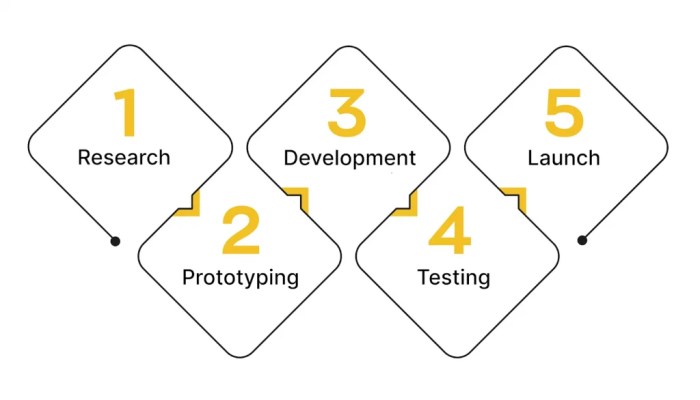
The new wave of app development is characterized by a blend of innovative technologies, user-centric design, and a focus on solving real-world problems. Analyzing successful case studies provides invaluable insights into the strategies and challenges involved in creating impactful and user-friendly applications. Understanding the factors contributing to their success allows developers to replicate those strategies in their own projects.
Illustrative Case Studies of the New Wave
These case studies highlight the innovative approaches and technological advancements shaping modern app development. They demonstrate the successful integration of cutting-edge technologies, user-centered design principles, and agile methodologies.
| App Name | Technology Used | Challenges | Solutions | Impact |
|---|---|---|---|---|
| Duolingo | Mobile app development, gamification, AI-powered personalized learning | Maintaining user engagement over the long term, ensuring high-quality content translation, adapting to diverse learning styles | Implementing a gamified learning structure, integrating AI to personalize learning paths, creating a supportive community forum, providing high-quality, culturally appropriate content translations | Transformed language learning, demonstrating a significant global impact on language acquisition. Millions of users worldwide use the app to learn new languages. |
| Calm | Mobile app development, mindfulness, and meditation technologies | Creating a consistent and engaging user experience that fosters relaxation, attracting and retaining a diverse user base, ensuring content quality and accuracy, establishing trust | Developing a wide range of guided meditations, incorporating user feedback to refine the experience, partnering with mindfulness experts, providing content in multiple languages, establishing clear community guidelines, using AI to tailor recommendations | Revolutionized the mindfulness and meditation market, showing how apps can foster mental well-being and provide accessible solutions to a global audience. Calm has become a leading name in the wellness space. |
| Airbnb | Mobile app development, location-based services, user reviews, trust and safety features | Ensuring trust and safety among users, managing large-scale operations across different locations, addressing cultural sensitivities in communication and design, handling customer support issues | Implementing robust verification processes, providing user reviews and ratings, building a community-based support system, establishing clear safety protocols and guidelines, providing multilingual customer support | Disrupted the hospitality industry by connecting travelers with hosts worldwide, offering a global platform for accommodation. Airbnb’s app has fundamentally changed the way people travel and find accommodations. |
Key Success Factors of Successful Apps
Several factors contribute to the success of apps in the new wave of development. A well-defined target audience, a strong user experience, and strategic marketing are crucial elements.
- Clear User Value Proposition: A successful app must offer a clear and compelling value proposition that addresses a specific user need or desire. Duolingo, for instance, provides a convenient and effective way to learn a new language.
- Exceptional User Experience (UX): A seamless and intuitive user interface is paramount for user engagement and retention. Calm’s app design fosters a calm and relaxing atmosphere.
- Iterative Development: Constantly gathering user feedback and adapting the app based on that feedback is critical for improvement and user satisfaction. Airbnb’s continuous refinement of its platform reflects this approach.
- Strong Marketing and Branding: Effective marketing strategies and a compelling brand identity are vital for attracting users and establishing market presence. The successful marketing campaigns of apps like Duolingo have helped them gain a significant user base.
Closing Summary
In conclusion, the new wave of app development is a dynamic and rapidly evolving field. The integration of cutting-edge technologies, user-centric design, and agile methodologies is reshaping the industry. Developers and businesses alike must adapt to these changes to thrive in this ever-changing environment. The future of app development is bright, and the potential for innovation is vast.