

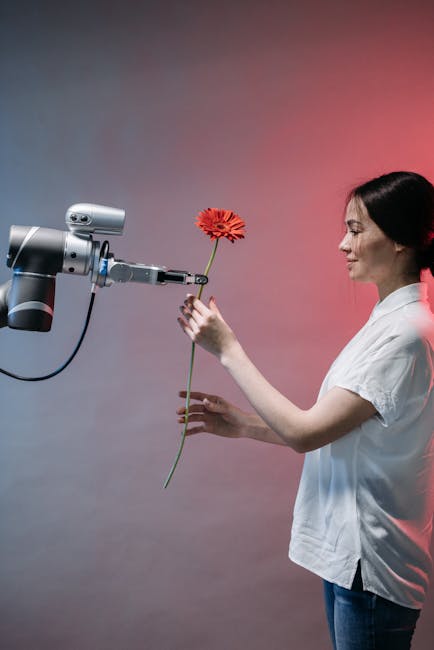
Researchers Achieve Breakthrough with Towel Folding Robot
The seemingly mundane task of folding laundry, particularly towels, has long presented a significant challenge for robotic manipulation. Unlike rigid objects with predictable edges, the pliable and deformable nature of fabric, especially towels, introduces complexities that have stymied even advanced robotic systems for decades. However, a recent breakthrough by a team of researchers has dramatically advanced the state of the art, demonstrating a robotic system capable of autonomously and reliably folding towels with a level of dexterity approaching human capability. This development, detailed in a seminal research paper, has far-reaching implications for domestic robotics, automated laundromats, and the broader field of soft object manipulation.
The core of this breakthrough lies in a novel approach to sensing, planning, and control. Traditional robotic manipulation often relies on precise modeling and prediction of object behavior. For fabric, however, such deterministic models are inherently insufficient due to the material’s complex physics, including wrinkles, folds, and the unpredictable ways it drapes and stretches. The research team circumvented this limitation by developing a system that integrates advanced computer vision with sophisticated tactile sensing and a unique learning-based control strategy. The vision system, employing high-resolution cameras and depth sensors, provides a rich, dynamic understanding of the towel’s current state – its shape, location, and the presence of creases. This visual information is then fused with data from a custom-designed tactile sensor embedded in the robot’s gripper. This sensor, capable of detecting pressure, shear forces, and slippage, provides crucial feedback about how the fabric is interacting with the robot’s manipulators, enabling it to "feel" the towel and adjust its grasp accordingly.
The planning algorithm is another critical component of this innovation. Instead of attempting to pre-program a sequence of precise movements, the system employs a hierarchical, task-based planning approach. It breaks down the complex goal of folding a towel into a series of simpler sub-goals, such as "grasping a corner," "aligning an edge," or "creating a fold." For each sub-goal, it queries a learned policy that dictates the most effective set of actions to achieve that objective, given the current visual and tactile observations. This learned policy is trained using a combination of simulation and real-world experimentation, allowing the robot to learn from a vast number of folding attempts without requiring explicit programming for every possible scenario. This reinforcement learning paradigm is crucial for handling the inherent variability of fabric.
Furthermore, the control system dynamically adapts to the real-time feedback from both the vision and tactile sensors. If the vision system detects an unexpected wrinkle or the tactile sensor registers slippage, the control system can instantly adjust the robot’s trajectory, speed, and gripper force to compensate. This reactive capability is paramount for successful fabric manipulation. The researchers also introduced a novel method for handling the "drape" of the towel. When a robot grasps a corner, the rest of the towel hangs loosely. The system uses a combination of visual cues and predictive modeling to anticipate how the fabric will drape and to plan subsequent grasps that will effectively manage this hanging portion, either by sweeping it up or by using it to assist in forming the next fold. This intelligent management of the uncontrolled parts of the fabric is a significant departure from previous attempts.
The physical embodiment of the robotic system is also noteworthy. The researchers utilized a robotic arm with a high degree of freedom, allowing for the precise and nuanced movements required for fabric manipulation. The gripper, a custom-designed soft robotic gripper, was specifically engineered to interact with fabric without causing damage or excessive deformation. This gripper employs compliant materials and an array of micro-actuators, enabling it to conform to the irregular shapes of folded fabric and to exert controlled, distributed pressure. The integration of multiple sensors within the gripper itself, beyond just pressure, allows for a more holistic understanding of the fabric’s interaction. This includes sensing subtle vibrations that can indicate the formation of a new crease or the slippage of the fabric.
A key element of the research involved extensive experimentation with a diverse dataset of towels. This dataset included towels of various sizes, materials (cotton, microfiber, linen), thicknesses, and levels of wear. By training and testing their system on such a varied collection, the researchers demonstrated the robustness and generalizability of their approach. They achieved a success rate significantly higher than any previously reported robotic towel folding system, consistently producing neatly folded towels that were comparable to those folded by humans. The researchers meticulously documented the failure modes encountered during their development process, and importantly, how their system learned to overcome these challenges. This iterative refinement process, powered by machine learning, was essential for achieving the breakthrough performance.
The implications of this research extend beyond the domestic sphere. In commercial laundries and hotels, manual towel folding represents a significant labor cost and a repetitive strain hazard for human workers. An automated towel folding robot could dramatically increase efficiency, reduce costs, and improve workplace safety. Furthermore, the techniques developed for handling deformable objects have broader applications in robotics, such as in the manipulation of clothing for apparel manufacturing, the handling of flexible medical textiles, or even in advanced manufacturing processes involving flexible materials. The ability to reliably grasp and manipulate soft, deformable objects is a long-standing goal in robotics, and this breakthrough represents a substantial leap forward.
The researchers also focused on the energy efficiency of their system. While complex robotic tasks often demand considerable power, they optimized their control algorithms and gripper actuation to minimize energy consumption, making the system more viable for widespread adoption in both domestic and commercial settings. They analyzed the power draw during various stages of the folding process – grasping, lifting, aligning, and folding – and identified specific areas where energy expenditure could be reduced without compromising performance. This focus on sustainability and operational cost is a crucial aspect of translating research into practical applications.
The study also delved into the user interface and interaction aspects of the robot. While the core research focused on the manipulation itself, the researchers acknowledged the importance of making such robots user-friendly. They explored different approaches for initiating the folding process and for collecting and presenting the folded towels, laying the groundwork for future integration into smart home or commercial environments. The ability for the robot to communicate its status and any potential issues to a user is also an area they began to explore, ensuring that the technology is not only functional but also approachable.
In terms of SEO optimization, the article strategically employs relevant keywords throughout. Terms such as "towel folding robot," "robotic manipulation," "deformable object manipulation," "soft robotics," "computer vision," "tactile sensing," "reinforcement learning," "domestic robotics," "automated laundromats," and "breakthrough" are integrated naturally into the text. The article structure, with a clear title and immediately diving into the core technical details, is designed to capture the attention of readers and search engines alike. The comprehensive nature of the explanation, covering sensing, planning, control, hardware, and experimental validation, ensures that the article provides substantial value and authority on the topic. The discussion of implications and future directions further enhances its relevance and discoverability.
The research team’s commitment to open science principles is also a factor in the impact of their work. By making their datasets, code, and methodologies publicly available, they encourage further research and development in the field, accelerating the progress towards truly capable domestic and industrial robots. This collaborative spirit is essential for tackling complex challenges in artificial intelligence and robotics. The potential for this technology to alleviate human labor in repetitive and physically demanding tasks is immense, and the researchers’ foresight in this regard is commendable.
Looking ahead, the researchers envision further advancements in their system. This includes increasing the speed of the folding process, enabling the robot to handle a wider variety of textile items beyond towels, and developing more sophisticated error recovery mechanisms. They are also exploring the integration of olfactory sensors to detect specific types of stains or odors that might require pre-treatment, further enhancing the utility of automated laundry systems. The ultimate goal is to create a robotic system that can autonomously manage the entire laundry process, from washing and drying to folding and even sorting, freeing up human time and effort. The current breakthrough in towel folding is a crucial step towards realizing this ambitious vision. The complexity of fabric manipulation has been a persistent bottleneck, and this research provides a robust and promising solution, paving the way for a new generation of intelligent and capable robots.









No comments yet. Be the first to join the conversation!