Ibm Taps Green Power With New Chips Servers
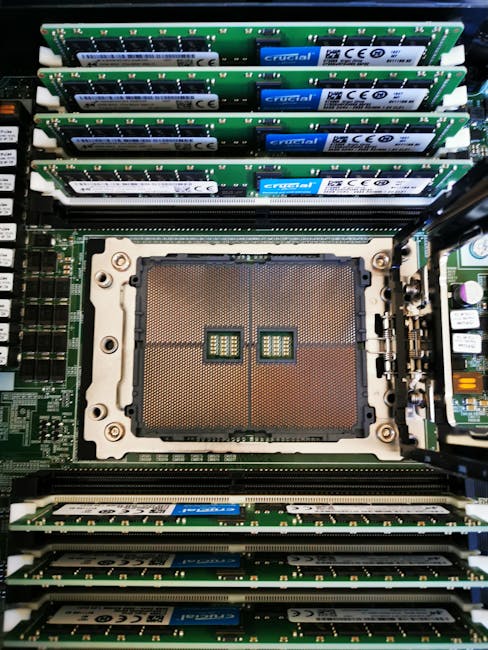
IBM Taps Green Power with New Chips and Servers
IBM’s strategic pivot towards sustainability in its computing infrastructure is dramatically underscored by the introduction of new chip and server technologies that are engineered to significantly reduce energy consumption and environmental impact. This initiative, driven by both a commitment to corporate responsibility and the economic imperative of lower operational costs, positions IBM at the forefront of green computing solutions. The development targets a multifaceted approach, encompassing improvements in the energy efficiency of its foundational semiconductor designs, as well as the integration of these advanced chips into server architectures optimized for minimal power draw. This comprehensive strategy is not merely about incremental improvements; it represents a fundamental rethinking of how high-performance computing can coexist with environmental stewardship.
At the core of this green revolution are IBM’s latest advancements in semiconductor technology. The company has consistently pushed the boundaries of silicon innovation, and its recent efforts are particularly focused on reducing the power per transistor. This involves exploring novel materials, advanced manufacturing processes, and innovative circuit designs. For instance, IBM has been a leader in developing specialized processors designed for specific workloads, such as AI inference or data analytics, that can perform these tasks more efficiently than general-purpose CPUs, thereby consuming less energy. The integration of 3D stacking technology in chip design also plays a crucial role, allowing for greater density and shorter signal paths, which directly translates to lower power consumption. Furthermore, IBM is actively researching and implementing new cooling technologies for its chips. Traditional air cooling can be energy-intensive, and the shift towards more efficient liquid cooling solutions, even at the chip level, is a significant factor in reducing the overall energy footprint of its hardware. The development of power management techniques, where chips can dynamically adjust their performance based on workload demands, further contributes to this energy-saving agenda. This intelligent power scaling ensures that resources are only consumed when necessary, avoiding wasted energy during periods of low activity.
The implications of these energy-efficient chips extend directly to IBM’s server portfolio. New server designs are being architected from the ground up to maximize the benefits of these advanced processors. This involves optimizing the entire server chassis for airflow, power distribution, and heat dissipation. For example, the chassis might be designed with modular components that can be easily reconfigured to improve cooling efficiency, and the power supply units (PSUs) are being designed with higher efficiency ratings, converting more AC power from the wall into DC power usable by the components. IBM is also emphasizing the importance of sophisticated power management software that works in concert with the hardware. This software can monitor the energy consumption of individual components and even entire servers, allowing for real-time adjustments to optimize performance and reduce power usage. Features like dynamic voltage and frequency scaling (DVFS) are not new, but IBM’s implementation in its latest servers is more granular and responsive, allowing for finer control over power consumption at a per-core or per-application level. The company is also exploring techniques like power capping, where administrators can set limits on the power consumption of specific servers or groups of servers, ensuring that data centers stay within their allocated power budgets.
Beyond individual component and server design, IBM’s green initiatives extend to the broader data center ecosystem. The company is increasingly integrating renewable energy sources into its own operations and is developing solutions that help its clients do the same. This includes providing consulting services and technologies that enable the integration of solar, wind, and other renewable power sources into their data center power grids. IBM’s hardware is being designed to be more compatible with these fluctuating power sources, incorporating features that allow for better management of energy input and output. Furthermore, IBM is actively involved in the development of advanced cooling technologies at the data center level, such as free cooling systems that leverage ambient air temperatures to reduce reliance on energy-intensive chillers. The company’s research into liquid immersion cooling, where servers are submerged in non-conductive dielectric fluid, offers a significant advancement in heat removal, allowing for higher-density computing with substantially lower energy expenditure. The data center’s overall energy consumption is a critical metric, and by addressing both the IT equipment and the infrastructure supporting it, IBM aims to deliver truly holistic green computing solutions.
The economic benefits of this green power strategy are substantial and are a key driver for adoption. Reduced energy consumption directly translates to lower electricity bills, which can represent a significant portion of a data center’s operational expenses. For large enterprises and cloud providers, these savings can amount to millions of dollars annually. Furthermore, by optimizing for power efficiency, IBM’s solutions can also lead to a reduction in cooling infrastructure requirements, further lowering capital and operational expenditures. The ability to achieve higher compute densities within existing data center footprints is another economic advantage. More efficient hardware means that more processing power can be packed into a smaller space, reducing the need for physical expansion and the associated real estate and construction costs. This density also simplifies management and maintenance.
Moreover, the growing emphasis on Environmental, Social, and Governance (ESG) criteria by investors and regulators makes sustainable computing a strategic imperative. Companies that demonstrate a commitment to environmental responsibility are increasingly favored, and IBM’s green initiatives position them as a leader in this evolving landscape. This not only enhances their corporate reputation but also opens up new market opportunities and strengthens relationships with environmentally conscious clients. The long-term viability of IT infrastructure is intrinsically linked to its environmental impact, and IBM’s proactive approach to green power ensures that its technologies are aligned with future sustainability goals and regulatory frameworks.
The new chips and servers from IBM are designed to address a wide range of applications, from high-performance computing (HPC) and artificial intelligence (AI) to traditional enterprise workloads. The company’s expertise in designing specialized processors for AI, such as those leveraging its Power architecture, allows for significant energy savings in computationally intensive tasks. These processors are optimized for the parallel processing demands of machine learning and deep learning algorithms, delivering superior performance per watt compared to less specialized architectures. For HPC environments, where vast amounts of data are processed for scientific research, climate modeling, and simulations, energy efficiency is paramount. IBM’s green server designs can help reduce the substantial energy footprint of these facilities, making cutting-edge research more sustainable.
The impact of these advancements is also felt in cloud computing environments. Cloud providers are constantly striving to reduce their operational costs and environmental impact, and IBM’s energy-efficient solutions offer a compelling proposition. By deploying IBM’s green servers and chips, cloud providers can offer more sustainable services to their customers, attracting a growing segment of the market that prioritizes environmental responsibility. This can lead to increased market share and a competitive advantage. The scalability of IBM’s green computing solutions makes them suitable for everything from small businesses to hyperscale data centers, ensuring that organizations of all sizes can benefit from reduced energy consumption and operational costs.
IBM’s commitment to green power is not a static endeavor but an ongoing process of research and development. The company continues to invest heavily in exploring next-generation semiconductor materials, such as those based on silicon-germanium (SiGe) or carbon nanotubes, which hold the promise of even greater energy efficiency. Innovations in quantum computing, while still in their nascent stages, also have the potential to revolutionize computing efficiency in the long term, and IBM is a leading player in this field. The company’s long-standing focus on open standards and collaborative development also means that its green computing innovations can be readily adopted and built upon by the wider industry, accelerating the transition to a more sustainable IT landscape.
The integration of AI-powered management tools further enhances the green credentials of IBM’s new offerings. These intelligent systems can learn from operational patterns and predict future energy demands, allowing for proactive optimization of resource allocation and power consumption. This predictive capability ensures that servers are not over-provisioned or running at inefficient power levels. AI can also be used to identify anomalies in energy consumption that might indicate hardware failures or inefficiencies, enabling faster troubleshooting and preventing energy wastage. This symbiotic relationship between advanced hardware and intelligent software is a hallmark of IBM’s approach to green computing.
Furthermore, the lifecycle management of IT equipment is an increasingly important aspect of sustainability. IBM is working to ensure that its servers and chips are designed for longevity, repairability, and recyclability. By reducing the frequency of hardware upgrades and facilitating the responsible disposal of end-of-life equipment, IBM aims to minimize the environmental impact associated with the entire product lifecycle. This holistic view of sustainability, encompassing design, operation, and end-of-life, is critical for achieving truly impactful green computing. The company’s focus on modular design in its servers also supports this, allowing for easier replacement of individual components rather than entire systems, thus extending the useful life of the overall infrastructure.
In conclusion, IBM’s strategic deployment of new, energy-efficient chips and servers represents a significant advancement in the pursuit of sustainable computing. By focusing on semiconductor innovation, optimized server architecture, renewable energy integration, and intelligent power management, IBM is not only reducing the environmental footprint of its own operations and its clients’ data centers but is also driving economic efficiencies and strengthening its market position in an era where ESG considerations are paramount. This commitment to green power is a testament to IBM’s ongoing dedication to technological leadership and responsible corporate citizenship.