

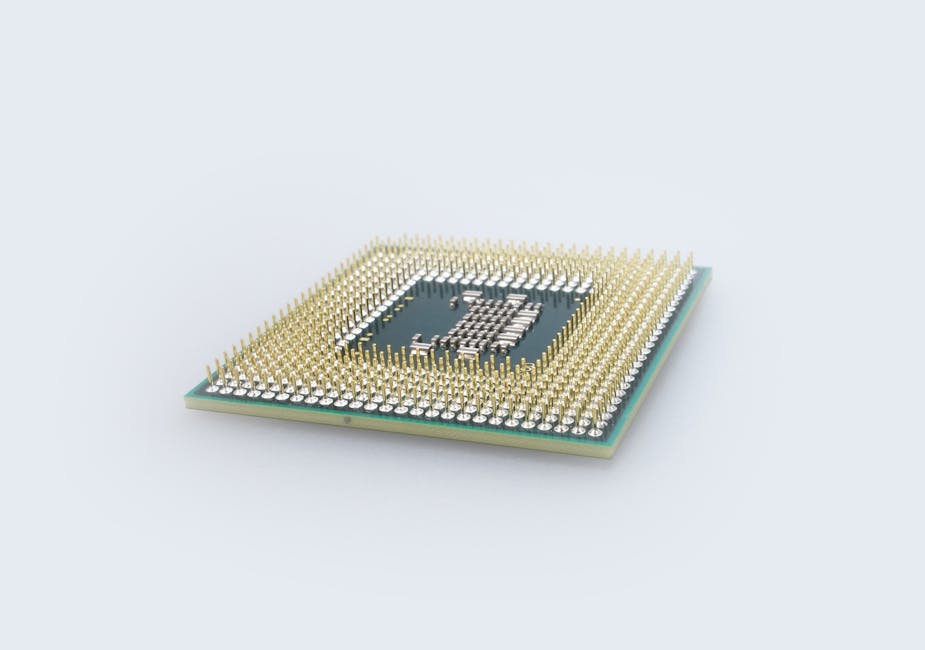
The Power-Efficient Heartbeat: Understanding and Leveraging Low-Power Processors
Low-power processors, also known as ultra-low-power (ULP) or energy-efficient processors, represent a critical technological advancement enabling the proliferation of battery-operated devices, embedded systems, and the Internet of Things (IoT). Their fundamental design prioritizes minimizing energy consumption without drastically sacrificing performance for their intended applications. This focus on power efficiency translates into extended battery life, reduced heat generation, smaller form factors, and lower operational costs, making them indispensable components in a vast array of modern electronics. Unlike their high-performance counterparts designed for demanding computational tasks like gaming or scientific simulations, low-power processors are engineered to excel in scenarios where energy scarcity is a primary constraint. This article delves into the core technologies, design considerations, applications, and future trends surrounding low-power processors, providing a comprehensive overview for engineers, developers, and technology enthusiasts.
At the heart of a low-power processor’s design lies a multifaceted approach to energy conservation. This begins with architectural innovations that reduce the number of transistors required and optimize data flow. Techniques such as reduced instruction set computing (RISC) architectures, as opposed to complex instruction set computing (CISC), are often employed. RISC architectures feature a smaller set of simpler instructions, which can be executed faster and with less energy. This simplicity reduces the complexity of the control unit, a significant power consumer. Furthermore, clever memory management is crucial. Processors employ sophisticated cache hierarchies and techniques like prefetching to minimize the number of times the processor needs to access slower, more power-hungry main memory. Data can be kept in faster, on-chip caches, reducing latency and energy expenditure.
Dynamic Voltage and Frequency Scaling (DVFS) is another cornerstone of low-power processor technology. DVFS allows the processor to dynamically adjust its operating voltage and clock frequency based on the current workload. When the processor is idle or performing light tasks, its voltage and frequency can be significantly reduced, dramatically cutting power consumption. Conversely, when a more demanding task arises, the processor can ramp up its voltage and frequency to meet the performance requirements. This adaptive approach ensures that power is only consumed when and where it is needed, optimizing energy efficiency. Modern ULP processors often feature very fine-grained control over DVFS, allowing for incremental adjustments to maximize efficiency.
Power gating and clock gating are also fundamental techniques. Power gating involves completely shutting off power to specific blocks or cores of the processor when they are not in use. This is more aggressive than clock gating, which simply stops the clock signal to a particular circuit block, preventing it from consuming dynamic power. By power gating idle components, the overall leakage current, which is power consumed even when a transistor is not actively switching, can be substantially reduced. This is particularly important in modern semiconductor manufacturing processes where transistors have become very small and prone to leakage.
The choice of semiconductor manufacturing process technology plays a pivotal role in low-power processor design. Advanced process nodes, such as those measured in nanometers (e.g., 7nm, 5nm, 3nm), allow for smaller transistors that require less voltage to switch and consume less power. These nodes also enable higher transistor densities, allowing for more complex functionality to be integrated within a given chip area while maintaining or even reducing overall power consumption compared to older, larger process nodes. Furthermore, materials science advancements, such as the use of high-k dielectric materials and metal gates, help to mitigate leakage currents, further enhancing power efficiency.
Memory subsystems are a significant contributor to overall system power consumption, and ULP processors employ specific strategies to address this. Beyond efficient cache management, they often utilize low-power memory technologies like SRAM (Static Random-Access Memory) for caches and registers, which consume less power than DRAM (Dynamic Random-Access Memory) used for main system memory. Techniques like self-refresh modes for DRAM, where the memory periodically refreshes its contents with minimal power, are also employed when DRAM is necessary. The integration of memory controllers on-chip also reduces external bus traffic, a substantial power sink.
The peripherals and I/O interfaces connected to a ULP processor are equally important in managing power. Modern ULP processors are designed with highly integrated peripheral sets that can be individually powered down or put into low-power states when not in use. This includes interfaces like I2C, SPI, UART, and wireless communication modules. Intelligent peripheral management allows the system to conserve power by only activating necessary communication channels. For example, a sensor reading might only require a brief activation of the I2C bus, after which it can be powered down.
The software stack also plays a crucial role in maximizing the benefits of ULP processors. Operating systems designed for embedded and IoT devices, such as FreeRTOS, Zephyr, or embedded Linux distributions, incorporate power management features. These include sophisticated task scheduling algorithms that minimize processor wake-ups and idle states, and mechanisms for managing peripheral power. Application developers must also be mindful of power consumption, employing efficient algorithms, minimizing polling, and utilizing event-driven architectures. Writing code that allows the processor to quickly return to a low-power state after completing a task is paramount.
The applications for low-power processors are incredibly diverse and continue to expand. In the realm of consumer electronics, they power smartphones, wearables (smartwatches, fitness trackers), wireless earbuds, and portable gaming devices, enabling extended usage times between charges. The burgeoning Internet of Things (IoT) ecosystem heavily relies on ULP processors. Smart home devices, industrial sensors, agricultural monitoring systems, smart city infrastructure, and connected medical devices all leverage the energy efficiency of these processors to operate for years on small batteries or even energy harvesting.
In the automotive sector, ULP processors are found in various control modules, infotainment systems, and advanced driver-assistance systems (ADAS), contributing to overall vehicle efficiency and reduced parasitic drain when the engine is off. In industrial automation, they enable robust and long-lasting sensors and actuators for monitoring and control in remote or challenging environments. Medical devices, from portable diagnostic tools to implantable pacemakers, demand ultra-low power consumption for prolonged operation and patient comfort. The proliferation of battery-powered tools and portable instrumentation also benefits from the integration of ULP processors.
The development of specialized ULP processor architectures caters to specific application needs. For instance, microcontrollers (MCUs) with integrated memory and peripherals are a common choice for many embedded applications, offering a balance of performance, power efficiency, and cost. System-on-Chip (SoC) designs often incorporate ULP processor cores alongside other specialized hardware accelerators for tasks like signal processing or machine learning inference, further optimizing power consumption for specific workloads. Application processors designed for smartphones and tablets, while more powerful, also incorporate significant ULP capabilities to manage battery life.
The future of low-power processors is characterized by several key trends. Continued advancements in semiconductor manufacturing processes will yield even smaller, more energy-efficient transistors. The integration of specialized AI accelerators and neural processing units (NPUs) within ULP processors is becoming increasingly important, enabling on-device machine learning inference with minimal power overhead. This is crucial for applications like edge AI, where data is processed locally rather than being sent to the cloud, reducing latency and communication power.
The concept of "near-zero power" computing is also gaining traction. This involves designing systems that can operate on extremely small amounts of energy, potentially harvested from ambient sources like solar, thermal, or radio frequency energy. This requires highly optimized processors and power management techniques that can operate effectively even with intermittent and low-power energy sources.
Heterogeneous computing, where different types of processing cores are combined on a single chip, will also play a larger role. This could involve combining high-performance cores for demanding tasks with ultra-low-power cores for background operations and sensor data processing. This allows for a more dynamic and efficient allocation of computational resources.
The increasing complexity of embedded software and the demand for richer user experiences in low-power devices necessitate more powerful and efficient ULP processors. This drives innovation in areas like multi-core ULP architectures, where multiple energy-efficient cores can work in parallel or be selectively activated based on workload. Advanced power management units (PMUs) integrated onto the processor or as companion chips are also becoming more sophisticated, providing granular control over voltage, frequency, and power gating for individual components and even specific functional blocks within cores.
Security is another growing concern in low-power devices, and ULP processors are increasingly incorporating hardware-based security features to protect sensitive data and prevent unauthorized access, all while maintaining low power consumption. This can include secure boot mechanisms, hardware encryption accelerators, and trusted execution environments.
The continued miniaturization and cost reduction of ULP processors will further democratize access to advanced embedded intelligence across a broader spectrum of industries and consumer products. As the demand for connected, intelligent, and battery-powered devices continues its exponential growth, the role of the low-power processor as the energy-efficient heartbeat of this technological revolution will only become more pronounced. Understanding the underlying principles of their design and the diverse array of techniques employed is essential for anyone involved in the development of modern electronic systems.












No comments yet. Be the first to join the conversation!