

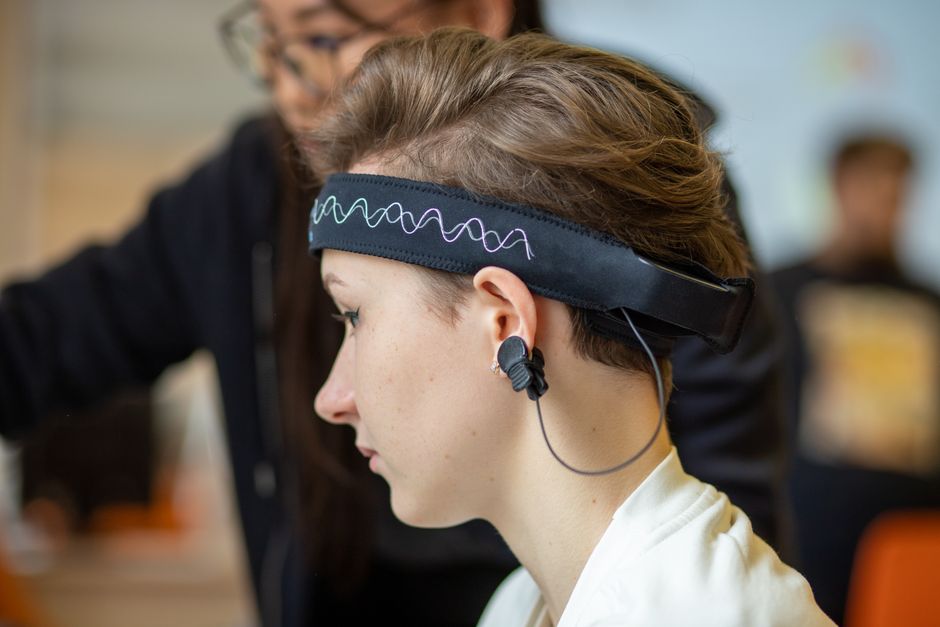
Brain-Computer Interfaces: Decoding Thought, Revolutionizing Interaction
Brain-Computer Interfaces (BCIs), a revolutionary frontier in neuroscience and engineering, are systems that enable direct communication pathways between the brain and an external device. This intricate bidirectional or unidirectional communication bypasses the brain’s normal output pathways of peripheral nerves and muscles, offering unprecedented potential for individuals with severe motor impairments and opening new avenues for human-computer interaction, diagnostics, and even cognitive enhancement. At its core, a BCI translates brain activity, detected through various neuroimaging techniques, into commands that control external devices such as prosthetic limbs, wheelchairs, computers, or communication aids. The burgeoning field encompasses diverse methodologies, ranging from non-invasive electroencephalography (EEG) to highly invasive intracortical electrode arrays, each with its own set of advantages and limitations regarding signal quality, spatial resolution, temporal precision, and ethical considerations. The ultimate goal is to restore lost function, augment human capabilities, and deepen our understanding of brain computation.
The fundamental principle underpinning BCI operation involves sensing brain signals, extracting relevant features, and translating these features into control signals. Brain signals are electrical or metabolic manifestations of neuronal activity. Non-invasive methods primarily rely on measuring the electrical activity on the scalp using EEG, which offers excellent temporal resolution but suffers from poor spatial resolution due to signal distortion as it passes through the skull and scalp. Magnetoencephalography (MEG) measures magnetic fields produced by electrical currents in the brain, offering better spatial resolution than EEG while retaining good temporal resolution, but it is significantly more expensive and less portable. Functional near-infrared spectroscopy (fNIRS) measures changes in blood oxygenation, providing a hemodynamic response that is slower than electrical signals but offers good spatial resolution and is less susceptible to motion artifacts. Invasive methods, while carrying higher risks, provide superior signal quality. Electrocorticography (ECoG) involves placing electrodes directly on the surface of the brain, offering a good balance between spatial and temporal resolution. Intracortical electrode arrays, such as Utah arrays or Neuropixels, are implanted directly into brain tissue, achieving the highest spatial and temporal resolution by recording the activity of individual neurons or small neuronal populations. The choice of sensing modality critically influences the type of brain activity that can be detected and, consequently, the types of BCIs that can be developed.
Feature extraction is the crucial step of identifying meaningful patterns within the raw brain signals. This involves applying various signal processing techniques to isolate relevant components that correspond to specific cognitive states or intended actions. For EEG, common features include amplitude variations in specific frequency bands (e.g., alpha, beta, theta, gamma waves), event-related potentials (ERPs) which are transient changes in brain activity time-locked to specific stimuli, and spatial patterns of activity across the scalp. For invasive methods, features can include spike rates of individual neurons, local field potentials (LFPs) representing the summed electrical activity of neuronal populations, and cross-correlations between neuronal firing patterns. Machine learning algorithms play a pivotal role in feature extraction and classification. Techniques such as Support Vector Machines (SVMs), Linear Discriminant Analysis (LDA), and various forms of neural networks are trained to recognize distinct brain patterns associated with specific mental tasks. For instance, a user might be trained to imagine moving their left hand, and the BCI system would learn to associate the resulting EEG or neuronal activity patterns with the "left hand movement" command.
The translation of extracted features into control signals forms the "command translation" phase of the BCI. This involves mapping the identified brain patterns to specific actions in the external device. For example, the detection of a "imagined right hand movement" pattern might translate to a command for a prosthetic arm to move to the right. This translation can be implemented through various algorithms, often incorporating feedback mechanisms. Real-time feedback is essential for BCI users to learn to control the system effectively. Visual, auditory, or haptic feedback allows the user to see or hear the consequences of their brain activity and adjust their mental strategies accordingly, leading to improved performance through a process of neuroplasticity and motor learning. This closed-loop system, where brain signals influence the external device and the device’s output influences the brain, is fundamental to many advanced BCI applications.
BCIs have demonstrated profound therapeutic potential, particularly for individuals with severe motor disabilities resulting from conditions like amyotrophic lateral sclerosis (ALS), spinal cord injury, stroke, and locked-in syndrome. For these individuals, BCIs offer a lifeline to regain lost communication and motor control, significantly improving their quality of life. Communication BCIs, often utilizing P300-based spellers or SSVEP (steady-state visual evoked potential) based selection, allow users to type messages by focusing their attention on specific letters or symbols presented on a screen. Motor BCIs, employing both non-invasive and invasive techniques, enable users to control prosthetic limbs, wheelchairs, or robotic arms with their thoughts. The ability to operate a prosthetic limb with a degree of naturalistic control, or to navigate a wheelchair independently, represents a paradigm shift in assistive technology. Furthermore, BCIs are being explored for neurorehabilitation, aiming to promote motor recovery after stroke by using brain activity to trigger or guide therapeutic movements.
Beyond therapeutic applications, BCIs are poised to revolutionize human-computer interaction. Imagine controlling your computer, smartphone, or even video games with just your thoughts. This could lead to more intuitive and efficient interfaces, especially in situations where physical interaction is impractical or impossible. For example, a surgeon could control robotic surgical instruments without breaking sterile protocol, or a pilot could manage aircraft controls in a high-stress environment. The development of consumer-grade BCIs, while still in its early stages, promises to unlock novel forms of entertainment, education, and productivity. Research is also exploring BCIs for cognitive enhancement, aiming to improve attention, memory, or learning capabilities. However, this area raises significant ethical questions regarding fairness, access, and potential misuse.
The technical challenges in BCI development are multifaceted. Signal-to-noise ratio (SNR) remains a critical bottleneck, especially for non-invasive methods, where distinguishing brain signals from artifacts is difficult. Achieving high bandwidth and low latency is crucial for naturalistic control. Invasive BCIs offer better SNR and bandwidth but are limited by surgical risks, implant longevity, and the body’s immune response. Developing robust, adaptive, and user-friendly algorithms that can account for individual differences in brain activity and its variability over time is also a significant challenge. Furthermore, the ethical landscape surrounding BCIs is complex and rapidly evolving. Issues of privacy, data security, consent, agency, and the potential for cognitive manipulation or enhancement require careful consideration and robust regulatory frameworks. The long-term societal impact of widespread BCI adoption needs thorough investigation and public discourse.
The future of BCIs is incredibly promising, with ongoing research pushing the boundaries of what is possible. Advancements in electrode technology, including flexible and wireless implants, are improving biocompatibility and signal quality. The application of artificial intelligence and deep learning is leading to more sophisticated decoding algorithms, capable of interpreting complex brain activity with greater accuracy and speed. The integration of BCIs with other neurotechnologies, such as functional magnetic resonance imaging (fMRI) for more precise brain state monitoring, is also being explored. The development of "brain-to-brain" interfaces, where individuals can directly share thoughts or experiences, is a more futuristic but actively researched concept. As the technology matures, BCIs are expected to move beyond specialized medical applications and become more integrated into everyday life, transforming our relationship with technology and potentially even our understanding of consciousness itself. The journey from decoding neuronal firing to facilitating seamless thought-driven interaction is a testament to human ingenuity and the persistent quest to augment our capabilities and alleviate suffering.










No comments yet. Be the first to join the conversation!