

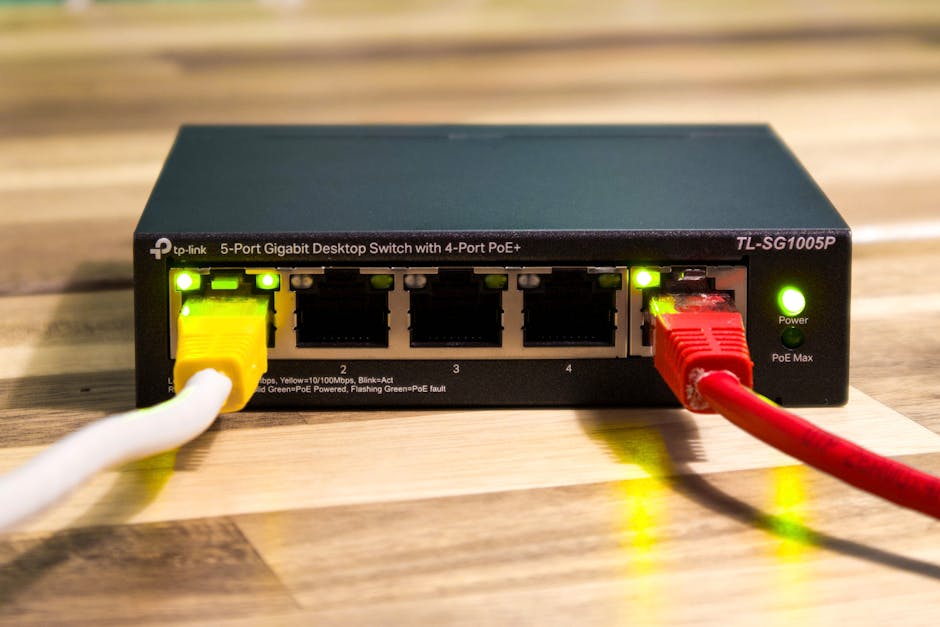
StarTech.com KVM Switch: The Ultimate Desktop Space Saver for Enhanced Productivity
The modern workstation is an increasingly complex ecosystem. Professionals juggle multiple computers, from powerful desktops for intensive tasks to sleek laptops for on-the-go productivity. This proliferation of devices, while beneficial for flexibility, often leads to a cluttered desktop, a cascade of cables, and a frustrating user experience. The StarTech.com KVM switch emerges as a brilliant solution to this pervasive problem, offering a streamlined and efficient way to manage multiple computers with a single set of peripherals. More than just a cable consolidator, a StarTech.com KVM switch fundamentally redefines desktop efficiency, transforming chaos into order and unlocking new levels of productivity by reclaiming valuable desk real estate.
At its core, a KVM (Keyboard, Video, Mouse) switch acts as a central hub, allowing a user to control multiple computers from a single console. Instead of requiring a separate keyboard, monitor, and mouse for each machine, a StarTech.com KVM switch enables seamless switching between them using just one set. This immediate and tangible benefit translates directly into significant space savings. Imagine a desk previously burdened by three monitors, three keyboards, and three mice, each with its own tangle of wires. With a StarTech.com KVM switch, this entire setup is reduced to a single monitor, a single keyboard, and a single mouse, freeing up substantial surface area. This reclaimed space isn’t just aesthetic; it promotes a cleaner, more organized workspace, which in turn can reduce visual distractions and foster a more focused work environment. For professionals in fields where desk space is at a premium, such as graphic design studios, video editing suites, or even compact home offices, this space-saving capability is not merely a convenience but a critical operational advantage.
The benefits of a StarTech.com KVM switch extend far beyond mere physical organization. The ability to switch between computers with the press of a button or a hotkey command dramatically enhances workflow efficiency. Consider a programmer who needs to switch between a development machine running a complex IDE and a separate server for testing, or a financial analyst who needs to access a secure trading platform on one PC and a general-purpose workstation for research on another. Without a KVM switch, this would involve physically unplugging and replugging peripherals, a time-consuming and error-prone process. A StarTech.com KVM switch eliminates this friction. Hotkey combinations, often customizable, allow for near-instantaneous transitions between operating systems and applications. This rapid context-switching is invaluable in fast-paced environments where split-second decisions and immediate access to information are paramount. Furthermore, the reduction in physical interaction with cables minimizes wear and tear on ports and connectors, contributing to the longevity of both the computers and the peripherals.
StarTech.com offers a diverse range of KVM switches, catering to a wide spectrum of user needs and technical requirements. This variety is crucial for SEO because it allows targeting specific search queries. For instance, users might search for "2-port KVM switch," "4-port KVM switch," "HDMI KVM switch," "DisplayPort KVM switch," "USB KVM switch," or "KVM switch with audio." StarTech.com addresses these specific demands with dedicated product lines. Their 2-port and 4-port models are ideal for individuals managing two or four computers, respectively, offering a straightforward entry into KVM technology. For users prioritizing high-resolution video output, their HDMI and DisplayPort KVM switches ensure that demanding visual content is displayed with clarity and fidelity, supporting resolutions up to 4K and beyond on newer models. The inclusion of USB peripheral support on most of their KVMs allows for the seamless sharing of printers, webcams, and external hard drives across connected computers, further consolidating resources and reducing peripheral clutter. The integration of audio switching is another key feature that distinguishes StarTech.com KVMs, enabling users to share speakers and microphones between computers without needing to disconnect and reconnect audio cables, adding another layer of convenience and space-saving functionality.
The selection of the right StarTech.com KVM switch often hinges on the specific video interface requirements of the connected computers and monitors. For systems utilizing modern graphics cards and high-resolution displays, KVM switches with HDMI or DisplayPort connectivity are essential. These interfaces support higher bandwidth, enabling resolutions like 4K, 5K, and even 8K, along with higher refresh rates, crucial for gaming, video editing, and graphic design professionals who demand pristine visual fidelity. StarTech.com’s commitment to supporting these advanced video standards ensures that users are not compromising on display quality when using their KVM switches. Conversely, for older systems or less demanding visual tasks, VGA or DVI KVM switches might suffice, though HDMI and DisplayPort are increasingly becoming the standard for new deployments. The inclusion of multiple video port options within StarTech.com’s product catalog ensures broad compatibility across a wide range of legacy and contemporary hardware.
Beyond video, USB connectivity is a cornerstone of modern computing, and StarTech.com KVM switches excel in providing seamless USB peripheral sharing. This includes keyboards, mice, webcams, printers, scanners, and external storage devices. Instead of having duplicate USB peripherals for each computer, a StarTech.com KVM switch allows these devices to be connected to the KVM and then shared across all attached computers. This not only saves desk space by reducing the number of USB devices and their associated cables but also simplifies device management. For professionals who rely on specific input devices, such as ergonomic keyboards or high-precision gaming mice, the ability to use these preferred devices across multiple machines without reconfiguring settings or drivers is a significant productivity booster. StarTech.com’s implementation of USB 2.0 and USB 3.0 (or higher) ports on their KVMs ensures compatibility with a broad array of peripherals, from basic keyboards and mice to high-bandwidth devices like external SSDs and dedicated capture cards. This forward-thinking approach to USB support future-proofs the user’s setup.
The ease of installation and use is another critical factor contributing to the success and SEO visibility of StarTech.com KVM switches. Most models feature plug-and-play functionality, requiring minimal configuration. Users typically connect the KVM switch to their computers using the provided cables, plug their single set of peripherals into the KVM, and then select the desired computer using a button on the switch or a customizable hotkey. This straightforward setup process removes a common barrier to adoption for less technically inclined users and contributes to positive user reviews and word-of-mouth, which indirectly benefits SEO. StarTech.com often provides detailed setup guides and customer support resources, further enhancing the user experience and solidifying their reputation as a reliable provider of practical IT solutions. The intuitive design of their interfaces, whether physical buttons or on-screen display (OSD) menus on higher-end models, ensures that switching between computers is a seamless and hassle-free operation.
For businesses and IT professionals, StarTech.com KVM switches offer robust solutions for managing server rooms, data centers, and multi-computer workstations. Rackmount KVM switches, for instance, are designed to be integrated into standard server racks, providing a compact and organized solution for managing numerous servers from a single console. These are essential for maintaining control and performing maintenance tasks in environments where physical space is at an absolute premium and security is paramount. The ability to consolidate multiple server control points into a single, easily accessible KVM station drastically reduces the complexity and footprint of server management infrastructure. Furthermore, StarTech.com’s enterprise-grade KVM solutions often include advanced features such as remote access capabilities, multi-user support, and advanced security protocols, making them suitable for mission-critical applications where uptime and efficient management are non-negotiable. The availability of KVMs with varying numbers of ports, from 8-port to 16-port and even higher configurations, allows businesses to scale their solutions according to their specific needs.
The concept of a "desktop space saver" is a powerful search term, and StarTech.com KVM switches directly address this need. By consolidating multiple computers onto a single console, they eliminate the need for duplicate monitors, keyboards, and mice, thereby freeing up significant desk real estate. This is particularly beneficial for individuals working in home offices, co-working spaces, or any environment where desk space is limited. A clutter-free workspace is not only aesthetically pleasing but also contributes to improved focus, reduced stress, and enhanced productivity. The visual impact of a tidy desk, devoid of the usual tangle of wires, is a significant selling point that resonates with a broad audience. StarTech.com’s product design often emphasizes compact form factors and efficient cable management solutions, further reinforcing their role as space-saving devices. The reduction in the number of physical devices also leads to less dust accumulation and easier cleaning, contributing to a healthier and more pleasant work environment.
Furthermore, the economic benefits of using a StarTech.com KVM switch should not be overlooked. While the initial purchase of a KVM switch represents an investment, it can lead to substantial cost savings over time. By eliminating the need to purchase duplicate sets of peripherals for each computer, businesses and individuals can significantly reduce their hardware expenditure. Moreover, the increased efficiency and productivity facilitated by seamless computer switching can translate into tangible business gains. Reduced downtime due to easier troubleshooting and maintenance, as well as faster task completion, can all contribute to a better return on investment. For companies looking to optimize their IT infrastructure and operational costs, a StarTech.com KVM switch offers a practical and cost-effective solution. The durability and reliability of StarTech.com products also mean fewer replacements and repairs, further contributing to long-term cost savings.
When searching for KVM switches online, users often employ terms like "computer switch," "multi-computer keyboard," "shared monitor setup," or "USB hub KVM." StarTech.com’s comprehensive product catalog and well-optimized product pages are designed to capture these search queries. By providing detailed product descriptions, clear specifications, and high-quality images, StarTech.com ensures that their KVM switches are easily discoverable by potential customers. The inclusion of user reviews and ratings on product pages also plays a crucial role in building trust and influencing purchasing decisions. Many users are specifically looking for solutions to organize their desk and improve workflow, and the "desktop space saver" aspect of StarTech.com KVM switches is a primary draw. The company’s commitment to providing a wide range of solutions, from basic 2-port models to advanced rackmount KVMs, ensures that there is a StarTech.com product to meet almost any requirement, further solidifying their position as a leader in the KVM switch market. The strategic use of keywords such as "KVM switch," "keyboard video mouse switch," "desktop organizer," "productivity enhancer," and specific port types like "HDMI KVM" and "USB 3.0 KVM" on their product pages and in their marketing materials helps to maximize their visibility in relevant online searches. The continuous development of new models that support the latest technologies, such as higher resolutions, faster USB standards, and more advanced connectivity options, ensures that StarTech.com remains at the forefront of innovation in this crucial IT accessory category, consistently offering solutions that not only save space but also enhance the overall computing experience.








No comments yet. Be the first to join the conversation!