

Rim Carries Blackberry Torch Into Smartphone Fray
The smartphone market is a fiercely competitive landscape, and Research In Motion (RIM), the maker of BlackBerry devices, has long been a dominant force. Their latest offering, the BlackBerry Torch, represents a significant attempt to not only maintain their market share but to aggressively compete with the burgeoning iOS and Android ecosystems. This article will delve into the multifaceted nature of the BlackBerry Torch, examining its hardware, software, user experience, and strategic positioning within the broader smartphone industry. Understanding the Torch requires an appreciation for RIM’s historical strengths and the challenges it faces in an era defined by touch-screen dominance and app-centric ecosystems.
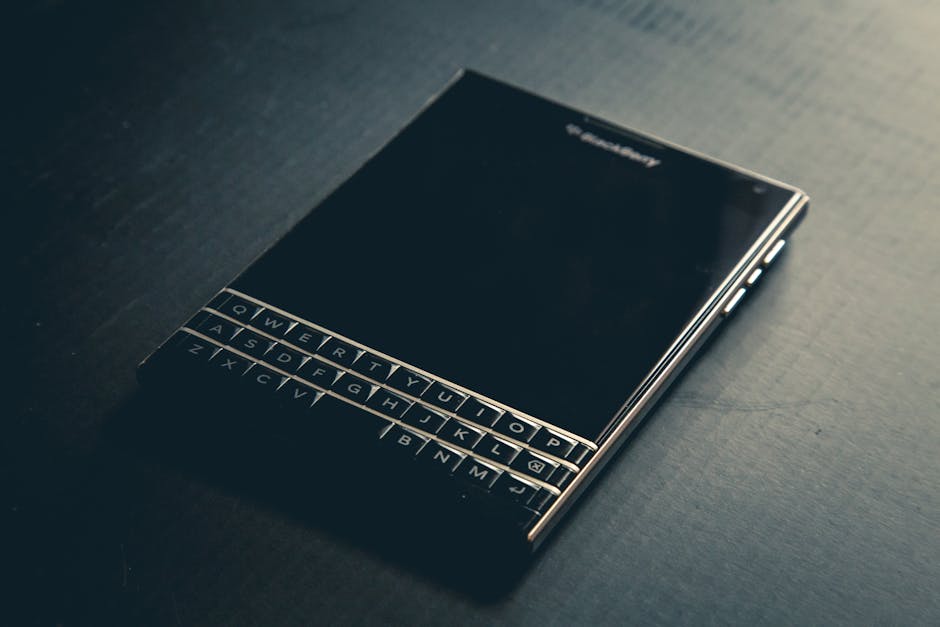
At the core of the BlackBerry Torch’s appeal, and indeed its very identity, lies its innovative dual-mode input system. Unlike many of its contemporaries which exclusively rely on a virtual keyboard, the Torch boasts a physical QWERTY keyboard that slides out from beneath its display. This design decision is a direct nod to BlackBerry’s heritage, catering to the legions of users who have come to rely on the tactile feedback and typing speed offered by physical keys. For many business professionals and power users, this ergonomic advantage is paramount, allowing for rapid text composition, email drafting, and message sending that can be difficult to replicate on a purely touch-based interface. The keyboard itself is well-spaced and offers a satisfying click, a hallmark of BlackBerry’s engineering prowess in this area. However, the presence of a physical keyboard inherently means a thicker device profile compared to wafer-thin all-touch smartphones. This is a trade-off that RIM has clearly deemed necessary to appeal to its core demographic while simultaneously attempting to broaden its appeal.
Complementing the physical keyboard is a responsive touch-screen display. The BlackBerry Torch features a multi-touch capacitive screen, allowing for gestures and pinch-to-zoom functionalities that are now standard in the smartphone world. This dual input method, often referred to as a "slider" form factor, is not entirely new to BlackBerry, but the Torch refines the execution. The transition between using the touch screen and the physical keyboard is seamless, and the device intelligently adapts its interface to whichever input method is currently active. The display resolution, while not pushing the bleeding edge of pixel density found in some competitor devices, is perfectly adequate for everyday tasks, displaying text clearly and images with reasonable fidelity. For productivity-focused users, the ability to quickly toggle between modes offers a level of flexibility that can enhance efficiency.
Software is, and always has been, the beating heart of the BlackBerry experience. The Torch runs on BlackBerry OS 6, a significant evolutionary leap from its predecessors. This iteration introduced a revamped user interface designed to be more visually appealing and intuitive. A key feature is the introduction of a tabbed browser, mirroring the functionality found in desktop web browsers and offering a more robust internet browsing experience than previous BlackBerry operating systems. This was a crucial development, as mobile web browsing has become an increasingly important aspect of smartphone usage. BlackBerry OS 6 also brought a more integrated social media experience, with dedicated feeds for platforms like Facebook and Twitter, and a unified inbox that consolidates messages from various applications. While BlackBerry OS 6 was a step forward, it still faced challenges in its ability to match the sheer breadth and depth of applications available on iOS and Android.
The BlackBerry App World, RIM’s answer to the Apple App Store and Google Play, was still in its developmental stages during the Torch’s prime. While it offered a growing selection of applications, it lagged behind its competitors in terms of both quantity and, at times, quality. This app gap was, and remains, one of the most significant hurdles for RIM in its battle for smartphone supremacy. Developers often prioritized the larger user bases of iOS and Android, leading to a situation where certain popular or niche applications were either unavailable on BlackBerry or arrived significantly later. For consumers accustomed to the vast app ecosystems of rival platforms, this could be a dealbreaker. However, RIM’s strength has always been in its enterprise solutions and its proprietary BlackBerry Messenger (BBM) service. BBM, with its end-to-end encryption and widespread adoption within business circles, remained a compelling reason for many to stick with BlackBerry. The Torch aimed to leverage this by providing a platform that was both productive and increasingly connected to the social and entertainment spheres.
The integration of multimedia capabilities on the Torch was also a point of emphasis. The device featured a capable camera, capable of capturing both still photos and video. While not a professional-grade shooter, it was sufficient for casual photography and video recording. Music playback was handled through a dedicated media player, and the device generally offered decent audio output. Connectivity options were comprehensive, including Wi-Fi, Bluetooth, and 3G. The inclusion of GPS was standard for a smartphone of this era, enabling navigation and location-based services. The battery life, a traditional strong suit of BlackBerry devices, was generally good, allowing for a full day of moderate to heavy usage. This was a significant advantage over some competitors that struggled to make it through a single day without requiring a recharge.
From a design perspective, the BlackBerry Torch presented a sleek and professional aesthetic. The build quality was solid, with the premium materials expected from a RIM device. The sliding mechanism felt robust and well-engineered, contributing to the overall premium feel. The device was available in various finishes, further allowing users to personalize their experience. The user interface, while improved with OS 6, still retained some of the distinct BlackBerry visual language, which some found familiar and comforting, while others perceived it as somewhat dated compared to the sleek animations and design of iOS and Android.
The strategic positioning of the BlackBerry Torch was crucial for RIM. It was designed to appeal to a dual audience: the loyal BlackBerry user base who valued the physical keyboard and the enterprise-grade security and messaging features, and a broader consumer market that was increasingly drawn to the versatility and app-rich environment of smartphones. The Torch was RIM’s attempt to bridge this gap, offering the best of both worlds. It was a device that could facilitate efficient communication and productivity while also providing access to entertainment and social networking. However, the market was rapidly evolving, and the dominance of touch-screen devices was becoming increasingly undeniable.
The competitive landscape at the time of the Torch’s release was intense. Apple’s iPhone had redefined the smartphone experience with its intuitive touch interface and robust App Store, while Google’s Android operating system was rapidly gaining traction with its open nature and diverse range of hardware manufacturers. Samsung, HTC, and Motorola were all releasing compelling Android devices that offered large, high-resolution displays and vast app selections. RIM’s challenge was to differentiate the Torch in a market saturated with capable alternatives. Their primary differentiator remained the physical keyboard and the BlackBerry ecosystem. However, as the market matured, the perceived advantage of a physical keyboard began to wane for a significant portion of the consumer base.
The success of the BlackBerry Torch was ultimately a mixed bag. It resonated strongly with existing BlackBerry users and those who prioritized tactile typing, but it struggled to make significant inroads into the broader consumer market dominated by iOS and Android. The app gap remained a persistent issue, and the operating system, while improved, couldn’t entirely match the dynamism and extensive third-party support of its competitors. RIM’s strategy of catering to both enterprise and consumer markets with a single device proved challenging. The company’s subsequent efforts to adapt to the changing market dynamics, including the eventual shift towards touch-screen devices and the development of BlackBerry 10, highlight the continuous struggle to remain relevant in a rapidly evolving technological landscape. The BlackBerry Torch, therefore, stands as a significant, albeit ultimately transitional, product in RIM’s history, representing a bold attempt to carry its legacy into the modern smartphone era while facing formidable competition.











No comments yet. Be the first to join the conversation!