Nasa Observatory Sheds New Light On Sun
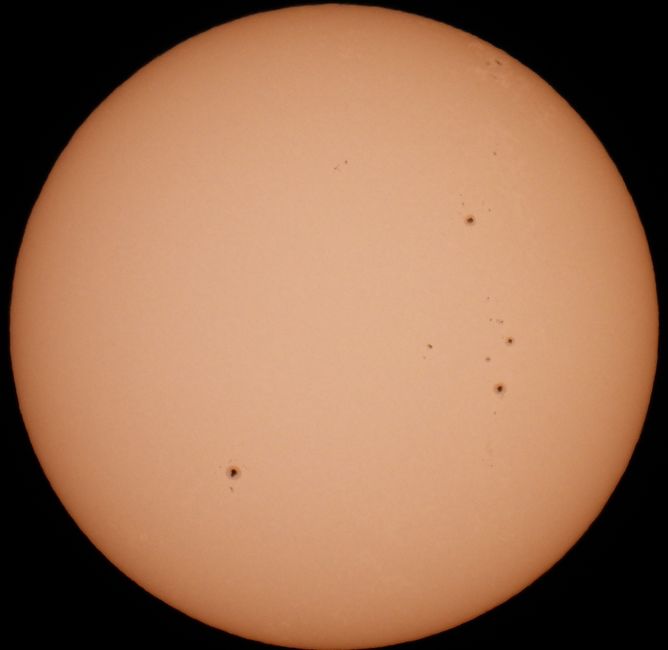
NASA Observatory Sheds New Light on the Sun
The Sun, our nearest star, has been a subject of fascination and study for millennia. Yet, despite our long observation, its inner workings and the complex processes that drive its behavior remain a fertile ground for scientific inquiry. Recently, a groundbreaking NASA observatory has begun to offer unprecedented insights, peering into the Sun’s turbulent atmosphere and revealing phenomena previously unseen or poorly understood. This advanced instrumentation is not merely providing more detailed images; it is fundamentally reshaping our comprehension of solar physics, from the origin of solar flares and coronal mass ejections (CMEs) to the generation and propagation of the solar wind. By capturing data at resolutions and wavelengths never before accessible, these observatories are effectively illuminating the Sun’s most dynamic and energetic processes, paving the way for more accurate space weather forecasting and a deeper understanding of stellar evolution.
The core mission of this new generation of solar observatories, exemplified by instruments like the Parker Solar Probe and the Solar Orbiter, is to get closer to the Sun than ever before. Parker Solar Probe, in particular, has been on a trajectory to “touch” the Sun, flying through the outermost layer of its atmosphere, the corona. This daring mission allows scientists to directly sample the solar wind and analyze the magnetic fields and plasma that originate from the Sun’s surface. Traditional observatories, limited by their distance, often relied on indirect measurements and modeling. The direct observations made by Parker Solar Probe are invaluable, providing ground truth for theoretical models and revealing the intricate, often chaotic, nature of the Sun’s magnetic field and its impact on the surrounding environment. This proximity is crucial for understanding how the Sun generates energy, expels matter, and influences the heliosphere, the vast bubble of plasma and magnetic fields that surrounds our solar system.
One of the most significant contributions of these advanced observatories is the unprecedented resolution at which they can observe solar phenomena. High-resolution imaging allows scientists to distinguish fine details in the Sun’s magnetic field lines, the flow of plasma, and the energetic bursts that characterize solar activity. For instance, observing the footpoints of coronal loops—arcs of hot plasma suspended above the Sun’s surface by magnetic fields—at high resolution has revealed a much more dynamic and complex magnetic environment than previously thought. These loops are believed to be sites where energy is stored and released in the form of solar flares and CMEs. The new observatories are capturing the rapid evolution of these magnetic structures, providing crucial data on the triggers and acceleration mechanisms behind these powerful events. This granular view is essential for distinguishing between different types of magnetic reconnection, a fundamental process in solar physics where magnetic field lines break and reconfigure, releasing enormous amounts of energy.
The study of solar flares and CMEs is a paramount objective for NASA observatories. These events, often erupting from active regions on the Sun’s surface, can have significant consequences for Earth. Powerful CMEs, when directed towards our planet, can disrupt satellite communications, cause power grid failures, and pose a hazard to astronauts. By providing detailed observations of the genesis and propagation of these eruptions, the new observatories are enabling scientists to develop more sophisticated predictive models. For example, researchers are now able to observe the initial destabilization of magnetic field lines that precedes a flare or CME with greater clarity, identifying precursor signals that could be used for early warning. The ability to track the three-dimensional structure and evolution of CMEs as they travel through the heliosphere is also being enhanced, allowing for a more accurate assessment of their potential impact on Earth.
Beyond flares and CMEs, the solar wind itself is being re-examined. The solar wind is a continuous stream of charged particles ejected from the Sun’s upper atmosphere. While its existence has been known for decades, its precise acceleration mechanisms, particularly in the inner heliosphere, have remained a puzzle. The Parker Solar Probe, by flying directly through the solar wind, is collecting in-situ measurements of its speed, density, temperature, and magnetic field. These measurements are revealing surprising details about the solar wind’s turbulent nature and its connection to the Sun’s magnetic field. Scientists are finding evidence of micro-flares and other small-scale energetic events that may be collectively responsible for accelerating the solar wind. This detailed understanding is vital for understanding the heliospheric environment, which influences everything from planetary atmospheres to interstellar dust.
The wavelength coverage of the new observatories is another critical factor in their groundbreaking discoveries. Different wavelengths of light and electromagnetic radiation reveal different aspects of the Sun. By observing the Sun across a broad spectrum, from radio waves to extreme ultraviolet (EUV) and X-rays, scientists can probe various layers of the solar atmosphere and observe phenomena that are invisible at other wavelengths. For instance, EUV emissions are particularly useful for studying the corona, as they are produced by highly ionized atoms found in the extremely hot solar atmosphere. X-ray observations are crucial for detecting the high-energy emissions associated with solar flares. The ability to correlate observations across multiple wavelengths from different instruments on the same spacecraft, or even from multiple coordinated spacecraft, provides a more holistic and comprehensive picture of solar activity.
The magnetic field of the Sun is central to almost all solar phenomena, and the new observatories are providing unprecedented data on its complex and dynamic nature. The Sun’s magnetic field is not a simple dipole like Earth’s; it is a tangled and ever-changing web that extends throughout the corona and into interplanetary space. Magnetic reconnection, a process where magnetic field lines break and reconfigure, is the primary driver of energetic events like flares and CMEs. The new observatories are capturing the intricate details of these reconnection events, allowing scientists to study the magnetic field topology and the plasma dynamics involved. Understanding how the magnetic field is generated and organized within the Sun, and how it erupts into the heliosphere, is a fundamental goal of solar physics. This is directly linked to the question of how the Sun’s magnetic dynamo works, a process that generates the Sun’s magnetic field through the motion of electrically charged plasma within its interior.
The impact of these observatories extends beyond fundamental solar physics. A more accurate understanding of the Sun’s behavior has direct implications for space weather forecasting. Space weather refers to the conditions in space that can affect space-based assets and ground-based technologies. By improving our ability to predict solar flares and CMEs, NASA observatories are contributing to enhanced protection for critical infrastructure. This includes satellites that provide essential services like communication, navigation, and weather monitoring, as well as power grids on Earth. The ability to provide timely and accurate warnings about impending solar storms can allow operators to take protective measures, such as shutting down sensitive equipment or rerouting spacecraft. This proactive approach is crucial in an increasingly technology-dependent world.
Furthermore, the insights gained from studying our Sun have broader implications for astrophysics. The Sun is a star, and understanding its processes can help us understand other stars. Many stars exhibit similar phenomena, such as flares, CMEs, and stellar winds. By studying our Sun in such detail, scientists are developing a more robust framework for understanding stellar activity across the universe. This can inform our understanding of exoplanet habitability, as stellar activity can significantly impact the atmospheres and evolution of planets orbiting other stars. The Sun serves as a crucial Rosetta Stone for deciphering the behavior of a vast array of celestial objects.
The data being collected by these advanced NASA observatories is not only of immense scientific value but also presents new challenges and opportunities for data analysis. The sheer volume and complexity of the data require sophisticated computational tools and techniques. Machine learning and artificial intelligence are playing an increasingly important role in processing and analyzing this vast dataset, helping scientists to identify patterns, anomalies, and subtle correlations that might otherwise be missed. This interdisciplinary approach, combining cutting-edge observational capabilities with advanced data science, is accelerating the pace of discovery in solar physics.
In conclusion, the new generation of NASA solar observatories is revolutionizing our understanding of the Sun. By getting closer, observing with unprecedented resolution, and utilizing a broad range of wavelengths, these missions are shedding new light on the Sun’s complex magnetic field, the drivers of solar flares and CMEs, and the acceleration of the solar wind. The implications of this research are far-reaching, from enhancing space weather forecasting and protecting critical infrastructure to deepening our understanding of stellar evolution and exoplanet habitability. The Sun, once a distant and enigmatic celestial body, is becoming increasingly accessible to scientific scrutiny, revealing its secrets and illuminating our place in the cosmos.