Intels Sandy Bridge Buffs Up On Board Graphics
Intel’s Sandy Bridge: A Revolution in Onboard Graphics Performance
The advent of Intel’s Sandy Bridge microarchitecture marked a significant paradigm shift in the realm of integrated graphics processing. Prior to Sandy Bridge, onboard graphics solutions from Intel were largely perceived as utilitarian components, sufficient for basic desktop tasks and rudimentary media playback but woefully inadequate for anything demanding visual fidelity or moderate gaming. Sandy Bridge fundamentally altered this perception by introducing a vastly improved integrated graphics engine that not only closed the performance gap with some discrete graphics cards of the era but also redefined expectations for what an integrated GPU could achieve. This article will delve into the technical innovations of Sandy Bridge’s graphics, analyze its performance improvements, explore its impact on the market, and discuss its legacy in the evolution of integrated graphics.
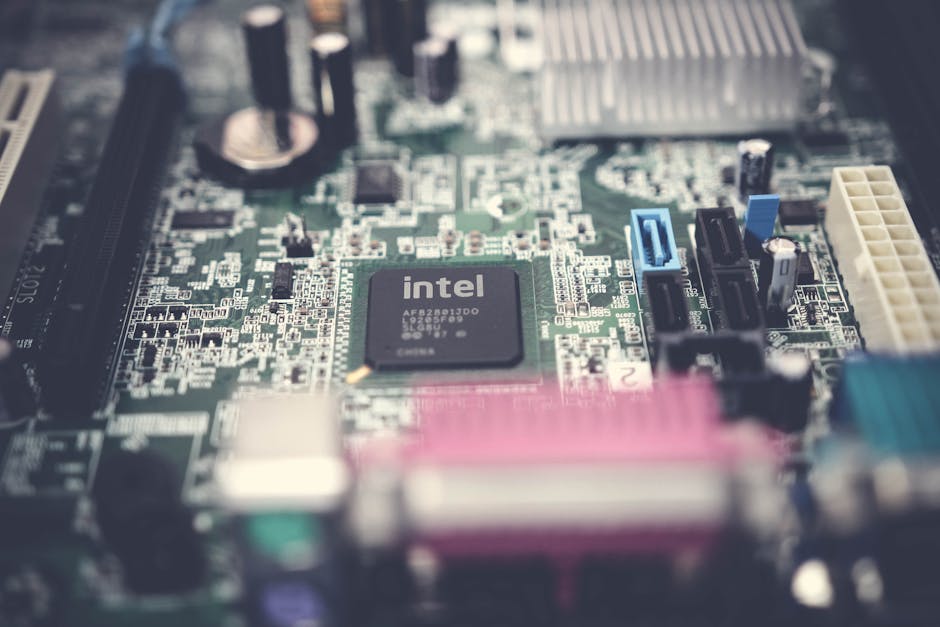
At the heart of Sandy Bridge’s graphical prowess was the introduction of the Intel HD Graphics 3000 (and its slightly cut-down sibling, HD Graphics 2000) integrated directly onto the same die as the CPU cores. This physical proximity was a key enabler of its performance. Previous Intel integrated graphics solutions, often referred to as "Intel Graphics Media Accelerator" (GMA), were typically found on the Northbridge of the motherboard chipset, leading to increased latency and reduced bandwidth when communicating with the CPU. Sandy Bridge’s unified architecture, however, placed the CPU cores and the GPU in close proximity, allowing for much faster data transfer and reduced communication overhead. This "on-die" integration meant that the GPU could access system memory with significantly lower latency and higher throughput, a critical factor for graphics performance.
Beyond the architectural integration, Intel significantly revamped the GPU design itself. The Intel HD Graphics 3000, for instance, was based on a new microarchitecture that offered a substantial increase in the number of execution units (EUs) compared to its predecessors. While older GMA architectures were often criticized for their limited shader capabilities and inefficient instruction handling, Sandy Bridge’s EUs were designed to be more powerful and flexible, supporting more advanced shader models and parallel processing techniques. The specific number of EUs varied between different Sandy Bridge SKUs, with the higher-end Core i5 and i7 processors typically featuring 12 EUs for the HD Graphics 3000, while lower-end models and Core i3 processors often had 6 EUs for the HD Graphics 2000. This increased parallelism directly translated to improved performance in graphics-intensive applications.
Furthermore, Sandy Bridge introduced significant advancements in media encoding and decoding capabilities. The Quick Sync Video technology, a dedicated hardware encoder and decoder engine, was a game-changer for video professionals and casual users alike. Quick Sync offloaded computationally intensive video encoding and decoding tasks from the CPU and the GPU, dramatically accelerating tasks like video conversion, editing, and playback. This meant that even systems with relatively modest CPUs and integrated graphics could handle high-definition video with ease, something that was previously a struggle for many integrated solutions. This dedicated hardware acceleration was a key selling point for Sandy Bridge, appealing to a broad spectrum of users beyond just gamers.
The architectural improvements extended to the memory subsystem as well. Sandy Bridge’s integrated graphics could leverage system RAM, but Intel implemented enhancements to ensure efficient memory access. This included improved memory controllers and more sophisticated cache hierarchies that helped feed the GPU with data more effectively. While the graphics still shared system RAM with the CPU, the overall efficiency of this sharing was significantly improved compared to previous generations. The ability to dynamically allocate memory between the CPU and GPU also played a crucial role in optimizing performance based on the workload.
In terms of raw performance, the jump from previous generations of Intel integrated graphics to Sandy Bridge was nothing short of revolutionary. Benchmarks from the time clearly demonstrated this. In synthetic graphics tests like 3DMark, Sandy Bridge’s HD Graphics 3000 often outperformed older GMA solutions by hundreds, and in some cases, even thousands of percent. More importantly, this translated to real-world improvements. Mainstream games that were previously unplayable on integrated graphics became playable at lower resolutions and graphical settings. Titles like World of Warcraft, StarCraft II, and various casual gaming titles saw playable frame rates, a feat that was previously unthinkable for Intel’s onboard solutions. While it was still not a match for mid-range or high-end discrete graphics cards, it provided a viable option for budget-conscious users who wanted to do more than just browse the web and use office applications.
The impact of Sandy Bridge’s enhanced onboard graphics on the PC market was profound. It significantly eroded the market share of entry-level discrete graphics cards from NVIDIA and AMD. For many users building or buying a standard desktop or laptop for general productivity, media consumption, and casual gaming, the performance of Sandy Bridge’s integrated graphics was "good enough." This meant that manufacturers could offer more affordable systems without compromising on the user experience for a large segment of the market. This led to a decrease in the demand for the cheapest discrete GPUs, forcing NVIDIA and AMD to focus more on their mid-range and high-end offerings.
Furthermore, Sandy Bridge’s integrated graphics played a crucial role in the burgeoning ultrabook market. The power efficiency of its integrated GPU, combined with the overall power savings of the Sandy Bridge architecture, allowed for thinner, lighter, and more power-efficient laptops that could still offer a respectable visual experience. This was a significant factor in the success of the ultrabook category, enabling it to compete with traditional laptops without sacrificing essential graphical capabilities.
The success of Sandy Bridge’s integrated graphics also spurred further innovation in the field. It set a new benchmark for what was expected from integrated solutions, pushing both Intel and its competitors to invest more heavily in the development of their onboard graphics technologies. The subsequent generations of Intel HD Graphics, such as Ivy Bridge and Haswell, continued to build upon the foundation laid by Sandy Bridge, offering further performance improvements, enhanced features, and even greater power efficiency. Similarly, AMD’s APUs (Accelerated Processing Units), which also featured integrated graphics, saw increased competition and innovation in response to Intel’s advancements.
The technological underpinnings of Sandy Bridge’s graphical success included several key architectural elements. The unified shader architecture allowed for greater flexibility in how processing resources were allocated between different types of graphical operations. The improved texture filtering and anti-aliasing capabilities also contributed to better visual quality. Support for DirectX 10.1 and OpenGL 3.1, while not the absolute latest at the time of release, was a significant upgrade from previous generations and allowed for compatibility with a wider range of software. The increased clock speeds of the GPU also played a direct role in its enhanced performance.
One of the crucial aspects of Sandy Bridge’s integrated graphics was its ability to dynamically scale performance based on the thermal and power envelopes of the system. This meant that in a desktop system with adequate cooling, the GPU could often run at higher clock speeds and maintain better performance than in a thermally constrained laptop. This adaptability was a testament to the intelligent design of the architecture.
The impact of Sandy Bridge on search engine optimization (SEO) is indirect but significant. The widespread adoption of Sandy Bridge processors meant that a vast number of computers in use were equipped with its improved integrated graphics. This influenced the types of websites and online content that were commonly accessed. For example, the ability to play higher-quality videos and more graphically demanding casual games online meant that content creators and web developers had to consider these capabilities when designing their sites and applications. Websites optimized for better visual presentation and smoother video playback, benefiting from the capabilities of Sandy Bridge and subsequent integrated graphics, were more likely to retain users and achieve better SEO rankings due to increased engagement. Furthermore, the performance boost in applications like video editing and content creation, facilitated by Quick Sync, meant that a larger pool of users could engage with and create richer multimedia content, further driving demand for optimized web experiences.
In conclusion, Intel’s Sandy Bridge microarchitecture, with its integrated HD Graphics 3000 and 2000, represented a monumental leap forward in onboard graphics performance. By integrating the GPU onto the CPU die, revamping the GPU architecture with more execution units, and introducing groundbreaking technologies like Quick Sync Video, Intel transformed integrated graphics from a reluctant compromise into a capable solution for mainstream users. This had a profound impact on the PC market, driving down the cost of capable systems, enabling the ultrabook revolution, and forcing a re-evaluation of the entry-level discrete graphics market. The legacy of Sandy Bridge lies not just in its impressive performance gains, but in its role as a catalyst for innovation, setting a new standard for integrated graphics that continues to influence the industry today. Its success demonstrated that powerful graphics capabilities could be achieved without the need for a separate, power-hungry discrete component, fundamentally altering the landscape of personal computing.