

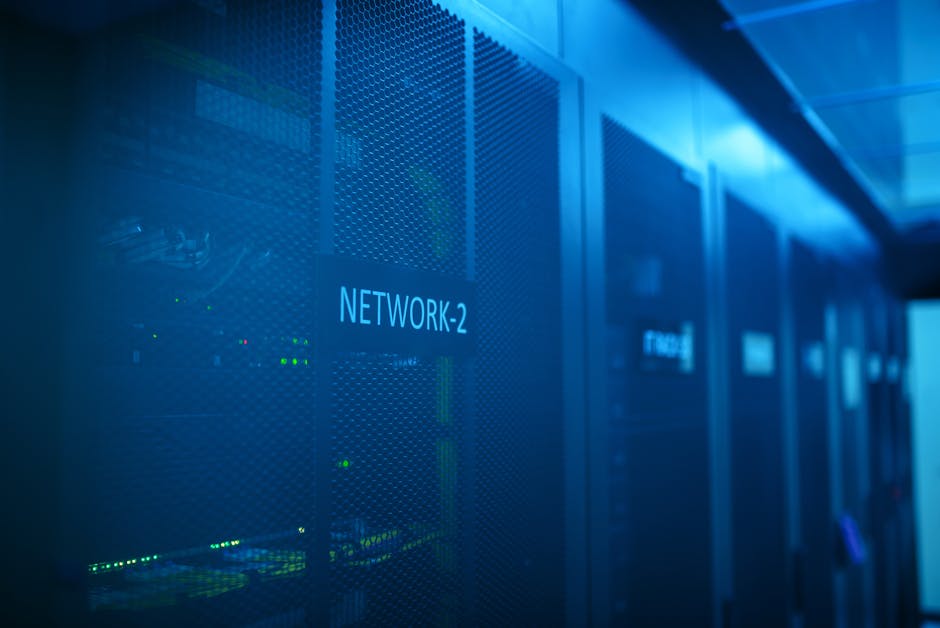
Category: Data Center Strategies 2
Deconstructing Advanced Data Center Strategy: Consolidation, Virtualization, and Cloud Integration
Category: Data Center Strategies 2 delves into the sophisticated approaches businesses are adopting to optimize their data center infrastructure for enhanced efficiency, agility, and cost-effectiveness. At the forefront of these strategies lies consolidation, a deliberate process of reducing the physical footprint of data center operations. This often involves migrating workloads from numerous smaller, underutilized data centers to fewer, larger, and more efficient facilities. The drivers for consolidation are manifold: reducing operational expenditures associated with power, cooling, and maintenance of disparate sites; simplifying IT management and increasing oversight; and achieving economies of scale in procurement of hardware, software, and services. Advanced consolidation strategies go beyond simply closing underperforming locations. They involve meticulous planning, including application dependency mapping to ensure seamless migration of critical systems, and careful consideration of network latency and connectivity requirements for distributed user bases. The potential pitfalls of consolidation, such as single points of failure and increased reliance on network performance, necessitate robust disaster recovery and business continuity plans. Companies implementing this strategy are often driven by a desire to centralize control, improve security posture by reducing the attack surface, and free up capital previously tied to dispersed physical assets. The financial benefits are often realized through reduced real estate costs, lower energy consumption, and streamlined staffing models.
Complementary to consolidation is virtualization, a transformative technology that abstracts hardware resources, allowing multiple virtual machines (VMs) to run on a single physical server. This fundamental shift has revolutionized data center operations by decoupling applications from their underlying hardware. The benefits of comprehensive virtualization are far-reaching: dramatic improvements in server utilization rates, which can soar from 10-15% in non-virtualized environments to upwards of 60-80%; significant reductions in hardware acquisition costs and the associated power and cooling demands; and accelerated provisioning of new computing resources, enabling IT departments to respond much faster to business needs. Advanced virtualization strategies extend beyond server virtualization to encompass storage virtualization, network virtualization, and even desktop virtualization (VDI). Storage virtualization abstracts physical storage arrays, pooling them into logical storage volumes that can be dynamically allocated to VMs, enhancing flexibility and simplifying storage management. Network virtualization creates logical networks on top of the physical network infrastructure, enabling the creation of isolated virtual networks for different applications or tenants, improving security and agility. VDI allows users to access their desktop environment from any device, centralizing management and enhancing security. The strategic implementation of virtualization requires careful consideration of hypervisor selection, resource allocation, performance monitoring, and security implications. Properly managed, virtualization is a cornerstone of modern data center efficiency and agility.
The convergence of consolidation and virtualization naturally leads to the strategic imperative of cloud integration. This involves a deliberate and phased approach to incorporating public cloud services, private cloud deployments, or hybrid cloud models into the overall data center strategy. Cloud integration is not merely about migrating workloads to the cloud; it is about creating a cohesive and unified IT environment where on-premises infrastructure and cloud resources work in concert. The primary motivations for cloud integration include leveraging the scalability and elasticity of public cloud services for variable workloads, accessing specialized cloud-native services that may not be cost-effectively replicable on-premises, and enhancing disaster recovery capabilities. A well-defined cloud integration strategy typically involves identifying suitable workloads for migration, assessing the security and compliance requirements of cloud environments, and establishing robust data governance policies. Hybrid cloud models, which combine private cloud infrastructure with public cloud services, are particularly popular as they offer a balance of control, security, and flexibility. This allows organizations to keep sensitive data on-premises while leveraging the agility and cost-effectiveness of public clouds for less critical or burstable workloads. The integration process requires careful planning of connectivity, identity and access management across different environments, and unified monitoring and management tools. Organizations must also develop expertise in cloud architecture, security best practices, and cost management within cloud platforms to maximize the benefits of this strategy.
Scalability and Elasticity: Architecting for Dynamic Demand
Category: Data Center Strategies 2 places significant emphasis on designing data centers capable of scalability and elasticity. Scalability refers to the ability of the data center infrastructure to grow and accommodate increasing workloads and data volumes without compromising performance or reliability. This is achieved through modular design principles, allowing for the incremental addition of compute, storage, and network resources. Strategies include employing scalable server architectures, utilizing distributed storage systems, and implementing flexible network fabrics that can expand as needed. Elasticity, a more dynamic concept, describes the ability of the data center to rapidly scale resources up and down in response to fluctuating demand. This is particularly crucial in today’s business environment, where workloads can experience significant and unpredictable spikes. Cloud computing environments are inherently elastic, and integrating cloud services into the data center strategy is a primary method of achieving this. However, on-premises infrastructure can also be designed for elasticity through technologies like serverless computing, auto-scaling policies for virtualized environments, and the use of converged or hyperconverged infrastructure, which simplifies the addition and management of resources.
A key element in achieving scalability and elasticity is the adoption of software-defined infrastructure (SDI). SDI decouples hardware resources from their control plane, allowing for programmatic management and automation of infrastructure components. This includes Software-Defined Networking (SDN), which centralizes network control, and Software-Defined Storage (SDS), which pools and manages storage resources through software. By abstracting these functionalities, SDI enables greater agility and faster provisioning of resources. For example, SDN allows for dynamic configuration of network paths, while SDS facilitates rapid creation and modification of storage volumes. This programmable nature is fundamental to achieving the rapid scaling and resource adjustments required for elasticity. Automation tools and orchestration platforms play a critical role in implementing SDI effectively, allowing for the automated deployment, configuration, and management of infrastructure resources. This reduces manual intervention, minimizes the risk of human error, and significantly speeds up the process of scaling up or down.
Furthermore, containerization has emerged as a pivotal technology in enabling scalability and elasticity at the application level, which directly impacts data center resource demands. Technologies like Docker and Kubernetes allow applications to be packaged with their dependencies into lightweight, portable containers. These containers can be rapidly deployed, scaled, and managed across diverse environments, whether on-premises or in the cloud. This microservices-based architecture, facilitated by containers, allows individual components of an application to scale independently, leading to more efficient resource utilization and a more resilient application. The data center must be architected to support the dynamic deployment and orchestration of these containers, often through the use of container orchestration platforms like Kubernetes. These platforms automate the deployment, scaling, and management of containerized applications, ensuring that the underlying infrastructure can dynamically respond to application needs. The ability to quickly spin up or shut down container instances based on real-time demand is a direct manifestation of elasticity at the application and infrastructure layers, profoundly influencing the overall data center strategy.
Resilience and Business Continuity: Minimizing Downtime
Category: Data Center Strategies 2 places paramount importance on resilience and business continuity. The modern business landscape is highly dependent on the continuous availability of IT systems. Any unscheduled downtime can result in significant financial losses, reputational damage, and erosion of customer trust. Therefore, building a resilient data center infrastructure is not an optional extra but a fundamental requirement. Resilience encompasses the ability of the data center to withstand and recover from disruptions, whether they are hardware failures, software glitches, cyberattacks, or natural disasters. This is achieved through a multi-layered approach that includes redundancy, fault tolerance, and robust monitoring and alerting systems.
Redundancy is a core principle of resilience, ensuring that critical components have backup or duplicate systems in place. This can include redundant power supplies, network interfaces, servers, and storage arrays. In a highly redundant environment, the failure of a single component does not lead to a system outage. Fault tolerance goes a step further, designing systems that can continue to operate even when a component fails, often by seamlessly switching to a backup. This can involve technologies like clustering, where multiple servers work together and can take over the workload of a failed server. The design of the data center facility itself also contributes to resilience, with considerations for redundant power feeds, cooling systems, and network ingress points.
Disaster Recovery (DR) planning and implementation are critical components of business continuity. DR strategies focus on restoring IT operations in the event of a catastrophic event that renders the primary data center inoperable. This typically involves replicating data and applications to a secondary site, which can be another data center, a colocation facility, or a cloud-based DR solution. Key considerations in DR planning include defining Recovery Time Objectives (RTOs) – the maximum acceptable downtime after a disaster – and Recovery Point Objectives (RPOs) – the maximum acceptable data loss. The selection of DR technologies, such as continuous data replication, snapshotting, and automated failover mechanisms, is crucial to meeting these objectives. Regular testing of DR plans is essential to ensure their effectiveness and identify any potential shortcomings before a real disaster strikes.
Moreover, high availability (HA) architectures are designed to minimize or eliminate planned and unplanned downtime for critical applications. HA solutions ensure that applications remain accessible even in the face of component failures. This is often achieved through redundant hardware, clustered servers, and load balancing. For instance, load balancers can distribute incoming traffic across multiple servers, and if one server fails, the load balancer automatically reroutes traffic to the remaining healthy servers. Automated failover mechanisms are a hallmark of HA systems, allowing for near-instantaneous switching to backup resources in the event of a failure. The implementation of HA requires careful consideration of application architecture, dependencies, and the underlying infrastructure to ensure that the entire system is designed for continuous operation.
Security and Compliance: Protecting Data and Meeting Regulations
Category: Data Center Strategies 2 places a non-negotiable emphasis on security and compliance. The increasing volume and sensitivity of data processed and stored within data centers make them prime targets for cyberattacks. A robust security posture is not merely about protecting data from external threats; it also involves safeguarding against insider threats and ensuring the integrity and availability of systems. This necessitates a holistic approach that encompasses physical security, network security, data security, and application security.
Physical security measures are the first line of defense, preventing unauthorized access to the data center facility. This includes robust access control systems, surveillance, intrusion detection, and strict visitor policies. Beyond the physical perimeter, network security is paramount. This involves implementing firewalls, intrusion prevention systems (IPS), intrusion detection systems (IDS), and robust network segmentation to isolate critical systems and limit the lateral movement of attackers. Secure network protocols and regular vulnerability assessments are also crucial.
Data security focuses on protecting the data itself, regardless of its location. This includes encryption of data at rest and in transit, access controls based on the principle of least privilege, and data loss prevention (DLP) solutions. Regular data backups and secure off-site storage are vital for data recovery in the event of a breach or disaster. Application security is equally important, as vulnerabilities in applications can provide entry points for attackers. This involves secure coding practices, regular security patching, and the use of application firewalls (WAFs).
In parallel with security, compliance with various regulatory frameworks is a critical consideration. Data center operators must adhere to a growing number of industry-specific and governmental regulations governing data privacy, security, and retention. Examples include GDPR (General Data Protection Regulation) for data privacy in the European Union, HIPAA (Health Insurance Portability and Accountability Act) for healthcare data in the United States, PCI DSS (Payment Card Industry Data Security Standard) for financial transactions, and various ISO standards related to information security management. Achieving and maintaining compliance requires a deep understanding of applicable regulations, the implementation of appropriate controls and policies, and regular audits to demonstrate adherence. Often, this involves creating detailed documentation, conducting risk assessments, and ensuring that all personnel are adequately trained on security and compliance requirements. The integration of security and compliance considerations into the initial design and ongoing operation of the data center is essential to avoid costly penalties and maintain business trust.
Emerging Technologies and Future Trends: AI, Edge, and Sustainability
Category: Data Center Strategies 2 recognizes the dynamic nature of the IT landscape and the increasing influence of emerging technologies. Artificial Intelligence (AI) and Machine Learning (ML) are transforming data center operations by enabling advanced automation, predictive maintenance, and intelligent resource optimization. AI algorithms can analyze vast amounts of operational data to identify patterns, predict potential hardware failures before they occur, and proactively adjust resource allocation to improve performance and reduce energy consumption. For example, AI can be used to optimize cooling systems based on real-time workload demands and environmental conditions, leading to significant energy savings. ML models can also be employed for anomaly detection, identifying unusual activity that may indicate a security breach or operational issue.
The growing demand for low-latency data processing at the edge of networks is driving the adoption of Edge Computing strategies. Instead of sending all data back to a centralized data center for processing, edge computing involves deploying compute and storage resources closer to the data source, such as IoT devices, retail locations, or industrial sensors. This reduces latency, conserves bandwidth, and enables real-time decision-making. Data center strategies are evolving to incorporate edge deployments, which may involve smaller, distributed data centers or specialized edge infrastructure. The management and orchestration of these distributed edge resources present new challenges and require innovative solutions for remote management, security, and data synchronization.
Sustainability is no longer a secondary concern but a primary driver in data center strategy. As data consumption continues to grow exponentially, so does the energy footprint of data centers. Companies are increasingly focused on reducing their environmental impact through energy efficiency initiatives, renewable energy sourcing, and responsible waste management. Strategies include utilizing energy-efficient hardware, optimizing cooling systems, implementing advanced power management techniques, and investing in renewable energy sources such as solar and wind power. Many organizations are setting ambitious sustainability goals, including achieving carbon neutrality in their data center operations. This often involves a lifecycle approach, considering the environmental impact of hardware from manufacturing to decommissioning. The adoption of sustainable practices not only benefits the environment but can also lead to significant cost savings through reduced energy consumption and improved operational efficiency. The interplay of these emerging technologies and the drive for sustainability will continue to shape the evolution of data center strategies in the coming years, demanding continuous adaptation and innovation.










No comments yet. Be the first to join the conversation!