

Industrial Control Systems: Automation, Security, and the Future
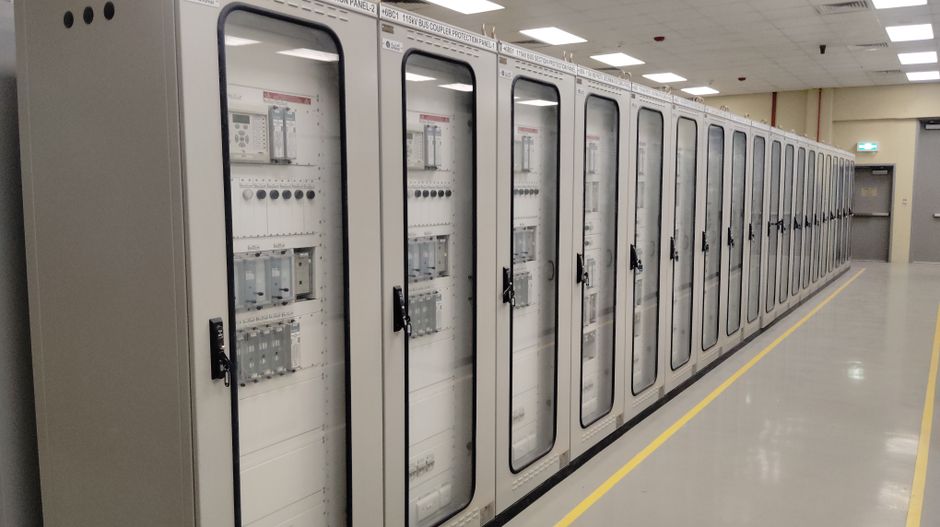
Industrial Control Systems (ICS) represent the bedrock of modern industrial operations, encompassing a broad spectrum of technologies that automate and supervise industrial processes. These systems are critical for managing everything from power generation and distribution to manufacturing assembly lines, water treatment facilities, and transportation networks. At their core, ICS are designed to monitor, control, and optimize the physical processes of a plant or infrastructure. This intricate network of hardware and software components allows for remote operation, data acquisition, and real-time decision-making, enhancing efficiency, safety, and productivity. The fundamental components of an ICS typically include sensors that measure physical parameters, actuators that perform actions based on control signals, and human-machine interfaces (HMIs) that provide operators with visibility and control over the process. Underlying these are controllers, such as Programmable Logic Controllers (PLCs) and Distributed Control Systems (DCS), which execute the logic and algorithms that govern the entire operation. SCADA (Supervisory Control and Data Acquisition) systems are a common type of ICS, often used for large-scale, geographically dispersed operations, providing supervisory control and centralized data collection. The evolution of ICS has seen a significant shift from proprietary, isolated systems to more integrated and networked architectures, driven by the need for greater efficiency, flexibility, and data utilization. This evolution, however, has also introduced new challenges, particularly in the realm of cybersecurity. Understanding the fundamental architecture, diverse applications, and inherent vulnerabilities of ICS is paramount for any organization relying on industrial automation.
The architecture of Industrial Control Systems is typically hierarchical, with distinct layers responsible for different functions. The lowest layer, the process level, involves sensors and actuators directly interacting with the physical environment. These devices collect raw data about process variables like temperature, pressure, flow rate, and position. The next layer, the control layer, houses the PLCs or DCS. These controllers receive data from the sensors, process it according to programmed logic, and send commands to the actuators to adjust the physical process. The supervisory layer, often comprising SCADA systems or HMIs, provides operators with a visual representation of the process, allowing them to monitor performance, set parameters, and intervene when necessary. Data historians, located at this or a higher layer, store vast amounts of historical process data for analysis, trending, and troubleshooting. Network infrastructure, including Ethernet, serial communication protocols, and specialized industrial networks like Modbus, Profibus, and EtherNet/IP, connects these layers and facilitates communication. In more advanced ICS, an enterprise integration layer connects the control systems to business systems like Enterprise Resource Planning (ERP) and Manufacturing Execution Systems (MES), enabling seamless data flow and informed business decisions. This layered approach ensures modularity, scalability, and resilience, allowing for independent development and troubleshooting of different system components. The increasing reliance on open standards and off-the-shelf hardware has, while improving interoperability and reducing costs, also broadened the attack surface for cyber threats.
The applications of Industrial Control Systems span virtually every sector of the economy. In the energy sector, ICS are indispensable for managing power grids, oil and gas pipelines, and renewable energy sources, ensuring reliable and efficient energy production and distribution. Manufacturing industries heavily rely on ICS for automating production lines, controlling robotic arms, managing inventory, and optimizing quality control in automotive, electronics, and consumer goods production. Water and wastewater treatment facilities utilize ICS to monitor and control water quality, manage pumping stations, and ensure the efficient and safe delivery of potable water. Transportation systems, including railways and air traffic control, employ ICS for signaling, scheduling, and managing complex operational flows. Building automation systems, often a subset of ICS, manage HVAC, lighting, and security in commercial and residential buildings, optimizing energy consumption and occupant comfort. Petrochemical plants use ICS to manage highly complex and hazardous processes, requiring precise control and robust safety interlocks. Food and beverage production leverages ICS for process automation, ensuring product consistency, safety, and compliance with stringent regulatory requirements. Even in agriculture, ICS are used for automated irrigation, climate control in greenhouses, and precision farming techniques. The ubiquitous nature of ICS highlights their critical role in maintaining the functioning of modern society.
The security of Industrial Control Systems is a growing and critical concern. Historically, ICS were designed with operational reliability and safety as paramount, with security often being an afterthought or implicitly assumed due to their isolation from external networks. This paradigm has shifted dramatically with the increasing connectivity of ICS, driven by the Industrial Internet of Things (IIoT), remote access for maintenance, and integration with enterprise IT networks. This increased connectivity, while offering significant benefits, exposes ICS to a range of cyber threats, including malware, ransomware, denial-of-service attacks, advanced persistent threats (APTs), and insider threats. The consequences of a successful cyberattack on an ICS can be catastrophic, leading to operational disruption, equipment damage, environmental disasters, financial losses, and even loss of life. For instance, the Stuxnet worm, discovered in 2010, demonstrated the potential for sophisticated cyberattacks to cause physical damage to industrial machinery. Vulnerabilities in ICS often stem from the use of legacy systems with outdated software and hardware, lack of regular patching and updates, weak authentication mechanisms, insecure network configurations, and insufficient security awareness among personnel. Furthermore, the proprietary nature of some ICS components can hinder security assessment and remediation efforts. Addressing ICS security requires a multi-layered approach, encompassing technical controls, robust policies, and comprehensive training.
Securing Industrial Control Systems necessitates a defense-in-depth strategy, employing multiple layers of security to protect against various threats. Network segmentation is a fundamental principle, dividing the ICS network into smaller, isolated zones to limit the lateral movement of attackers. This can be achieved through firewalls, virtual local area networks (VLANs), and demilitarized zones (DMZs). Access control is crucial, implementing strong authentication mechanisms, role-based access control (RBAC), and the principle of least privilege to ensure that users and systems only have access to the resources they absolutely need. Intrusion detection and prevention systems (IDPS) monitor network traffic for malicious activity and can take automated actions to block or alert on threats. Endpoint security measures, such as antivirus software and host-based intrusion detection systems, should be deployed on ICS devices where feasible. Regular security awareness training for all personnel involved in operating and maintaining ICS is essential to mitigate human error and social engineering attacks. Patch management and vulnerability management programs are critical for identifying and remediating known vulnerabilities in ICS software and hardware. Encryption should be employed for sensitive data in transit and at rest, where supported by the system. Physical security measures, such as restricting access to control rooms and critical infrastructure, also play a vital role. Incident response planning is paramount, ensuring that organizations have well-defined procedures for detecting, analyzing, and recovering from security incidents.
The evolution of Industrial Control Systems towards the Industrial Internet of Things (IIoT) and Industry 4.0 presents both opportunities and significant security challenges. IIoT involves connecting a vast array of sensors, devices, and machines to the internet, enabling real-time data collection, advanced analytics, and predictive maintenance. This interconnectedness allows for greater operational visibility, enhanced efficiency, and the development of smart factories. However, each connected device represents a potential entry point for cyber attackers. The sheer volume and diversity of IIoT devices, many of which may have limited processing power or security capabilities, create a complex attack surface. Securing IIoT environments requires a focus on device lifecycle management, secure by design principles, robust authentication for devices, and secure communication protocols. Cloud computing is also playing an increasingly significant role in ICS, offering scalable computing power and storage for data analytics and remote management. While cloud platforms offer advanced security features, the secure integration of on-premises ICS with cloud services is critical. Industry 4.0, a broader concept encompassing smart manufacturing, automation, and data exchange, relies heavily on secure and interoperable ICS. The trend towards greater autonomy in industrial processes, driven by AI and machine learning, requires robust security to ensure that autonomous decisions are not compromised by malicious actors. The convergence of IT and Operational Technology (OT) networks, while enabling data sharing and operational improvements, also necessitates a unified security strategy that addresses the unique requirements of both environments.
The future of Industrial Control Systems will be shaped by several key trends, with cybersecurity remaining a central theme. The continued growth of IIoT and the push towards Industry 5.0 will see an even greater level of interconnectedness and automation. Artificial intelligence (AI) and machine learning (ML) will be increasingly integrated into ICS for predictive maintenance, anomaly detection, process optimization, and autonomous control. However, the security implications of AI-powered ICS will need careful consideration, including the potential for adversarial attacks against AI models. Edge computing will gain prominence, allowing for real-time data processing and decision-making closer to the physical process, reducing latency and bandwidth requirements. This distributed computing paradigm will require robust security measures at the edge. The increasing demand for sustainability and efficiency will drive further adoption of ICS in areas like smart grids and smart manufacturing. Regulatory frameworks and compliance requirements for ICS security are expected to become more stringent, compelling organizations to adopt best practices and invest in robust security solutions. The development of advanced threat detection and response capabilities, including AI-driven security analytics and automated incident response, will be crucial. Furthermore, greater emphasis will be placed on the resilience of ICS, ensuring that systems can withstand and recover quickly from cyberattacks and other disruptions. The human element will also remain critical, with a continued need for skilled cybersecurity professionals who understand the unique challenges of securing OT environments. Collaboration between industry, government, and academia will be essential in developing and implementing effective security strategies for the evolving landscape of Industrial Control Systems.











No comments yet. Be the first to join the conversation!