

The Slow Demise of Tesla: Horsepower, Horsepower, and One Foolish CEO
The narrative of Tesla’s ascendance, once a seemingly unstoppable force, is now facing a potent, multi-pronged challenge, a slow strangulation from a convergence of traditional automotive might, the relentless march of electrification, and the increasingly erratic decisions of its chief executive. While Elon Musk’s audacious vision propelled Tesla to the forefront of the EV revolution, his recent pronouncements and strategic missteps are creating openings for legacy automakers to reclaim their dominance and for new electric contenders to seize market share. The question is no longer if Tesla will face significant headwinds, but rather how effectively these challenges will erode its once unassailable position. This article will dissect these forces, illustrating how the very strengths Tesla leveraged are now being turned against it, compounded by the singular impact of its chief executive’s disruptive, yet at times self-destructive, leadership.
The resurgence of established automotive giants is not a mere statistical blip; it is a strategic and product-driven comeback. For decades, these behemoths – Ford, General Motors, Volkswagen, Toyota, and others – honed their manufacturing prowess, built vast dealer networks, and cultivated deep reservoirs of brand loyalty. While they initially lagged in the EV race, underestimating the seismic shift occurring in the industry, they are now channeling their immense resources and accumulated expertise into a full-scale electrification offensive. Their advantage lies in their scale. They possess the infrastructure for mass production, the experience in navigating complex supply chains, and the financial muscle to invest billions in battery technology and manufacturing. Brands like Ford, with its Mustang Mach-E and F-150 Lightning, are leveraging their iconic model names and established customer bases to offer compelling electric alternatives. Volkswagen’s ID. series, built on its scalable MEB platform, represents a global commitment to EVs, aiming to achieve economies of scale that Tesla, for all its innovation, has struggled to consistently replicate. These legacy players are not merely offering EVs; they are offering EVs built by companies that understand how to build cars for millions, not tens of thousands, and deliver them to customers through established, trusted channels. Their long-term durability, robust warranty programs, and extensive service networks, often seen as a weakness in the early EV market, are now significant selling points for a broader, more risk-averse consumer base.
Furthermore, the very definition of "horsepower" is undergoing a profound transformation. Historically, it signified raw engine power, a visceral metric of performance. In the electric era, this concept is being redefined. Electric powertrains, with their instant torque and seamless acceleration, offer a level of performance that often surpasses their internal combustion engine (ICE) counterparts, regardless of the "horsepower" figures traditionally quoted. Tesla’s initial advantage was rooted in this superior performance, a "wow" factor that captivated early adopters. However, as other automakers electrify their fleets, they are not only matching but in some cases exceeding Tesla’s performance metrics. High-performance EVs from brands like Porsche (Taycan), Lucid (Air), and even some of the more potent offerings from Hyundai and Kia, demonstrate that electrification is not a compromise on performance; it is an evolution. The silent, rapid acceleration of an electric motor is becoming the new benchmark for automotive prowess, and Tesla’s initial monopoly on this sensation has evaporated. The market is no longer solely captivated by raw acceleration; it is increasingly looking at range, charging infrastructure, sustainability, and the overall ownership experience – areas where legacy automakers, with their established charging partnerships and improving battery technology, are making significant strides.
The "foolish CEO" factor, personified by Elon Musk, is a potent catalyst exacerbating Tesla’s vulnerabilities. Musk’s genius in innovation and his ability to capture public attention have been undeniable. However, his increasingly volatile and unpredictable public persona, coupled with his controversial business decisions, are actively undermining Tesla’s brand equity and alienating key stakeholders. His acquisition of Twitter (now X) and its subsequent tumultuous management, his public pronouncements on sensitive social and political issues, and his tendency to prioritize speculative ventures over core business operations have created an aura of instability around Tesla. For a company that built its reputation on technological advancement and a vision for a sustainable future, this erratic leadership is deeply problematic. Potential customers, particularly those looking for a stable and reliable long-term investment, may be hesitant to commit to a brand so closely tied to the whims of its CEO. Investors, once captivated by Musk’s Midas touch, are now expressing concerns about governance and the potential for reputational damage. Furthermore, Musk’s increasingly adversarial relationship with regulators, media, and even his own employees can lead to costly legal battles, public relations crises, and a decline in morale, all of which contribute to operational inefficiencies and a weakened competitive stance. His pronouncements about self-driving technology, often ahead of actual capabilities, have also drawn scrutiny and regulatory attention, further complicating Tesla’s path to market.
The competitive landscape for electric vehicles has evolved dramatically. While Tesla was once the undisputed leader, the market is now teeming with capable alternatives. The rise of Chinese EV manufacturers, such as BYD, Nio, and XPeng, presents a significant global threat. These companies benefit from strong government support, rapid technological development, and an aggressive pricing strategy that can undercut Western competitors, including Tesla. BYD, in particular, has surpassed Tesla in overall vehicle sales, demonstrating its formidable production capacity and diverse product portfolio, which includes both electric and plug-in hybrid vehicles. Their entry into international markets, often with vehicles tailored to local preferences and price points, represents a direct challenge to Tesla’s global ambitions. Tesla’s initial strategy of premium pricing and aspirational branding, while effective in the early days, becomes less tenable as a wider array of more affordable, yet still technologically advanced, EVs become available from both established automakers and these new Chinese entrants.
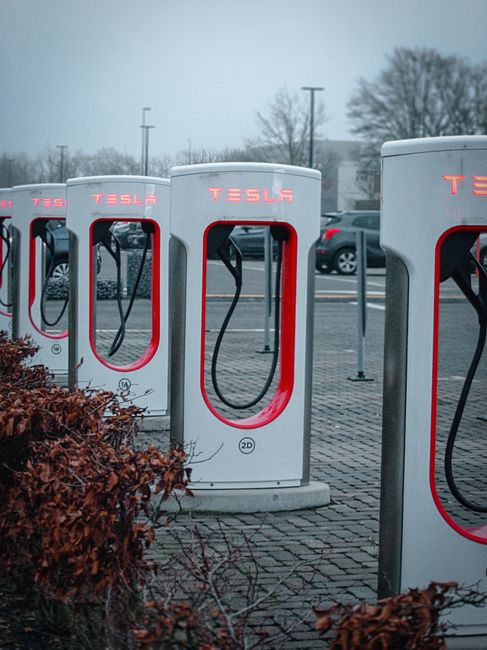
The "horse vs. gas vs. electric" dynamic is also shifting. The initial "horse" analogy, representing the raw power of traditional engines, has been effectively challenged by electric torque. However, the perceived limitations of electric vehicles – range anxiety and charging infrastructure – are diminishing with each passing year. Battery technology is advancing rapidly, leading to longer ranges and faster charging times. The expansion of charging networks, both public and private, is addressing one of the primary barriers to EV adoption. Tesla’s Supercharger network, once a significant competitive advantage, is now facing increased competition from other charging providers and even the opening of its network to other EV manufacturers. This means that the convenience of charging is becoming more democratized, lessening Tesla’s unique selling proposition in this area. Furthermore, the ongoing discussions and advancements in battery chemistries, including solid-state batteries, promise even greater range and faster charging in the near future, further closing the gap with gasoline-powered vehicles and potentially rendering the "gas" option increasingly obsolete for many consumers.
The narrative of Tesla’s invincibility is being rewritten by a confluence of factors. The formidable resurgence of legacy automakers, armed with their manufacturing scale and brand loyalty, provides a robust alternative for consumers. The evolving definition of "horsepower" in the electric era means that Tesla’s performance edge is no longer unique. The competitive pressure from global EV manufacturers, particularly from China, is intensifying. And perhaps most critically, the unpredictable and often self-sabotaging behavior of its CEO is creating internal and external vulnerabilities. The slow strangulation of Tesla will not be a sudden collapse but rather a gradual erosion of market share, a decline in its premium valuation, and a loss of its pioneering aura as competitors catch up and even surpass it in key areas. The future of the automotive industry is undoubtedly electric, but Tesla’s singular dominance within that future is far from guaranteed, and the "foolish CEO" may very well be the architect of its slow, painful unraveling. The industry is moving beyond the initial hype and into a mature phase of competition, where execution, reliability, and stable leadership will be paramount. Tesla, under its current leadership, appears ill-equipped to navigate this new reality without significant internal reform or a dramatic shift in its public and operational strategy. The very foundations of its success, once perceived as unshakeable, are now being tested by a more pragmatic and strategically adept competitive environment, coupled with the increasingly apparent liabilities of its singular leadership.





No comments yet. Be the first to join the conversation!