Next Gen Nintendo Ds 3 Dimensions No Glasses
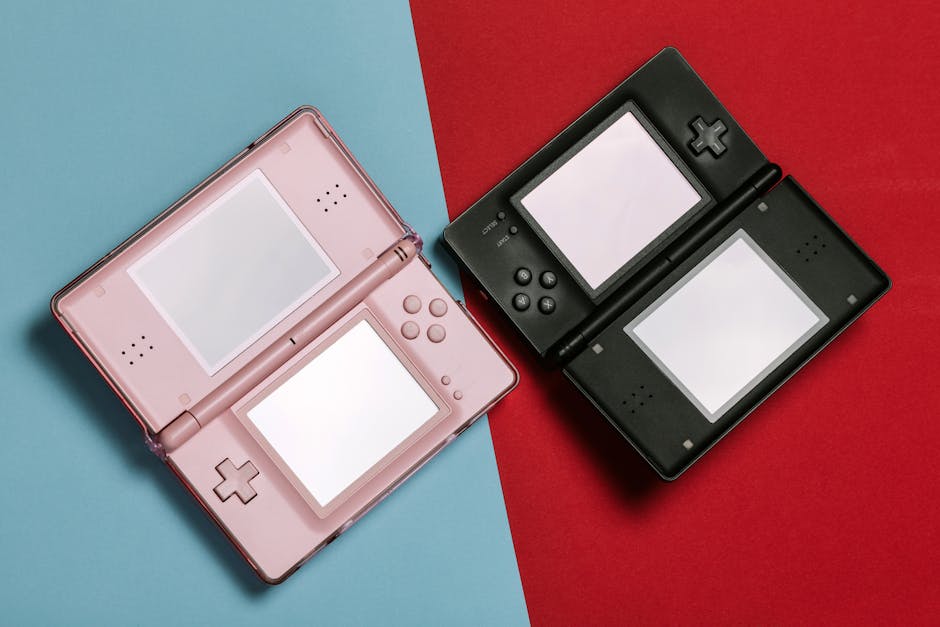
The Future of Portable 3D Gaming: Next-Gen Nintendo DS with Glasses-Free 3D Technology
The evolution of handheld gaming has long been defined by innovation, and Nintendo has consistently been at the forefront. The Nintendo DS, with its dual screens and touch interface, revolutionized portable play. The subsequent introduction of stereoscopic 3D via the Nintendo 3DS, without the need for external glasses, was a groundbreaking leap. Now, the anticipation for a "next-gen Nintendo DS" that further refines and expands upon this glasses-free 3D experience is palpable. This article delves into the potential technological advancements, game-changing features, and the enduring appeal of a truly next-generation Nintendo DS that leverages cutting-edge 3D without requiring viewers to don special eyewear.
The core of a next-gen Nintendo DS experience would undoubtedly revolve around an enhanced stereoscopic 3D display. While the 3DS offered a glimpse into this future, a new iteration would necessitate significant improvements. This means a wider "sweet spot" for the 3D effect, reducing the need for precise head positioning. Current autostereoscopic displays, while impressive, can sometimes lead to eye strain or a feeling of being "locked in" to a specific viewing angle. A next-gen device would likely employ advanced parallax barrier or lenticular lens technology, possibly combined with eye-tracking, to create a more robust and comfortable 3D viewing experience that adapts dynamically to the user’s gaze. This could translate to deeper immersion, more convincing depth perception, and a reduction in the perceived "ghosting" or visual artifacts that can plague early 3D technologies. Furthermore, the resolution and refresh rate of the display would need to be significantly upgraded. Higher resolutions would provide sharper images, making text and in-game elements more legible, while faster refresh rates would ensure smoother animations and minimize motion blur, crucial for fast-paced action games. The brightness and color accuracy of the screen would also be critical for an enjoyable visual experience, especially in varied lighting conditions. Imagine vibrant, lifelike worlds rendered in true 3D, popping off the screen without any visual discomfort. This visual fidelity is not just about aesthetics; it’s about enhancing gameplay, allowing players to perceive spatial relationships more intuitively and react with greater precision.
Beyond the display itself, the processing power of a next-gen Nintendo DS would need to be a substantial upgrade to truly capitalize on the advancements in 3D rendering. To achieve these higher resolutions and refresh rates, and to render complex 3D environments and character models with greater detail, a more potent CPU and GPU would be essential. This would open the door to more ambitious game designs, with larger, more intricate worlds to explore and more sophisticated AI for non-player characters. The limitations of the 3DS in terms of graphical fidelity were often apparent when compared to other contemporary consoles. A next-gen device would aim to bridge this gap, offering a portable gaming experience that rivals home consoles in visual splendor, while still maintaining its unique form factor and accessibility. Think of games with dynamic lighting, detailed textures, and particle effects that were previously only achievable on much larger systems. This increased power wouldn’t just benefit graphics; it could also enable more complex physics simulations, richer audio experiences, and more sophisticated online multiplayer functionalities. The ability to stream larger game assets or download more content seamlessly would also be a direct consequence of improved processing and connectivity.
Connectivity and online features are another area ripe for next-generation advancement. While the 3DS had online capabilities, they were often considered somewhat rudimentary compared to other platforms. A next-gen Nintendo DS would likely embrace a more robust and user-friendly online ecosystem. This could include seamless integration with Nintendo’s existing online services, improved matchmaking for multiplayer games, and the ability to easily connect with friends. Furthermore, advancements in Wi-Fi technology, such as Wi-Fi 6 or 6E, would ensure faster download speeds for games and updates, as well as a more stable and responsive online experience. The potential for cloud gaming integration, while ambitious, could also be explored, allowing access to a wider library of games streamed directly to the device. Imagine playing a graphically demanding title on your portable console without the need for a massive download or even having it installed locally. This would revolutionize game accessibility and library size. The ability to participate in persistent online worlds, with cross-platform play possibilities with other Nintendo devices, could also be a significant draw. The social aspect of gaming is increasingly important, and a next-gen DS would need to facilitate meaningful and engaging multiplayer interactions.
The form factor and user interface of a next-gen Nintendo DS would also undergo careful consideration. While the dual-screen clamshell design has been a hallmark of the DS line, it’s not inconceivable that Nintendo might experiment with new ergonomic approaches. However, given the success and familiarity of the existing design, a refined version is more probable. This could involve a larger, higher-resolution primary 3D display, a secondary touchscreen that is more responsive and offers greater functionality, and improved ergonomics for comfortable extended play sessions. The tactile feedback of physical buttons remains a strong preference for many gamers, so these would likely be retained and potentially enhanced. The integration of more advanced sensors, such as improved gyroscopic and accelerometer capabilities, could also lead to more innovative gameplay mechanics that leverage motion controls in new and exciting ways, further enhancing the immersive 3D experience. Imagine games that respond to subtle tilt and movement with uncanny accuracy, making the interaction feel more intuitive and natural. The possibility of a hybrid design, perhaps allowing the device to be docked for a larger screen experience on a television, could also be a compelling addition, blurring the lines between handheld and home console gaming.
The software library is, of course, paramount to the success of any gaming console. A next-gen Nintendo DS would require a strong launch lineup and a consistent stream of compelling titles to showcase its unique capabilities, particularly its glasses-free 3D technology. Nintendo’s first-party franchises – Mario, Zelda, Pokémon – would undoubtedly be at the forefront, reimagined with the enhanced 3D and processing power. Developers would need the tools and support to create games that fully utilize the stereoscopic display, pushing the boundaries of visual storytelling and gameplay mechanics. This could lead to entirely new genres or a significant evolution of existing ones. Imagine a survival horror game where the depth perception makes the environment feel truly claustrophobic, or a puzzle game where manipulating objects in 3D space becomes the core mechanic. The appeal of the DS has always been its accessibility and its ability to cater to a broad audience. A next-gen device would need to maintain this inclusivity while also offering experiences that appeal to the core gamer. The potential for indie developers to explore innovative 3D gameplay concepts on a powerful, accessible platform is also significant. Nintendo has a history of fostering strong relationships with third-party developers, and this would be crucial for building a diverse and engaging software ecosystem.
Beyond gaming, the multimedia capabilities of a next-gen Nintendo DS could also be expanded. While the 3DS offered some basic multimedia functions, a newer device could integrate more robust features. This could include enhanced video playback capabilities, with support for higher resolutions and various codecs. Integration with streaming services for movies and TV shows could become a more significant aspect of the device’s functionality. The potential for augmented reality (AR) experiences, building upon the AR features introduced on the 3DS, could also be explored further. Imagine using the device to overlay digital information onto the real world, or to play games that seamlessly blend virtual and physical environments. This opens up a vast array of possibilities for educational applications, interactive storytelling, and entirely new forms of entertainment. The device could also serve as a portable creative tool, with applications for digital art, music creation, or even simple video editing, leveraging its intuitive touch interface and powerful processing.
The economic and market positioning of a next-gen Nintendo DS would also be a critical factor. Nintendo has a proven track record of creating successful, distinct product lines. A next-gen DS would likely occupy a space that bridges the gap between their flagship consoles like the Switch and potentially more niche, specialized devices. The price point would need to be competitive, appealing to both existing Nintendo fans and a new generation of gamers. The longevity of the hardware would also be a consideration, with Nintendo’s history of supporting their consoles for many years. The environmental impact and sustainability of the device would also become increasingly important, with a focus on durable design and the use of recycled materials. The success of a next-gen Nintendo DS hinges on Nintendo’s ability to innovate not just in terms of technology, but also in how that technology is integrated into compelling and accessible gaming experiences that appeal to a broad demographic. The future of portable 3D gaming without glasses is a bright one, and a new Nintendo DS could be its shining beacon. The continued refinement of glasses-free 3D displays, coupled with substantial leaps in processing power, connectivity, and software innovation, promises to deliver a truly next-generation portable gaming experience that sets a new benchmark for immersive, accessible entertainment. The anticipation for such a device, and the potential it holds, remains incredibly high.