

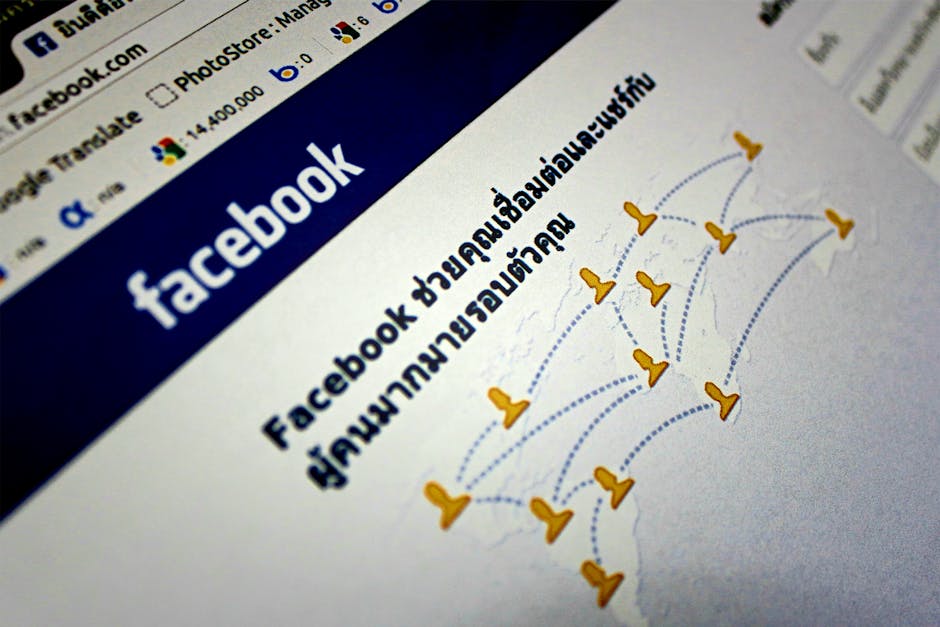
Clickjackers Love Facebook: A Deep Dive into Exploitation Vectors and Mitigation
Facebook, with its ubiquitous presence and vast user base, has long been a prime target for clickjacking attacks. The platform’s intricate interplay of social features, user interactions, and embedded content creates a fertile ground for malicious actors to trick unsuspecting users into performing unintended actions. Understanding these exploitation vectors is crucial for both cybersecurity professionals and everyday users to navigate the platform more safely. Clickjacking, at its core, leverages the user’s trust in a legitimate website to disguise malicious actions behind seemingly innocuous interfaces. On Facebook, this often involves overlaying hidden elements of a malicious website or iframe onto a legitimate Facebook interface, tricking users into clicking a button or link that initiates an unwanted action on their behalf. The sheer volume of daily interactions, from liking posts and sharing content to granting permissions and making purchases, provides numerous opportunities for clickjackers to achieve their objectives, which can range from spreading malware and phishing for credentials to unauthorized app installations and financial fraud.
One of the primary reasons clickjackers find Facebook so appealing is its pervasive use of iframes. Facebook integrates a multitude of third-party applications, widgets, and embedded content through iframes. These can include games, advertisements, social plugins from other websites, and even embedded videos. The same-origin policy, a fundamental security mechanism in web browsers, is designed to prevent scripts from one origin (domain, protocol, port) from accessing data or executing actions on another origin. However, clickjacking exploits the fact that while the browser may prevent direct script access, it still renders the content of the iframe within the legitimate page. A clickjacker can create a transparent iframe containing a malicious action (e.g., a "like" button, a "buy now" button, a "grant permission" button) and overlay it precisely on top of a seemingly harmless element on a Facebook page, such as a "Play Game" button or a "View Photo" link. When the user clicks the visible, legitimate-looking element, they are unknowingly interacting with the hidden malicious element within the iframe, performing an action they never intended. The illusion of a safe, familiar Facebook interface is maintained, making the deception highly effective.
The social graph of Facebook further amplifies the impact of successful clickjacking attacks. If a user is tricked into liking a malicious page, sharing a harmful link, or installing a malicious application, this action is often broadcasted to their friends and network. This viral spread of malicious content leverages the trust users place in their social connections, making them more susceptible to subsequent attacks. A clickjacked "like" can lead to a flood of likes for a fraudulent page, boosting its perceived legitimacy and potentially tricking more users. A clickjacked share can disseminate malware or phishing links across a wide network of contacts, creating a cascading effect of infections and compromises. This inherent virality makes Facebook a highly attractive platform for attackers seeking to maximize their reach and impact with minimal initial effort. The user’s own network becomes a vector for further exploitation.
Beyond simple social interactions, clickjacking on Facebook can be used to facilitate more insidious attacks. For instance, attackers can employ clickjacking to trick users into granting permissions to malicious applications. Many Facebook applications require users to grant them access to their profile information, friend lists, and even the ability to post on their behalf. A carefully crafted clickjacking attack can disguise the true nature of these permissions, making users believe they are granting access for a harmless purpose. Once granted, these malicious applications can then scrape sensitive user data, send spam messages, or even engage in financial fraud by initiating unauthorized purchases or advertisements. The sophistication of these attacks often lies in their ability to mimic the look and feel of legitimate Facebook permission requests, leaving users with little reason to suspect deception.
Phishing attacks are another significant area where clickjacking finds fertile ground on Facebook. Attackers can use clickjacking to create convincing fake login pages that appear to be legitimate Facebook login prompts. These fake pages might be embedded within an iframe on a seemingly innocuous page, or an attacker might trick a user into visiting a malicious website that then overlays a fake Facebook login form over the user’s actual Facebook session. When the user attempts to log in, they are actually submitting their credentials to the attacker, compromising their account. The visual familiarity of Facebook’s login interface, combined with the trust users place in the platform, makes these phishing attempts highly effective. Clickjacking provides a mechanism to present these deceptive login forms in a context that maximizes the user’s likelihood of engagement.
Cross-Site Scripting (XSS) vulnerabilities, while distinct from clickjacking, can sometimes be combined to create more potent attacks. If a Facebook page is vulnerable to XSS, an attacker can inject malicious scripts that, among other things, could be used to manipulate the DOM (Document Object Model) of the page. This manipulation can then be used to position hidden iframes containing malicious actions, effectively enabling clickjacking on a page that might otherwise be more resistant. Conversely, clickjacking can be used to deliver an XSS payload by tricking a user into clicking a link that executes a script on a vulnerable domain, and the clickjacked interface serves to obscure the malicious nature of this execution. The interplay between these attack vectors highlights the complex threat landscape.
The underlying architecture of web browsers and the way they handle sandboxing and cross-origin policies are critical in understanding clickjacking. Modern browsers have implemented various defenses against clickjacking, such as the X-Frame-Options HTTP header and the Content-Security-Policy (CSP) directive. The X-Frame-Options header can be set by a website to control whether it can be rendered in an iframe. Options like DENY prevent framing altogether, SAMEORIGIN allows framing only by pages from the same origin, and ALLOW-FROM permits framing from a specific URI. Similarly, CSP’s frame-ancestors directive offers more granular control over which origins are allowed to embed a page. However, the effectiveness of these defenses relies on their proper implementation by the website owner. If Facebook, or any website it embeds content from, fails to correctly configure these headers, it can leave itself vulnerable to clickjacking. Legacy browsers or misconfigurations can still create attack windows.
Facebook, as a platform, has had to continuously evolve its security measures to combat clickjacking. Over the years, they have implemented stricter controls on application permissions, improved UI elements to make it harder to overlay them transparently, and actively worked to educate users about safe online practices. Features like two-factor authentication (2FA) can mitigate the damage of account compromise, even if credentials are stolen through clickjacking-facilitated phishing. The platform’s ongoing efforts involve not only technical solutions but also user education campaigns to raise awareness about the dangers of clicking on suspicious links or granting permissions to unknown applications. However, the arms race between attackers and defenders means that new vulnerabilities and exploitation techniques are constantly emerging.
From a user’s perspective, vigilance and a healthy dose of skepticism are paramount. Being aware of the tell-tale signs of a clickjacking attack can be beneficial. These signs can include unusually slow loading times for certain elements, unexpected pop-ups that appear to be legitimate but seem out of place, or prompts to perform actions that the user didn’t initiate. Always scrutinize permission requests from applications, paying close attention to what data the application is asking to access and whether that access is truly necessary for the application’s functionality. Hovering over links before clicking can sometimes reveal the true destination URL, which can be a red flag if it doesn’t match the expected site. Ensuring that browser security settings are up-to-date and that security extensions are enabled can also provide an additional layer of protection.
The economic incentives for clickjackers are substantial. The ability to spread malware, steal credentials, generate ad revenue through fraudulent clicks, or drive traffic to scam websites can be highly lucrative. Facebook’s massive advertising ecosystem itself can be a target, with attackers potentially using clickjacking to inflate ad impressions or generate fake clicks, thereby defrauding advertisers. The platform’s role as a gateway to online commerce also makes it a target for financial fraud, where clickjacking can be used to trick users into making unauthorized purchases. The sheer scale of Facebook’s user base means that even a small success rate can translate into significant profits for attackers.
The technical intricacies of implementing a clickjacking attack often involve a combination of HTML, CSS, and JavaScript. Attackers will meticulously craft the malicious page, using CSS to position hidden elements precisely. JavaScript might be used to detect user actions and trigger the hidden iframe’s functionality. For example, an attacker might detect a user hovering over a specific area of a Facebook page and then use JavaScript to simultaneously load a hidden iframe containing a malicious button directly beneath the user’s cursor. The challenge lies in making the overlay seamless and indistinguishable from the legitimate interface. This often requires detailed knowledge of Facebook’s page structure and CSS styling.
The future of clickjacking on Facebook and other social media platforms will likely involve a continued evolution of both attack and defense mechanisms. As browsers and platforms become more robust in their defenses, attackers will seek more sophisticated methods, potentially exploiting zero-day vulnerabilities in browsers or Facebook’s own code. The rise of progressive web apps (PWAs) and more integrated web technologies may present new avenues for exploitation. Ultimately, a multi-layered approach, combining robust platform security, diligent browser vendors, informed users, and a commitment to ongoing security research, is essential to mitigate the persistent threat of clickjacking. The love affair between clickjackers and Facebook, while regrettable from a security standpoint, is a testament to the platform’s pervasive influence and the constant need for vigilance in the digital realm.










No comments yet. Be the first to join the conversation!