New Cisco Router Boasts Breakneck Speeds
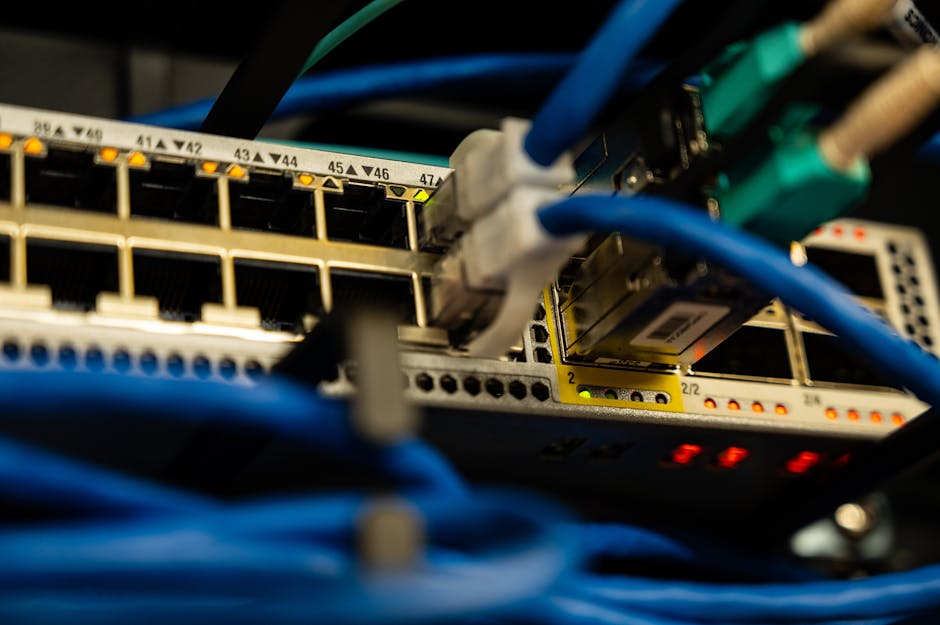
Cisco Unleashes Next-Gen Routers: Breakneck Speeds Redefining Network Performance
Cisco’s latest router lineup signifies a paradigm shift in networking hardware, delivering unprecedented processing power and throughput to meet the escalating demands of modern digital infrastructure. These new devices are engineered to handle the exponential growth in data traffic driven by cloud computing, IoT, AI/ML workloads, and immersive applications. The core of this performance leap lies in advanced silicon architectures, optimized packet processing engines, and intelligent software that dynamically allocates resources. Forget the bottlenecks of yesteryear; these routers are designed for a future where speed and low latency are not just desirable but essential for business continuity and competitive advantage. The implications extend across enterprise networks, service provider backbones, and even demanding branch office deployments, promising a more responsive, scalable, and efficient digital landscape.
The architectural advancements within these new Cisco routers are multifaceted, focusing on maximizing data flow and minimizing processing overhead. At the heart of many models is a new generation of ASICs (Application-Specific Integrated Circuits) that are not merely faster but also more intelligent. These ASICs are purpose-built to accelerate critical network functions such as packet forwarding, Quality of Service (QoS) enforcement, security processing, and routing protocol computations. Unlike general-purpose CPUs that can become a bottleneck, ASICs execute these tasks in hardware, significantly reducing latency and increasing overall throughput. The move towards multi-core processing within these ASICs further enhances parallel processing capabilities, allowing the router to handle a vast number of concurrent traffic flows without degradation. This parallelization is crucial for services like network virtualization, where multiple virtual routers or firewalls operate simultaneously on the same physical hardware. Furthermore, the memory subsystems have been upgraded to support higher bandwidth and lower latency access, ensuring that data is readily available for processing and forwarding. This holistic approach to hardware design, from silicon to memory, is the foundational element behind the breakneck speeds these routers achieve.
Beyond the raw processing power, the enhanced packet forwarding mechanisms are critical to the performance gains. Traditional routers often rely on a store-and-forward approach, where an entire packet is received, buffered, checked for errors, and then transmitted. While reliable, this method introduces latency. Cisco’s latest routers incorporate advanced techniques like cut-through forwarding, where packets are forwarded as soon as the destination address is read, without waiting for the entire packet to arrive. This significantly reduces latency, especially for real-time applications like voice and video conferencing. Furthermore, intelligent buffering strategies and buffer management algorithms are employed to prevent packet drops under heavy load. These mechanisms dynamically allocate buffer space based on traffic patterns and priorities, ensuring that critical data streams receive preferential treatment. The introduction of advanced queueing disciplines, such as Hierarchical QoS (HQoS) and traffic shaping, allows for granular control over traffic flow, ensuring that bandwidth is allocated efficiently and that applications receive the performance they require. This fine-grained control is essential in today’s converged networks, where a mix of latency-sensitive and bandwidth-hungry applications co-exist.
The integration of advanced security features directly into the silicon and forwarding path is another key differentiator, contributing to breakneck speeds by eliminating the need for separate security appliances in many scenarios. Traditional approaches often involved diverting traffic to dedicated security devices for inspection, introducing latency and complexity. Cisco’s new routers embed powerful security processing capabilities within their ASICs. This allows for high-speed inspection of traffic for threats like malware, intrusion attempts, and policy violations without impacting the overall forwarding performance. Features such as deep packet inspection (DPI), encrypted traffic visibility, and integrated firewall capabilities can now be performed at line rate, meaning the speed of the security inspection matches the speed of the network connection. This "security in the path" approach simplifies network design, reduces operational costs, and significantly improves the security posture by enabling real-time threat mitigation. The ability to inspect encrypted traffic is particularly important in today’s environment, where the majority of internet traffic is encrypted. These routers employ advanced techniques to analyze and secure this traffic without resorting to costly and performance-impacting decryption methods for all flows.
The software architecture underpinning these high-performance routers has also undergone a significant evolution. Cisco’s commitment to open networking and programmability is evident in the new operating systems and management platforms. These routers support advanced network automation tools, allowing for dynamic configuration, provisioning, and monitoring. This programmable infrastructure is essential for agility and rapid response to changing network conditions. Through APIs (Application Programming Interfaces), these routers can be seamlessly integrated into broader network orchestration systems, enabling intent-based networking where the desired network state can be declared and the underlying infrastructure automatically configured to achieve it. This level of automation reduces human error, speeds up service deployment, and ensures consistent policy enforcement across the network. Furthermore, the operating systems are designed for high availability and resilience, with features like non-stop forwarding and hot-standby capabilities that minimize downtime in the event of hardware or software failures. The integration of telemetry and analytics capabilities provides deep visibility into network performance, allowing for proactive identification and resolution of potential issues before they impact users.
The impact of these breakneck speeds is profound across various industry verticals. In the financial sector, low-latency trading platforms and real-time transaction processing demand the utmost performance, and these new routers are poised to meet those critical needs. For healthcare organizations, the ability to transmit large medical imaging files quickly and reliably, coupled with the need for secure remote access and telemedicine, makes these advancements indispensable. In manufacturing and industrial environments, the explosion of Industrial IoT (IIoT) devices generates massive amounts of data that need to be processed and analyzed in real-time for predictive maintenance, process optimization, and automation. These routers provide the backbone for such demanding applications. Furthermore, the burgeoning metaverse and immersive technologies, with their requirement for ultra-low latency and high bandwidth for seamless virtual experiences, will find these new Cisco routers to be a foundational technology. The ability to support high-density Wi-Fi deployments and the increasing prevalence of 5G and future wireless technologies also necessitates a robust and high-performance routing infrastructure.
The scalability of these new routers is designed to accommodate future growth without requiring frequent hardware refreshes. Modular designs with support for various interface types, including high-speed Ethernet ports (e.g., 100GbE, 400GbE, and beyond), flexible service modules, and advanced port density, ensure that networks can expand incrementally to meet evolving demands. This modularity also allows organizations to tailor the router’s capabilities to their specific needs, avoiding over-provisioning and optimizing cost. The ability to upgrade components and add new functionalities through software allows for a longer hardware lifecycle, contributing to sustainability and a more predictable total cost of ownership. As network traffic continues its relentless climb, the architectural choices made in these new Cisco routers, from the silicon to the software, are designed to provide a robust and future-proof foundation for the digital services that underpin modern society and enterprise operations. The sustained investment in research and development by Cisco in areas like AI-driven networking, edge computing enablement, and quantum-resistant security further signals their commitment to pushing the boundaries of what is possible with network infrastructure, ensuring their customers remain at the forefront of technological innovation. The emphasis on unified management platforms and simplified deployment workflows also aims to address the growing complexity of network environments, making these powerful devices accessible and manageable for a wider range of IT professionals.