Will The Real Ipad Challenger Please Stand Up
Will the Real iPad Challenger Please Stand Up: Unpacking the Tablet Landscape Beyond Apple
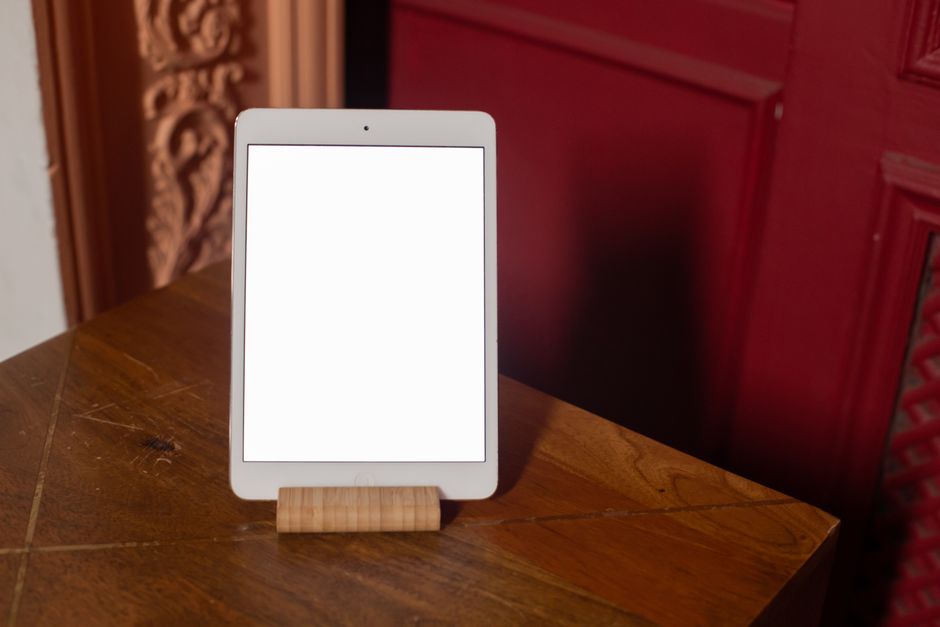
The iPad has long held an almost unassailable position at the apex of the tablet market. Its intuitive interface, robust app ecosystem, and consistent hardware innovation have cemented its dominance. However, the notion of a true "iPad challenger" is not a static one. It’s a constantly evolving narrative, with various manufacturers vying for a slice of the premium tablet pie, each offering a unique blend of features, performance, and price points. This article aims to dissect the current contenders, examine their strengths and weaknesses, and ultimately, help determine which devices are truly posing a significant threat to Apple’s reign. We will move beyond the superficial and delve into the underlying technology, software experiences, and market positioning that define these potential iPad killers.
One of the most persistent and formidable challengers to the iPad has been Samsung, particularly with its Galaxy Tab S series. Samsung has consistently pushed the boundaries of Android tablet hardware, often matching or even exceeding the iPad in specific areas. Their AMOLED displays, renowned for their vibrant colors, deep blacks, and excellent contrast ratios, have frequently been lauded as superior to Apple’s Liquid Retina panels. Devices like the Galaxy Tab S9 Ultra, with its expansive 14.6-inch screen, offer a canvas that few iPads can match in sheer size, making it ideal for multitasking, creative work, and media consumption. Samsung’s integration with the broader Samsung ecosystem, including DeX mode which transforms the tablet into a desktop-like experience, further strengthens its appeal for users who value productivity. The inclusion of the S Pen stylus, often bundled with higher-end models, provides a direct competitor to the Apple Pencil, offering a refined writing and drawing experience with low latency and pressure sensitivity. However, the Android tablet app ecosystem, while vastly improved, still lags behind iOS in terms of the sheer volume of optimized tablet applications. Developers historically prioritized iOS for tablet development, leading to some apps appearing as stretched smartphone versions rather than truly native tablet experiences on Android.
Microsoft’s Surface Pro line represents a different, yet equally compelling, approach to challenging the iPad. By positioning the Surface Pro as a "2-in-1" laptop-tablet hybrid, Microsoft aims to bridge the gap between traditional computing and mobile productivity. Running a full version of Windows, the Surface Pro offers unparalleled software compatibility, allowing users to run virtually any desktop application they would on a laptop. This is a significant advantage for professionals who rely on specific Windows-based software for their work, such as complex design tools, coding environments, or specialized business applications. The integration of a detachable keyboard cover and the Surface Pen provides a versatile computing experience, transitioning seamlessly from a portable tablet to a capable workstation. The latest Surface Pro models, powered by Intel Core processors, boast performance that can rival many ultrabooks. However, this power comes at a price, often making the Surface Pro more expensive than comparable iPads. Furthermore, the Windows operating system, while powerful, can sometimes feel less intuitive or streamlined for touch-based interaction compared to iPadOS. Battery life can also be a point of contention, with intensive Windows applications potentially draining the battery faster than on an iPad.
Google, despite its significant involvement in Android, has had a more inconsistent history with its own tablet offerings. While devices like the Pixel Tablet aim to integrate into the Google ecosystem and offer a smart home hub experience when docked, they haven’t historically been positioned as direct, high-performance iPad challengers in the vein of Samsung or Microsoft. The Pixel Tablet’s strengths lie in its seamless integration with Google Assistant, its unique charging speaker dock, and its generally polished Android experience. For users deeply invested in the Google ecosystem, it offers a compelling proposition for casual use, media consumption, and smart home control. However, its processing power and overall performance are generally not on par with the top-tier iPads or Samsung Galaxy Tabs, and its stylus support, while present, is not as advanced or widely adopted as Apple’s or Samsung’s. The lack of a truly high-end, productivity-focused Pixel tablet means it occupies a different niche, appealing more to a specific segment of the market rather than aiming for broad, professional dominance.
Amazon’s Fire tablet lineup represents a different strategy entirely: affordability and ecosystem lock-in. While these tablets are undeniably popular, they are not direct competitors to the premium iPad experience. Their primary focus is on content consumption within Amazon’s ecosystem, with deep integration of Kindle, Prime Video, and Amazon’s app store. The Fire HD tablets offer excellent value for money for basic tasks like browsing, reading, and watching videos, but their performance is generally limited, and the operating system is heavily customized, restricting access to the full Google Play Store and its vast array of apps. Therefore, while they sell in massive numbers, they don’t represent a "challenger" in the sense of competing for the same high-end, versatile user base as the iPad.
The concept of a "challenger" also extends to the software and hardware integration. Apple’s tight control over both iPadOS and its A-series chips allows for an optimized experience where hardware and software are designed to work in perfect harmony. This often translates to smoother performance, better battery efficiency, and a more cohesive user experience, especially in demanding applications. Competitors are constantly trying to replicate this, with Samsung improving its One UI overlay on Android and Microsoft optimizing Windows for touch. However, the depth of integration Apple achieves is a significant competitive advantage that is difficult to fully replicate.
Furthermore, the app ecosystem remains a crucial battleground. While Android has made strides, and the Windows Store continues to grow, the sheer volume and quality of tablet-optimized apps on the App Store are still a major draw for the iPad. Many creative professionals, from graphic designers to video editors, rely on applications that are either exclusive to iPadOS or perform significantly better on Apple’s platform. This creates a powerful network effect, where users are drawn to the iPad because of the apps, and developers are incentivized to create apps for the iPad because of its large user base.
When evaluating potential iPad challengers, it’s essential to consider the target audience. For the average consumer looking for a device for browsing, streaming, and casual gaming, a more affordable option like a Samsung Galaxy Tab A series or an Amazon Fire tablet might suffice. However, for power users, creatives, and professionals, the competition heats up significantly. These users are looking for high-performance processors, brilliant displays, stylus support, robust multitasking capabilities, and access to a wide range of productivity software.
The evolution of mobile chipsets also plays a vital role. Apple’s custom-designed A-series and M-series chips have consistently set benchmarks for performance and efficiency in tablets. Competitors are leveraging powerful processors from Qualcomm (Snapdragon) and Intel, but Apple’s ability to tailor its silicon for specific tasks, combined with its software optimization, often gives it an edge in raw power and sustained performance. The recent introduction of M-series chips in some iPads blurred the lines even further, bringing desktop-class performance to a portable form factor.
The charging and connectivity standards also differentiate devices. While USB-C is now a universal standard, the implementation and speed can vary. Apple has embraced USB-C across its iPad lineup, offering fast charging and data transfer capabilities. Samsung has also adopted USB-C widely. However, the inclusion of features like Thunderbolt on some iPads offers even faster data transfer speeds, which can be crucial for workflows involving large files.
The pricing strategy of challengers is also a key factor. While Apple products often command premium prices, some challengers aim to undercut them with more aggressive pricing, particularly for models that offer comparable core functionality. However, this often involves compromises in other areas, such as build quality, display technology, or processing power. The sweet spot for a true iPad challenger is to offer compelling features and performance at a competitive, or at least justifiable, price point.
In conclusion, while the iPad continues to be the dominant force in the tablet market, the landscape of challengers is vibrant and constantly evolving. Samsung’s Galaxy Tab S series, with its stunning displays and robust feature sets, remains a primary contender, especially for those seeking larger screen real estate and excellent stylus integration. Microsoft’s Surface Pro line, with its Windows operating system, offers a compelling alternative for users who prioritize full desktop application compatibility and a true laptop-tablet hybrid experience. While Google’s Pixel Tablet occupies a different niche, and Amazon’s Fire tablets focus on affordability, the direct threats to the iPad’s premium position primarily come from Samsung and Microsoft. The "real" iPad challenger is not a single device but a dynamic set of offerings that cater to different user needs and preferences, continually pushing Apple to innovate and refine its own formidable tablet offering. The ongoing competition benefits consumers, driving innovation and providing a wider array of choices in the increasingly sophisticated tablet market.