Tag Human Robot Interaction
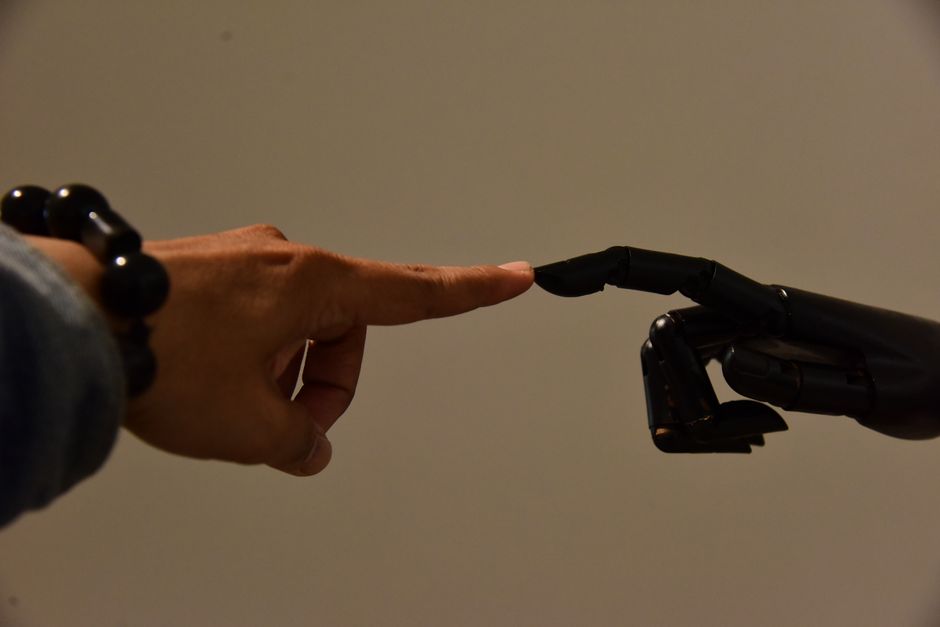
Human-Robot Interaction: Designing Intuitive and Effective Collaboration
The increasing integration of robots into diverse aspects of human life necessitates a deep understanding of Human-Robot Interaction (HRI). HRI is an interdisciplinary field that focuses on the design, study, and evaluation of robotic systems that humans can interact with. Effective HRI is paramount for ensuring that robots are not only functional but also safe, efficient, and accepted by their human counterparts. This field draws upon principles from computer science, cognitive science, psychology, sociology, and engineering to create systems that facilitate seamless collaboration between humans and machines. The goal is to move beyond simple control interfaces and achieve a symbiotic relationship where robots augment human capabilities, perform tasks requiring precision or repetitive motion, and operate in environments too hazardous for humans. Key challenges in HRI include developing intuitive control mechanisms, ensuring robust perception of human intent and state, fostering trust and understanding, and addressing ethical considerations. The success of future robotic applications, from domestic assistants and healthcare robots to industrial collaborators and autonomous vehicles, hinges on our ability to master these HRI challenges.
The fundamental goal of HRI is to enable humans and robots to work together harmoniously and effectively. This collaboration can manifest in various forms, from direct physical interaction to remote operation and shared decision-making. For instance, in a manufacturing setting, a robot arm might assist a human worker by lifting heavy components or performing precise assembly tasks, while the human oversees the process, handles delicate operations, and makes critical adjustments. In healthcare, robots can aid in surgery, provide rehabilitation support, or assist elderly individuals with daily living tasks. In domestic environments, service robots are being developed to perform chores, offer companionship, and provide personalized assistance. The effectiveness of these interactions is determined by several factors, including the robot’s ability to understand human commands and intentions, its capacity to communicate its own status and actions clearly, and the user’s comfort level and trust in the robotic system. Poor HRI can lead to frustration, errors, accidents, and ultimately, the rejection of robotic technology, regardless of its technical capabilities.
A cornerstone of effective HRI is intuitive interface design. This involves creating interaction methods that are easy to understand and use, requiring minimal training and cognitive load for the human operator. Traditional command-line interfaces or complex programming environments are generally unsuitable for most HRI applications, especially those involving non-expert users. Instead, HRI emphasizes naturalistic interaction paradigms. Speech recognition and natural language processing (NLP) allow humans to communicate with robots using everyday language, making the interaction feel more conversational and less like operating a machine. Gesture recognition and body language interpretation enable robots to understand non-verbal cues, such as pointing, waving, or expressions of intent. Touchscreen interfaces, augmented reality (AR) overlays, and even direct manipulation (e.g., guiding a robot arm with your hand) are other techniques employed to create intuitive HRI. The principle is to bridge the gap between human cognitive models and the robot’s operational capabilities, making the interaction as seamless and natural as possible.
Robot perception of human state and intent is a critical area of research within HRI. For a robot to effectively collaborate, it needs to understand not only explicit commands but also implicit signals about the human’s emotional state, attention, and goals. This involves sophisticated sensing and processing capabilities. Computer vision systems can track human movement, identify body posture, and even detect facial expressions to infer emotional states like frustration, happiness, or confusion. Haptic sensors can detect the force and pressure applied by a human during physical interaction, providing feedback on the nature of the contact. Wearable sensors can monitor physiological signals such as heart rate or galvanic skin response, offering further insights into the human’s arousal and stress levels. By integrating information from multiple modalities, robots can build a more comprehensive model of the human user, enabling them to adapt their behavior accordingly, predict potential issues, and offer assistance proactively.
Trust is another indispensable element in successful HRI. Humans are more likely to engage with and rely on robots they trust. Building trust involves several aspects: reliability, predictability, transparency, and competence. A robot that consistently performs its tasks accurately and reliably will foster greater trust. Its actions should be predictable, so users can anticipate its behavior and avoid unexpected or dangerous situations. Transparency in the robot’s decision-making process is also crucial; users should understand why a robot is taking a particular action, even if it’s a simplified explanation. Demonstrating competence in its designated tasks further reinforces trust. Over time, positive and safe interactions contribute to the gradual development of trust, allowing for more complex and critical collaborations. Conversely, a single negative or unsafe interaction can severely erode trust, making future engagement difficult.
Ethical considerations are increasingly prominent in HRI research and development. As robots become more autonomous and integrated into our lives, questions about accountability, privacy, bias, and the potential for job displacement arise. For instance, who is responsible if an autonomous robot causes an accident? How can we ensure that robots do not perpetuate or amplify societal biases present in their training data? What are the implications for human dignity and autonomy when robots become pervasive companions or caregivers? Addressing these ethical dilemmas requires careful design, robust regulation, and ongoing societal dialogue. Researchers are exploring methods for making robots explainable, ensuring data privacy, and developing ethical frameworks for robot behavior.
The application of HRI spans a wide range of domains, each with its unique challenges and opportunities. In industrial settings, collaborative robots (cobots) are designed to work alongside human operators, enhancing productivity and safety. Cobots are often equipped with advanced safety features, such as force sensors that can detect human contact and halt movement, and visual servoing that allows them to adjust their trajectory based on the human’s proximity. The goal is to augment human dexterity and judgment with the robot’s strength, precision, and endurance. In healthcare, robots are being developed for surgical assistance, rehabilitation therapy, and elder care. Surgical robots can offer enhanced precision and minimally invasive capabilities, while rehabilitation robots can provide personalized exercise programs and monitor patient progress. Robots assisting with elder care can help with daily tasks, provide medication reminders, and offer social companionship, addressing the growing needs of an aging population.
The field of autonomous vehicles represents a significant and rapidly evolving area of HRI. While the primary interaction might be with the vehicle’s navigation system, the human passenger is still an integral part of the system. HRI in this context focuses on ensuring passenger safety, comfort, and trust. This includes providing clear information about the vehicle’s intentions, allowing for manual override in critical situations, and designing interfaces that minimize driver distraction while the vehicle is in autonomous mode. The transition between autonomous and manual control, known as the "handoff," is a particularly challenging HRI problem, requiring robust mechanisms to ensure that the human driver is fully aware of their responsibility and prepared to take control.
In educational settings, robots are being explored as tools to enhance learning experiences. Educational robots can serve as tutors, teaching programming skills, or providing interactive learning modules. HRI in this context focuses on making the robots engaging, adaptable to different learning styles, and supportive of student development. The robots need to be able to assess student understanding, provide constructive feedback, and maintain student motivation. This requires robots that can understand and respond to verbal questions, interpret student body language (e.g., signs of confusion or engagement), and tailor their teaching approach accordingly.
The development of effective HRI relies heavily on robust sensing and perception technologies. For a robot to interact meaningfully with its environment and humans, it must be able to perceive and interpret a wide range of sensory information. This includes visual perception for object recognition, scene understanding, and human tracking; auditory perception for speech recognition and environmental sound analysis; haptic perception for understanding physical contact and force; and potentially olfactory and gustatory sensing for more specialized applications. Advanced sensor fusion techniques are employed to combine data from multiple sensors, creating a more comprehensive and accurate understanding of the situation. Machine learning, particularly deep learning, plays a crucial role in enabling robots to learn patterns from vast amounts of data, improving their ability to recognize objects, understand human speech, and predict human behavior.
User-centered design principles are fundamental to the success of HRI. This means that the design process must prioritize the needs, capabilities, and preferences of the human user. Iterative design, prototyping, and user testing are essential components of this approach. By involving users throughout the design lifecycle, researchers and engineers can identify potential usability issues early on, gather valuable feedback, and ensure that the final robotic system is intuitive, efficient, and enjoyable to interact with. This human-centered approach contrasts with purely technology-driven development, where the focus might be solely on the robot’s technical capabilities without sufficient consideration for the human experience.
The future of HRI is likely to see increasingly sophisticated and integrated robotic systems. As artificial intelligence and robotics continue to advance, robots will become more capable of understanding and responding to complex human needs and social cues. This will pave the way for more seamless collaboration in a wider range of applications, from personalized healthcare and education to creative endeavors and scientific exploration. However, the ethical and societal implications of these advancements will also become more pronounced, requiring ongoing attention and proactive solutions. The ultimate success of these future robotic systems will depend on our continued commitment to designing for effective and beneficial human-robot interaction.