Nasas Wise Surveyor Sets Out To Illuminate Secrets Of The Sky
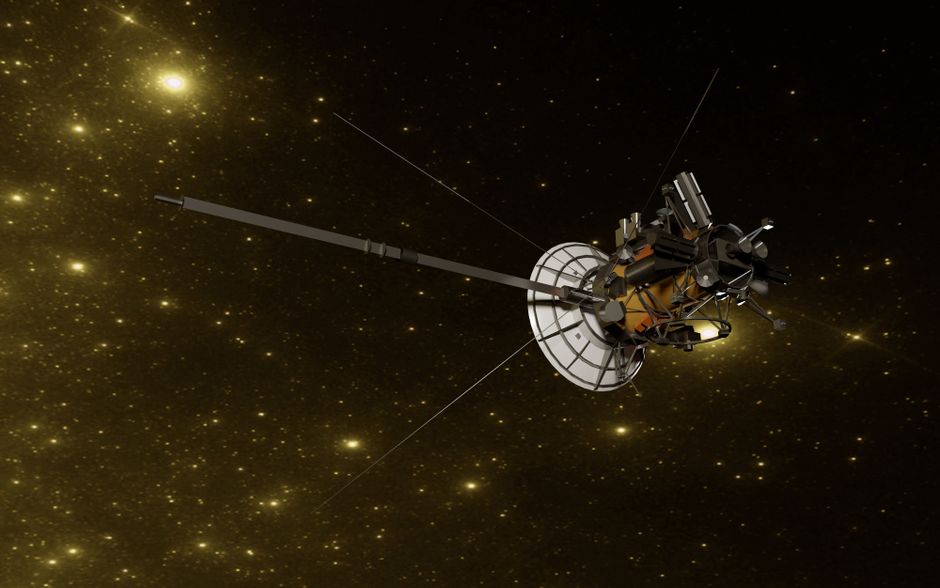
NASA’s Wise Surveyor Sets Out to Illuminate Secrets of the Sky
The Wide-field Infrared Survey Explorer (WISE) mission, a testament to NASA’s relentless pursuit of cosmic knowledge, deployed its powerful infrared telescope into Earth orbit with a singular, ambitious goal: to map the entire sky in unprecedented detail. Launched in December 2009, WISE was not just another telescope; it was a revolutionary instrument designed to pierce through the obscuring dust and gas that blankets vast swathes of the universe, revealing celestial objects and phenomena that remain invisible to telescopes operating in optical wavelengths. Its success has been profound, yielding a treasure trove of data that continues to revolutionize our understanding of everything from the formation of stars and planets to the enigmatic nature of asteroids and distant galaxies. The WISE mission’s primary objective was to conduct a comprehensive all-sky survey at four infrared wavelengths: 3.4, 4.6, 12, and 22 micrometers. This selection was strategic, allowing WISE to detect a broad spectrum of cosmic objects, from the faint warmth of brown dwarfs, often dubbed "failed stars," to the brilliant glow of active galactic nuclei powered by supermassive black holes. The infrared spectrum is crucial because many celestial bodies emit much of their radiation in this range, particularly those that are cool or enshrouded in dust. Dust clouds, the cosmic nurseries where stars and planets are born, are opaque to visible light, rendering them invisible to optical telescopes. However, infrared radiation can penetrate these dusty veils, allowing WISE to peer into the heart of stellar nurseries and witness the processes of star and planet formation in action. This capability alone made WISE a game-changer in astrophysics.
One of WISE’s most significant contributions lies in its discovery and characterization of a vast population of brown dwarfs. Brown dwarfs are substellar objects, too massive to be planets but not massive enough to ignite nuclear fusion in their cores like true stars. They represent a crucial link in the stellar evolution chain and are thought to be far more numerous than stars. WISE’s sensitivity to infrared light allowed it to detect these cool, dim objects, which had largely eluded previous surveys. By identifying thousands of new brown dwarfs, WISE has provided astronomers with the data necessary to study their formation, evolution, and the diversity of their properties. This has led to a much clearer picture of how stars form and the prevalence of these intermediate objects in our galaxy. Furthermore, the study of brown dwarfs helps refine models of star formation, shedding light on the initial mass function – the distribution of masses for a newly formed population of stars. Understanding this distribution is fundamental to understanding the chemical evolution of galaxies and the production of heavy elements, which are essential for the formation of planets and life. The infrared spectrum is also ideal for detecting the faint heat signatures of exoplanets directly, though WISE was not primarily designed for this purpose, its data has indirectly contributed to exoplanet research.
Beyond brown dwarfs, WISE has made pivotal discoveries in the realm of asteroids. By surveying the sky multiple times, WISE was able to detect asteroids by their movement against the background stars. Its infrared capabilities allowed it to measure the size and albedo (reflectivity) of these objects, which are crucial parameters for understanding their composition and potential threat to Earth. WISE identified tens of thousands of new asteroids, including a significant number of Near-Earth Objects (NEOs) and potentially hazardous asteroids (PHAs). This has greatly enhanced our inventory of solar system bodies, providing vital data for planetary defense initiatives and for understanding the composition and evolution of our own solar system. The mission’s ability to observe in the infrared is particularly important for detecting darker, less reflective asteroids that might be missed by optical surveys. These darker asteroids can absorb more sunlight, making them warmer and thus more detectable in the infrared. WISE’s systematic survey has provided a more complete census of the asteroid belt and the population of objects closer to Earth, significantly improving our understanding of the dynamical history of the inner solar system and the potential for impacts.
The sheer volume of data collected by WISE has also revolutionized our understanding of galaxies, particularly their distant and active counterparts. WISE’s infrared vision allowed it to penetrate the dust that often obscures the centers of galaxies, revealing the energetic processes powered by supermassive black holes. It has identified millions of galaxies, including a large population of dusty, star-forming galaxies that were previously underestimated. These galaxies are the engines of cosmic evolution, churning out new stars at prodigious rates and playing a critical role in shaping the structure of the universe. WISE’s observations of quasars and active galactic nuclei (AGN) have provided crucial insights into the growth and co-evolution of supermassive black holes and their host galaxies. The infrared emission from these objects can be dominated by dust heated by the central engine, making WISE an invaluable tool for studying these phenomena. The mission has also revealed a population of galaxies with extremely red colors, indicating high levels of dust obscuration and intense star formation, suggesting that our previous estimates of the universe’s star formation history were likely underestimates.
The design and operation of WISE were meticulously planned to maximize its scientific output. Its cryogenic cooling system was essential for reducing thermal noise from the telescope itself, allowing it to detect the faint infrared signals from distant objects. After its initial all-sky survey, WISE’s cryogen was depleted, but the mission continued in a "NEOWISE" (Near-Earth Object WISE) phase, focusing on asteroids and comets with its remaining instruments. This extended mission has been instrumental in identifying and tracking thousands of NEOs. The wealth of data is publicly available through the NASA/IPAC Infrared Science Archive (IRSA), enabling astronomers worldwide to conduct further research and make new discoveries. This open-access policy has democratized access to cutting-edge astronomical data, fostering innovation and collaboration across the global scientific community. The WISE data is so extensive that it continues to yield new discoveries years after the mission’s primary survey concluded. Researchers are constantly sifting through the archives, finding previously unrecognized patterns and objects.
The legacy of WISE extends beyond specific discoveries; it has fundamentally changed how we observe and understand the universe. It demonstrated the immense power of infrared astronomy for revealing hidden cosmic structures and processes. The data from WISE has been instrumental in refining our understanding of the Milky Way’s structure, identifying previously unknown stellar clusters and nebulae, and providing a more comprehensive census of the stars within our own galaxy. The mission’s impact on the field of extragalactic astronomy is equally profound, offering new insights into the distribution and evolution of galaxies across cosmic time. WISE’s ability to survey at multiple infrared wavelengths also allows astronomers to classify galaxies based on their spectral energy distributions, providing clues about their star formation rates, the presence of active galactic nuclei, and the amount of dust they contain. This has led to a more nuanced understanding of galaxy evolution and the processes that drive it. Furthermore, the mission’s findings have spurred the development of new theoretical models to explain the observed phenomena, pushing the boundaries of astrophysical theory. The WISE mission has truly illuminated secrets of the sky, transforming our view of the cosmos and inspiring future generations of astronomers. Its impact will continue to be felt for decades to come, as scientists delve deeper into its rich data archives. The ongoing analysis of WISE data is a testament to its enduring scientific value, ensuring its place as one of NASA’s most successful and impactful astrophysics missions.