3d Modelling Makes The Process More Efficient More Realistic
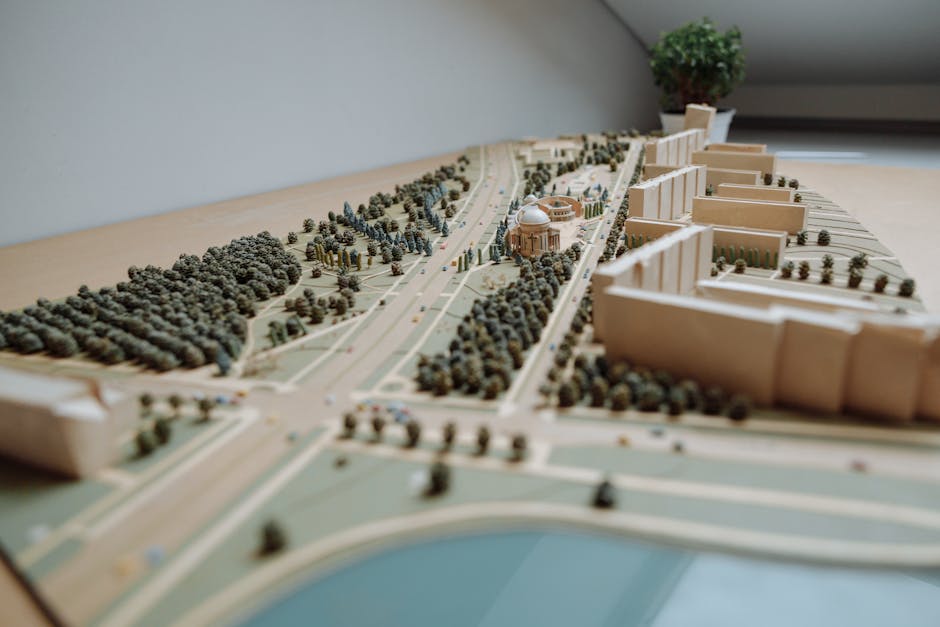
3D Modeling: Revolutionizing Efficiency and Realism Across Industries
The transformative power of 3D modeling lies in its ability to fundamentally alter and significantly enhance the efficiency and realism of processes across a vast spectrum of industries. Gone are the days of static blueprints and costly, time-consuming physical prototypes. 3D modeling introduces a dynamic, iterative, and visually immersive approach to design, development, and communication, leading to tangible improvements in workflow, resource allocation, and the fidelity of final outputs. This article will delve into the specific mechanisms by which 3D modeling achieves these critical advantages, exploring its impact on various sectors and providing a detailed understanding of its indispensable role in modern innovation.
Enhanced Design Iteration and Prototyping: A Paradigm Shift in Efficiency
At its core, 3D modeling streamlines the design and prototyping phases by enabling rapid, cost-effective iteration. Traditional methods often involve painstaking manual drafting and the creation of physical prototypes, each step consuming significant time and resources. A mistake discovered late in the physical prototyping stage can necessitate a complete rework, leading to substantial delays and increased expenditure. 3D modeling circumvents these limitations by allowing designers to create, manipulate, and refine digital models with unparalleled speed and flexibility.
The process begins with the creation of a virtual three-dimensional representation of an object or environment. This digital asset can be easily duplicated, modified, and tested within the modeling software itself. Changes that would require redrawing or rebuilding in a physical context can be implemented in seconds or minutes in a 3D model. This agility empowers designers to explore a wider range of design possibilities, experiment with different materials, textures, and forms, and optimize for functionality and aesthetics without incurring the material and labor costs associated with physical prototyping.
Furthermore, the ability to create multiple versions of a design concurrently allows for direct comparison and evaluation. Designers can easily switch between variations, assess their strengths and weaknesses, and make informed decisions based on objective visualization rather than abstract concepts. This iterative loop, where design, analysis, and refinement occur in rapid succession within the digital realm, drastically reduces the time to market for new products and solutions. The reduction in physical prototype creation also translates directly into cost savings, as materials, labor, and disposal costs associated with failed or suboptimal prototypes are minimized. The feedback loop from stakeholders can also be integrated much faster, as they can review and comment on a tangible 3D representation rather than relying on 2D drawings that may be open to misinterpretation. This accelerated feedback cycle further bolsters efficiency by ensuring that design decisions are aligned with project goals from the outset.
Unprecedented Realism: Bridging the Gap Between Concept and Perception
The pursuit of realism in visualization and representation is a cornerstone of 3D modeling’s impact. Beyond mere geometric accuracy, 3D models can be imbued with photorealistic textures, intricate surface details, and sophisticated lighting to create visualizations that are virtually indistinguishable from reality. This level of realism offers profound benefits across numerous applications, fostering better understanding, clearer communication, and more accurate decision-making.
In product design and manufacturing, for instance, photorealistic renderings allow stakeholders to experience a product before it is physically manufactured. This is invaluable for marketing, sales presentations, and client approvals. Potential buyers can see how a product will look in different environments, with various finishes, and in use, leading to higher conversion rates and reduced ambiguity. For engineers, the ability to simulate how light interacts with a surface or how different materials will appear under various lighting conditions can reveal subtle design flaws or opportunities for aesthetic improvement that might be missed in less realistic representations.
Architectural visualization has been revolutionized by 3D modeling. Architects can present designs to clients with immersive walkthroughs and photorealistic renderings of buildings and interiors. This allows clients to truly grasp the scale, ambiance, and functionality of a space, fostering a deeper connection with the design and enabling them to provide more constructive feedback. The ability to virtually "walk through" a building before construction begins significantly reduces the risk of costly changes during the build phase, as potential issues related to spatial relationships, natural light, or material choices can be identified and addressed early on. The impact on planning permission and public engagement is also substantial, as complex design proposals can be presented in an accessible and understandable manner.
The entertainment industry, from film and gaming to virtual reality, relies heavily on the realism achievable through 3D modeling. Creating believable characters, environments, and special effects requires an extraordinary level of detail and fidelity. Photorealistic 3D models are the building blocks of these immersive experiences, allowing audiences to suspend disbelief and engage deeply with fictional worlds. The ability to simulate complex physical phenomena, such as fluid dynamics or realistic cloth simulation, further enhances the believability of these digital creations.
Streamlined Communication and Collaboration: Breaking Down Silos
3D models serve as a universal language, transcending the limitations of technical jargon and disparate disciplines. This shared visual reference point significantly enhances communication and collaboration among diverse teams and stakeholders. In complex projects involving engineers, designers, marketers, and clients, a 3D model provides a common ground for discussion and understanding.
Instead of relying on lengthy written descriptions or abstract blueprints, team members can point to specific elements within the 3D model, discuss their implications, and collaboratively identify solutions. This reduces misinterpretations, clarifies objectives, and fosters a more cohesive and efficient working environment. For example, a manufacturing engineer can easily identify potential assembly issues by examining a 3D model of a product, while a marketing professional can assess its visual appeal. This cross-disciplinary understanding, facilitated by the 3D model, leads to better-integrated designs and more successful product launches.
Version control and asset management are also greatly simplified with 3D modeling. Centralized digital models ensure that all collaborators are working with the most up-to-date versions, preventing costly errors arising from the use of outdated information. The ability to annotate and comment directly on 3D models further enhances collaborative workflows, allowing for precise feedback and targeted revisions. This digital trail of communication also provides valuable documentation for project history and future reference.
Applications Across Key Industries: A Multifaceted Impact
The benefits of 3D modeling are not confined to a single sector; its applications are broad and continuously expanding.
Manufacturing and Product Design: As discussed, 3D modeling accelerates design cycles, facilitates rapid prototyping, and enables realistic product visualization. It also plays a crucial role in computer-aided manufacturing (CAM), where 3D models are directly used to program CNC machines, ensuring precision and efficiency in production. Furthermore, simulations within 3D environments can predict product performance under various stresses, identify potential failure points, and optimize designs for durability and functionality. This reduces the need for extensive physical testing and leads to more robust and reliable products.
Architecture, Engineering, and Construction (AEC): Beyond visualization, 3D models, often in the form of Building Information Models (BIM), are used for clash detection, where potential conflicts between different building systems (e.g., HVAC, plumbing, electrical) are identified and resolved in the digital model before construction begins. This significantly reduces costly rework and delays on-site. BIM also facilitates better cost estimation, project scheduling, and facility management throughout the lifecycle of a building. The ability to simulate construction sequences and material logistics further enhances project planning and execution.
Automotive Industry: 3D modeling is integral to automotive design, from the initial styling of vehicle exteriors and interiors to the detailed engineering of engine components and chassis. Realistic simulations allow engineers to test aerodynamics, crashworthiness, and performance characteristics in a virtual environment, saving immense time and resources compared to physical testing. It’s also used in the development of advanced driver-assistance systems (ADAS) and autonomous driving technologies, where complex scenarios are simulated to train and validate algorithms.
Aerospace Industry: The complexity and criticality of aerospace components demand the highest levels of precision and realism. 3D modeling is used for designing aircraft structures, engines, and interior systems. Finite Element Analysis (FEA) within 3D environments allows engineers to simulate structural integrity under extreme conditions, optimize weight, and ensure safety. It also plays a vital role in virtual assembly and maintenance planning.
Medical and Healthcare: 3D modeling is transforming medical procedures and patient care. It’s used to create patient-specific anatomical models for surgical planning, allowing surgeons to practice complex procedures virtually before operating. 3D printing of prosthetics, implants, and even organs from these models is becoming increasingly common, offering personalized and precise solutions. Medical imaging data can be converted into 3D models for better diagnosis and visualization of internal structures.
Gaming and Entertainment: The creation of immersive virtual worlds, realistic characters, and compelling visual effects is entirely dependent on sophisticated 3D modeling techniques. From concept art to final rendering, 3D artists build every element of these digital experiences. The pursuit of photorealism and intricate detail drives innovation in both software and hardware within this sector.
Education and Training: 3D models provide powerful educational tools, allowing students to interact with complex subjects in a visually engaging way. For example, anatomical models can be explored from all angles, and historical artifacts can be recreated and examined in detail. In professional training, 3D simulations allow for hands-on practice in safe, controlled environments, improving skill acquisition and reducing the risk of errors in real-world scenarios.
Future Trajectories: Continued Evolution and Integration
The evolution of 3D modeling is far from complete. Advancements in real-time rendering, artificial intelligence, and virtual and augmented reality (VR/AR) are pushing the boundaries of what is possible. AI is being integrated to automate repetitive modeling tasks, generate complex geometries, and optimize designs based on specified parameters. VR/AR technologies are allowing for even more immersive and interactive experiences with 3D models, further enhancing collaboration and visualization.
The trend towards real-time rendering is democratizing access to high-fidelity visualizations, enabling faster feedback loops and more dynamic design processes. As hardware becomes more powerful and software more sophisticated, the distinction between the digital and physical world will continue to blur, with 3D models becoming increasingly integral to our everyday lives, from product conception to final consumption and beyond. The continuous integration of 3D modeling with other digital technologies promises an even more efficient and realistic future across all industries.